The "bone–brain axis" is an emerging concept describing two-way biochemical communication between bone and brain that may link osteoporosis and depression. Bone-derived molecules such as osteocalcin and osteopontin can influence mood and brain inflammation, while chronic stress and elevated cortisol in depression can accelerate bone loss. The review's authors recommend multidisciplinary care and further clinical trials of axis-targeted interventions, including exercise, neuromodulation, and drugs.
New Research Highlights a 'Bone–Brain Axis' That May Link Depression and Osteoporosis
'Brain-Bone-Axis' May Link Depression With Osteoporosis, Study Claims
Depression and osteoporosis may be connected through a biologically active "bone–brain axis," according to a new review by three neurologists in China. The authors argue that bone is not merely structural tissue but an endocrine organ that releases molecules capable of affecting brain function — and that brain-derived stress responses can, in turn, weaken bone.
What Is the Bone–Brain Axis?
The bone–brain axis describes two-way biochemical communication between skeletal tissue and the central nervous system. Bones secrete hormones and proteins that enter the bloodstream and can reach the brain, while brain-regulated stress hormones and inflammatory pathways influence bone remodeling and density.
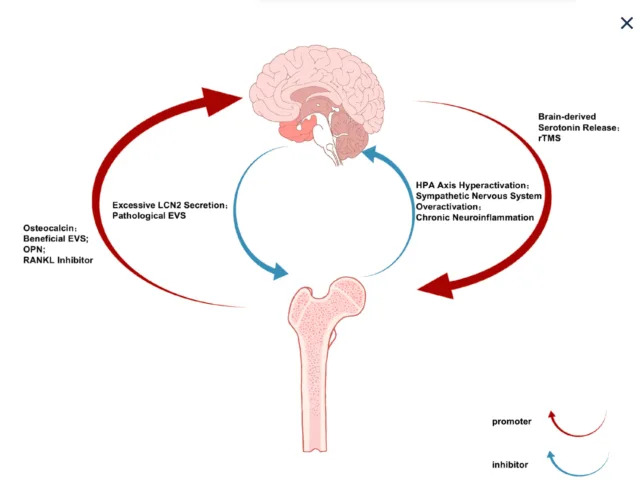
The two-way street of the bone-brain axis. (Li et al.,Biomolecules, 2026)
Key Molecular Players
- Osteocalcin: A bone-derived hormone that can cross the blood–brain barrier and influence cognition and mood. Studies report higher osteocalcin levels in some patients with acute depression that fall with effective treatment, suggesting an association with mood state.
- Osteopontin: A bone-produced protein with anti-inflammatory effects in the brain and the capacity to remodel neural tissue. Genetic variants affecting osteopontin production have been linked to depression susceptibility in some studies.
How Depression May Affect Bone
Chronic activation of stress pathways in depression elevates hormones such as cortisol and sustains inflammation, both of which promote bone resorption and reduce bone mineral density. As a result, depression and osteoporosis can form a reinforcing, bidirectional cycle.
Clinical Implications and Future Directions
The review authors — Pengpeng Li (Xi'an Aerospace Hospital), Yangyang Gao (Ningxia Medical University) and Xudong Zhao (Jiangnan University) — conclude that the bone–brain axis now "represents a legitimate physiological network." They call for clinicians across specialties to consider the interconnected pathophysiology when treating older adults and other at-risk patients.

Subscribe to ScienceAlert's free fact-checked newsletter
Potential interventions discussed include personalized exercise programs, neuromodulation techniques, and therapies that target bone-derived signals affecting mood and skeletal integrity. The authors emphasize the need for rigorous clinical trials to validate axis-targeted strategies.
"Future investigations must validate axis-targeted interventions through rigorous clinical trials, but the current knowledge already supports incorporating this conceptual framework into patient management strategies." — Li, Gao & Zhao
The review was published in the journal Biomolecules. The authors also cite a 2025 review reporting that exercise can engage bone–brain signaling with potential benefits for neurodegeneration, bone health and mood disorders.
Takeaway
Recognizing the bone–brain axis may help clinicians develop more integrated approaches to prevent and treat both depression and osteoporosis, particularly in older adults and other vulnerable groups.
Help us improve.