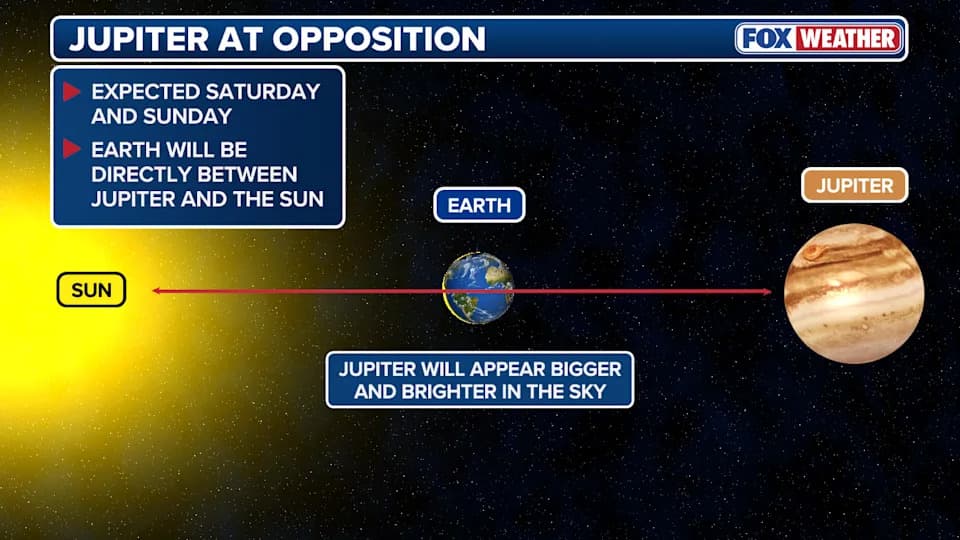
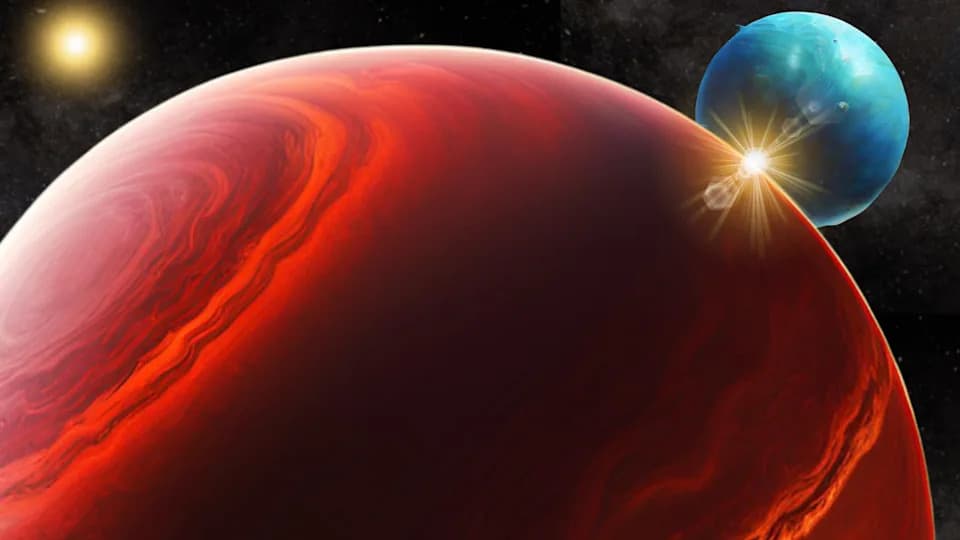
NASA's Juno spacecraft has refined Jupiter's dimensions: the equatorial diameter is 88,841 miles (142,976 km), about 5 miles (8 km) smaller than earlier estimates, and the pole-to-pole diameter is 83,067 miles (133,684 km), about 15 miles (24 km) smaller. Scientists used radio signals passing through Jupiter's atmosphere during a behind-planet alignment to measure composition, density and temperature and derive these precise values. The updated measurements improve models of Jupiter's interior and atmosphere and inform studies of the planet's role in solar system formation.
Juno Shows Jupiter Is Slightly Smaller — Most Precise Size and Shape Measurements Yet
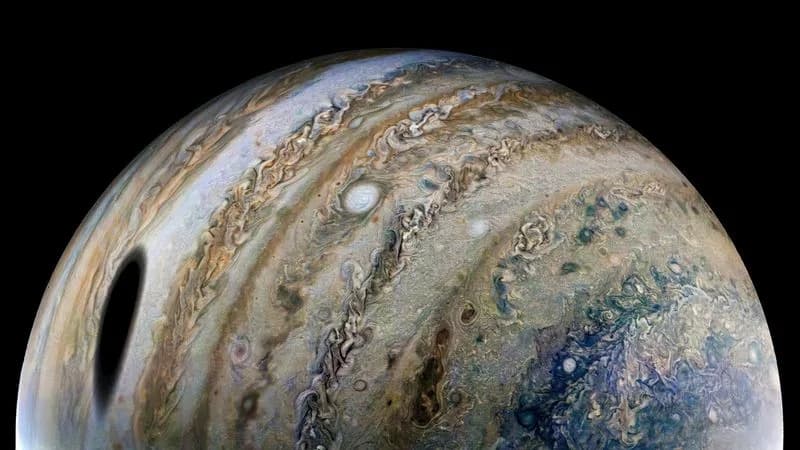
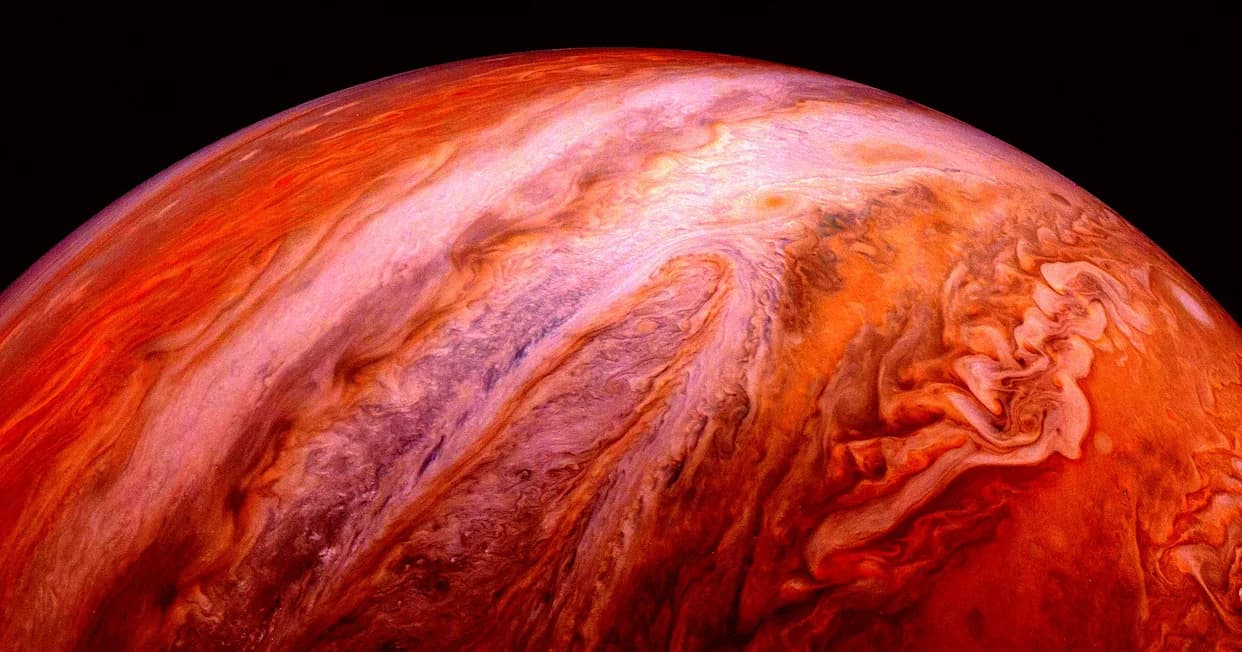
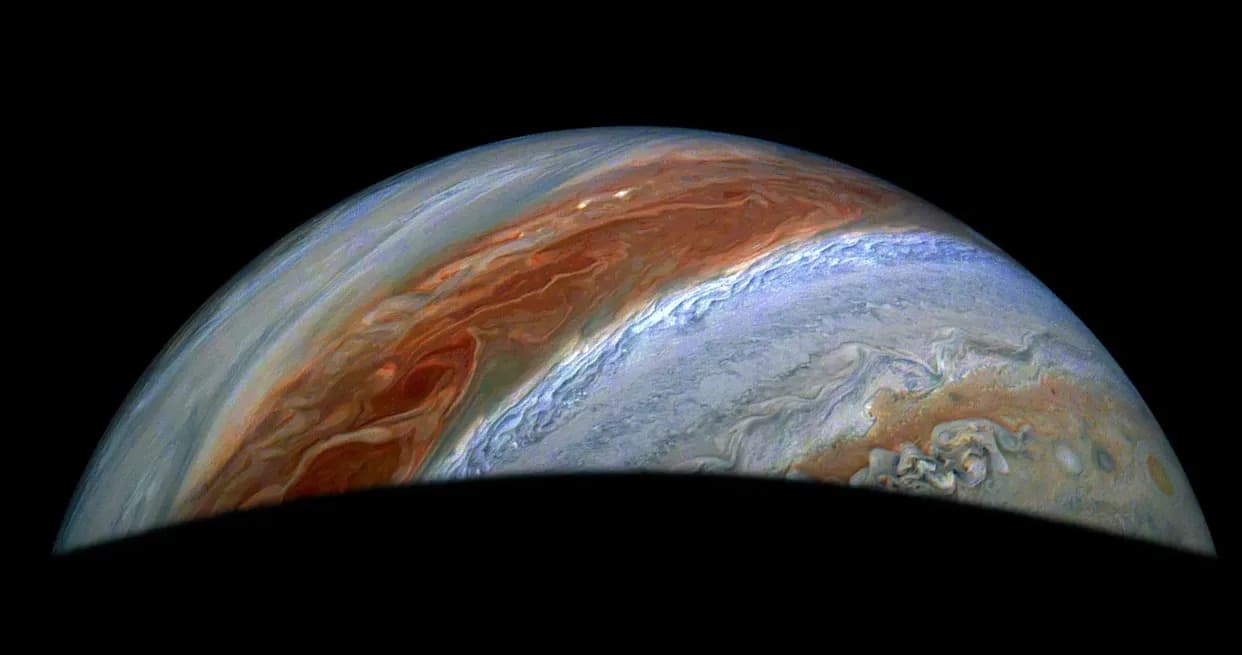
An enhanced-color image, using raw data from the JunoCam instrument aboard NASA's Juno spacecraft, shows the planet Jupiter, with a shadow of its moon Ganymede on the left, released by NASA on April 21, 2022. NASA/JPL-Caltech/SwRI/MSSS/Image processing by Thomas Thomopoulos/Handout via REUTERS
NASA's Juno mission has produced the most precise measurements to date of Jupiter's size and shape, revealing the gas giant is marginally smaller than earlier estimates.
New Measurements
Using radio data collected when the Juno spacecraft passed behind Jupiter from Earth's perspective, researchers determined Jupiter's equatorial diameter is 88,841 miles (142,976 km)—about 5 miles (8 km) smaller than past estimates. The pole-to-pole diameter is 83,067 miles (133,684 km), roughly 15 miles (24 km) less than previous figures.
How the Measurement Was Made
Juno's radio signal traveled through Jupiter's atmosphere on its way back to Earth, and changes to that signal—caused by the atmosphere's composition, density and temperature—let scientists probe the planet's outer layers with exceptional precision. These radio-occultation observations were possible thanks to an extended mission phase approved in 2021; the geometric alignment required did not occur during Juno's prime mission.
"Measuring how the signal changed due to Jupiter's atmospheric composition, density and temperature allowed us to probe the atmosphere and determine the planet's size and shape with high precision," said Eli Galanti of the Weizmann Institute of Science, lead author of the study in Nature Astronomy.
What This Tells Us
Jupiter is noticeably oblate—flattened at the poles—so its equator is about 7% larger than its polar diameter, compared with Earth's equator, which is about 0.33% larger than its poles. Accurate values for Jupiter's radius (half the diameter) are a fundamental reference for models of the planet's interior structure and atmospheric dynamics.
Broader Significance
As the solar system's most massive planet, Jupiter played a central role in shaping planetary formation and the distribution of material in the early system. Precise measurements of its size and shape help refine models of how Jupiter formed and how it influenced the delivery of volatiles—such as water, carbon dioxide and ammonia—to the inner solar system, processes that affected Earth's development.
Juno launched in 2011 and entered orbit around Jupiter in 2016. The spacecraft continues to return data on Jupiter's atmosphere, interior structure, magnetic field and magnetosphere, improving our understanding of the giant planet.
Reporting by Will Dunham; study published in Nature Astronomy; lead author Eli Galanti (Weizmann Institute of Science).
Help us improve.