Former prime minister Abhisit Vejjajiva has returned to active politics, boosting the Democrat Party’s standing ahead of Thailand’s Feb. 8 election. Polls show Abhisit rising to third among prime ministerial contenders and positioning the Democrats as a potential coalition pivot. The party’s resurgence is strongest in its southern heartland, while winning Bangkok remains a major challenge. Abhisit’s comeback combines personal popularity with a bid to restore the party’s traditional principles.
Abhisit’s Comeback Energises Democrats Ahead of Thailand’s Feb. 8 Vote
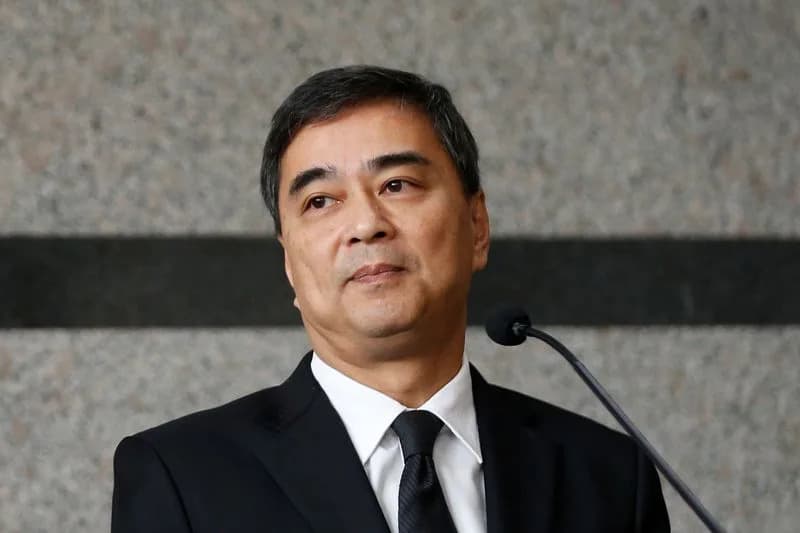
Former Democrat Party leader Abhisit Vejjajiva announces his resignation as a member of the parliament during a press conference in Bangkok, Thailand June 5, 2019. REUTERS/Soe Zeya Tun
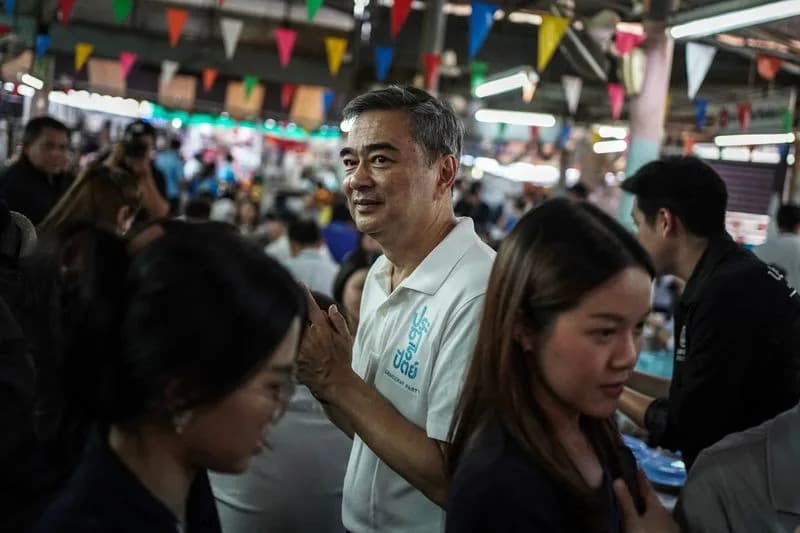
BANGKOK, Feb. 4 — Former prime minister Abhisit Vejjajiva has returned to frontline politics, drawing warm public reactions as he campaigns ahead of Thailand's snap general election on Feb. 8. Walking through busy Bangkok markets and main streets, the Oxford-educated economist frequently stopped for selfies and greetings — a sign of revived grassroots enthusiasm for the long-established Democrat Party.
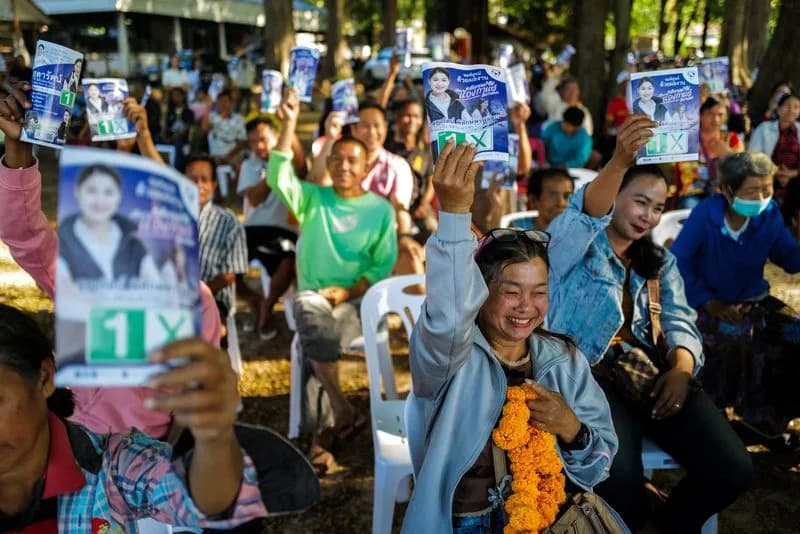
Abhisit, 61, says his goal is to "offer a choice and revive the party," appealing to voters frustrated by limited options. His comeback has reshaped what had looked like a three-way contest among the ruling Bhumjaithai Party, the progressive People's Party and the populist Pheu Thai Party, helping the Democrats reclaim conservative and older voters.
Polls And Political Standing
Recent opinion surveys, many reflecting Abhisit's personal popularity, show the Democrats climbing. A National Institute of Development Administration (NIDA) poll placed Abhisit third among likely prime ministerial contenders and the Democratic Party fourth overall — positioning the party as a potential kingmaker in coalition talks if no single party wins an outright majority.
After poor showings in recent elections — 52 of 500 seats in 2019 and just 25 seats in 2023 — the party’s resurgence under Abhisit's renewed leadership suggests a partial recovery from years of decline following the 2014 military coup.
Regional Support And Challenges
Much of Abhisit's renewed support comes from the Democrats' traditional southern strongholds, where voters in several provinces, including flood-hit Songkhla, are showing renewed backing. Catastrophic floods in November killed 145 people across nine provinces, and local polls in January showed Abhisit leading as the preferred candidate in parts of the south.
However, winning Bangkok — the country's largest electoral block with 33 seats and roughly 4.5 million voters, which largely favored a People's Party predecessor in 2023 — remains a difficult task. Abhisit acknowledged the party would have preferred more time to prepare its capital campaign.
Legacy And Controversies
Abhisit served as prime minister from 2008 to 2011 and faced sustained street protests by the Red Shirt movement. In 2010 he authorised security operations to clear protests in central Bangkok that resulted in 90 deaths. Rights groups criticised the response as excessive; Thai courts later dismissed criminal cases against Abhisit and senior officials, and there were no convictions.
Election Context
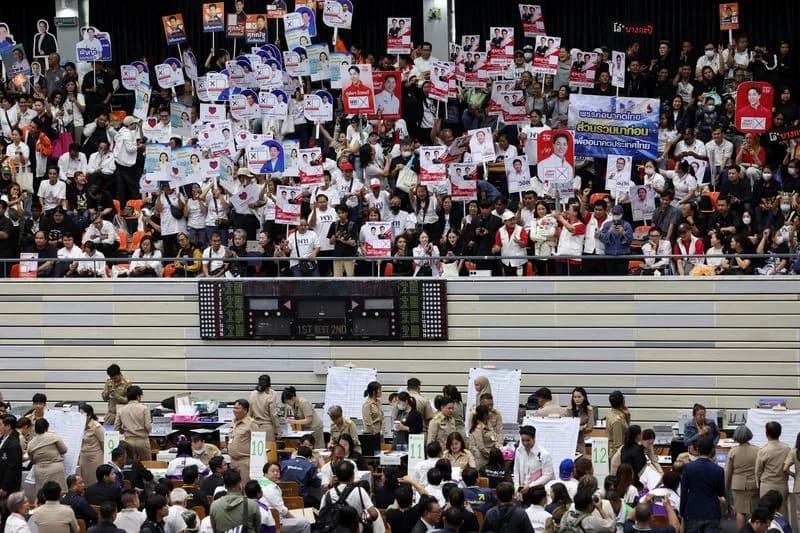
The snap vote followed Prime Minister Anutin Charnvirakul's decision to dissolve parliament in December amid a tense border clash with Cambodia — a move analysts say may have aimed to capitalise on rising nationalist sentiment. Observers warn the contest is still likely to produce a hung parliament, making coalition negotiations crucial and elevating the strategic importance of the resurgent Democrat Party.
"We're bringing back the principles people once supported us for," Abhisit said, framing his return as both a revival and a transformation of the party.
Help us improve.