Pheu Thai's rural dominance in northeastern Thailand is fraying as voters shift from party loyalty to trusted local candidates ahead of the Feb. 8 general election. Discontent over unfulfilled cash handouts, border tensions with Cambodia and a wave of nationalism have weakened Pheu Thai's appeal. Parties are recruiting defected incumbents and well-known local figures to capture personal loyalty networks that remain powerful in the countryside.
Rural Thai Voters Break With Party Loyalty — Local Candidates Test Pheu Thai's Populist Machine
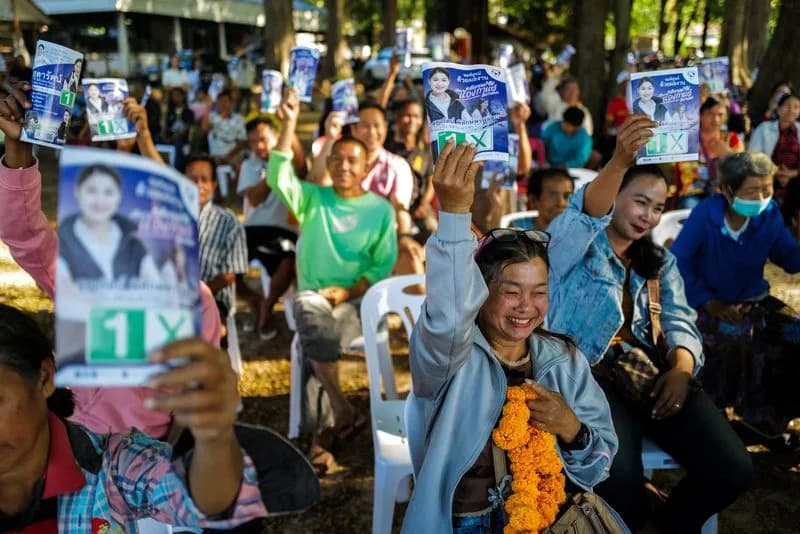
People hold up election campaign brochures of Sudarat Pitakpornpunlop, a parliamentary candidate for the Bhumjaithai Party, during her election campaign rally in Woen Buek village, Khong Chiam district, Ubon Ratchathani province, Thailand, January 24, 2026. REUTERS/Athit Perawongmetha
UBON RATCHATHANI, Thailand — In a sign of shifting political winds across northeastern Thailand, many rural voters are abandoning long-standing party loyalties and instead backing well-known local figures in the run-up to the Feb. 8 general election. Once a stronghold of former premier Thaksin Shinawatra's populist Pheu Thai party, the region now shows growing appetite for individual candidates and defectors who promise direct help to communities struggling with low crop prices, rising costs and mounting debt.
Polling, Power and the Payback Problem
A January University of Khon Kaen survey places Pheu Thai at 30.1% in the region — slightly behind the reformist People's Party and narrowly ahead of the ruling Bhumjaithai Party at 27.2%. In the 2023 election, Pheu Thai won 73 of 133 direct constituency seats across 20 northeastern provinces, an area that includes roughly 4 million of Thailand's 8.56 million registered farmers.
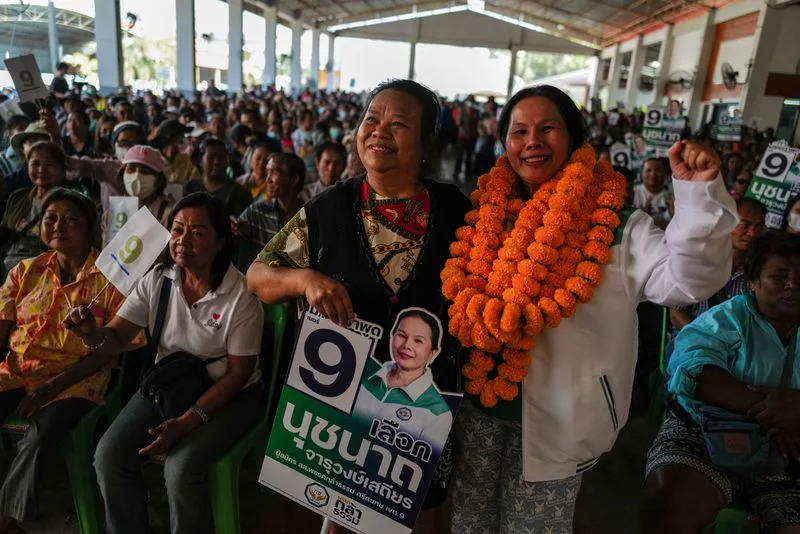
Nuchanat Jaruwongsethian, a parliamentary candidate for the Kla Tham Party, gestures next to a supporter during her election campaign rally in Rasi Salai district, Si Sa Ket province, Thailand, January 22, 2026. REUTERS/Athit Perawongmetha
Yet the party's grip has been tested by recent events: Paetongtarn Shinawatra's removal as premier after a mishandled response to border clashes with Cambodia; the escalation that left at least 149 people dead; and the imprisonment of Thaksin on an unrelated conviction. Pheu Thai also faced criticism for failing to deliver promised cash handouts after taking office in 2023 — a key grievance cited by disillusioned voters.
Voters Choose People Over Party
Rubber farmer Pinittaya Boonlieng, 48, said she is now considering voting for a former Pheu Thai lawmaker who defected and stands for the ruling Bhumjaithai Party — not because she endorses Bhumjaithai's platform but because she trusts the local candidate to help her community. “I am choosing the candidate. The party is less important,” she told Reuters.
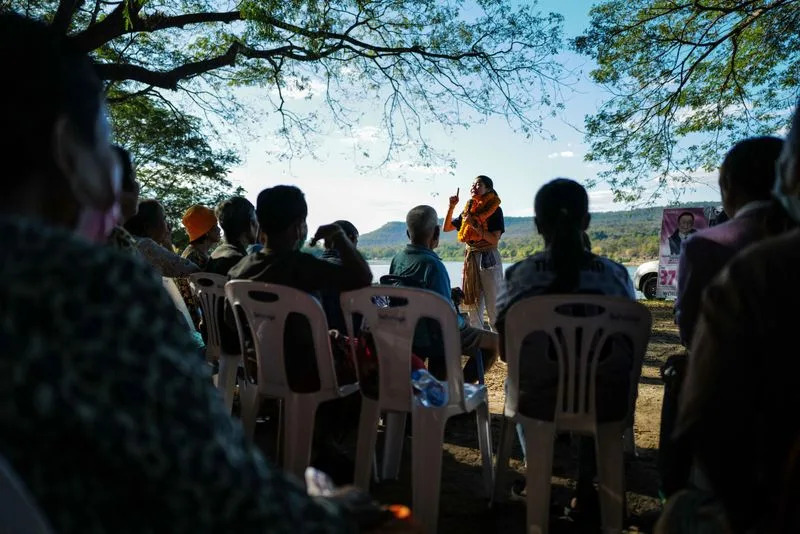
Sudarat Pitakpornpunlop, a parliamentary candidate for the Bhumjaithai Party, speaks during her election campaign rally in Woen Buek village, Khong Chiam district, Ubon Ratchathani province, Thailand, January 24, 2026. REUTERS/Athit Perawongmetha
“I was like their number one supporter but what they did isn't right. People lost faith in the party,” said 62-year-old rice farmer Manee Ruamtham, explaining her decision to back a defected incumbent now with the smaller Kla Tham party.
At the same time, some rural voters remain loyal to Pheu Thai when local candidates stay engaged with communities. Tapioca farmer Ubon Thanomsup, 53, said she still leans toward Pheu Thai because the local candidate lives nearby and can provide hands-on assistance.
Defections and Patronage Politics
Political parties are responding to voter shifts by recruiting high-profile local figures and defected incumbents to capture personal loyalty networks rather than relying solely on national messaging. At least 91 lawmakers elected in 2023 have changed affiliation ahead of the polls: Bhumjaithai has taken in 64 defectors, Kla Tham 21, and only one lawmaker has joined Pheu Thai.
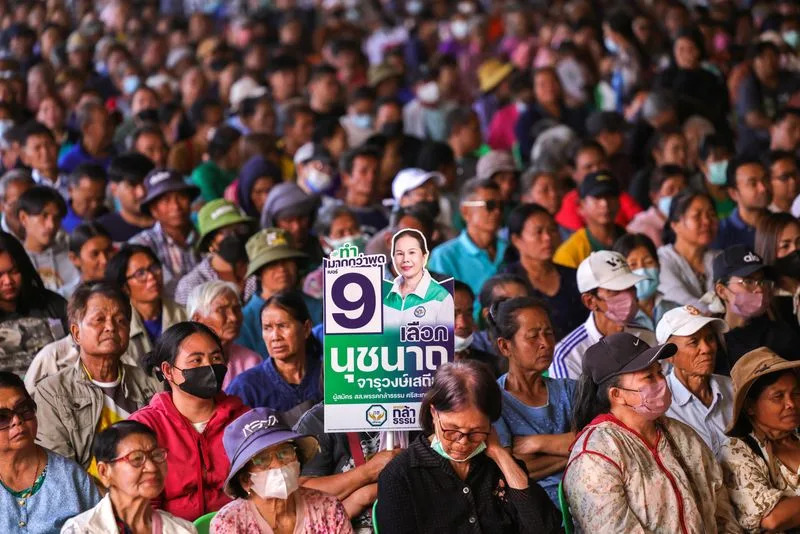
People attend an election campaign rally by Nuchanat Jaruwongsethian, a parliamentary candidate for the Kla Tham Party, in Rasi Salai district, Si Sa Ket province, Thailand, January 22, 2026. REUTERS/Athit Perawongmetha
Former Pheu Thai lawmakers such as Sudarat Pitakpornpunlop are running for rival parties while emphasizing continued local service: “Even if I change to another four or five parties, I will be the same old person who worked for all of you like before,” she told voters in Ubon Ratchathani.
Political scientists say this trend underscores the continued strength of patronage in Thailand's hinterlands, driven by gaps in state welfare and public services. As Titipol Phakdeewanich of Ubon Ratchathani University notes, long-term personal networks remain powerful determinants of voter behavior: when people receive help, they feel obliged to support the provider in return.
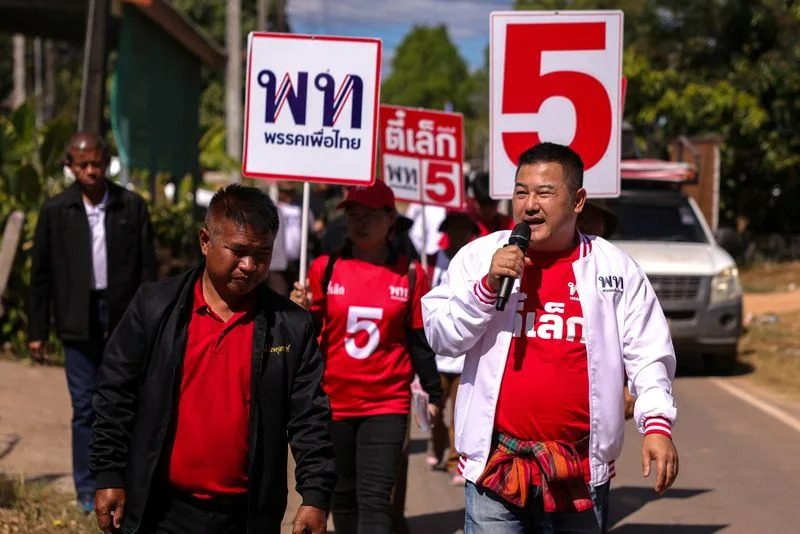
Cherdsak Phokkunlanon, a parliamentary candidate for the Pheu Thai Party, speaks during his election campaign rally in Nong Phue village, Khong Chiam district, Ubon Ratchathani province, Thailand, January 24, 2026. REUTERS/Athit Perawongmetha
What This Means
The erosion of strict party loyalty in rural northeastern Thailand signals a more candidate-centric contest where local reputation and direct delivery of services may outweigh national brand power. For Pheu Thai, the challenge will be to rebuild trust and demonstrate effective delivery if it hopes to maintain its rural base. For rivals, recruiting popular local figures offers a fast route to gains, but those gains will hinge on continued local engagement, not just short-term defections.
($1 = 31.5500 baht)
Help us improve.