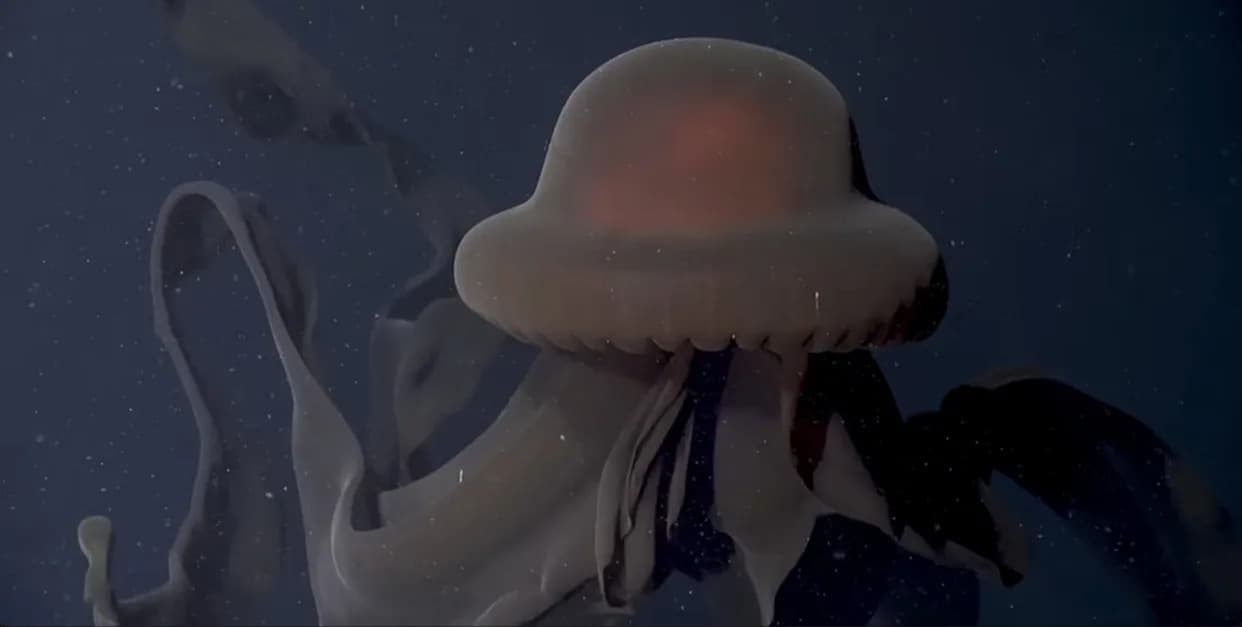
Deep-sea footage from the Schmidt Ocean Institute shows a rare giant phantom jellyfish, Stygiomedusa gigantea, swimming about 820 feet (≈250 m) below Argentina's coast. The Argentinian-led expedition recorded 28 suspected new species and discovered what may be the largest-known Bathelia candida coral reef. Researchers collected extensive chemical, physical and biological samples to study these extreme ecosystems. The jelly lacks stinging tentacles and captures prey with broad, trailing arms.
Watch: Bus-Sized 'Phantom' Jellyfish Filmed 820 Feet Below Argentina — Rare Deep‑Sea Discovery
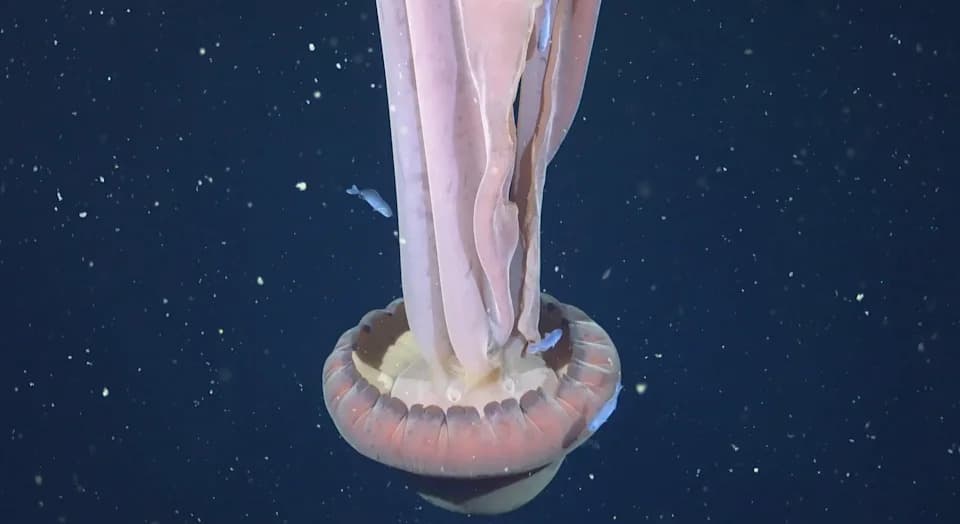
The giant phantom jelly is rare.(FOX Weather)
New deep-sea footage released by the Schmidt Ocean Institute captures a rare giant phantom jellyfish, Stygiomedusa gigantea, drifting roughly 820 feet (about 250 m) below the ocean surface off Argentina's coast. The animal's bulbous bell and long, ribbon-like arms give it an otherworldly appearance as it pulses through the dim blue depths.
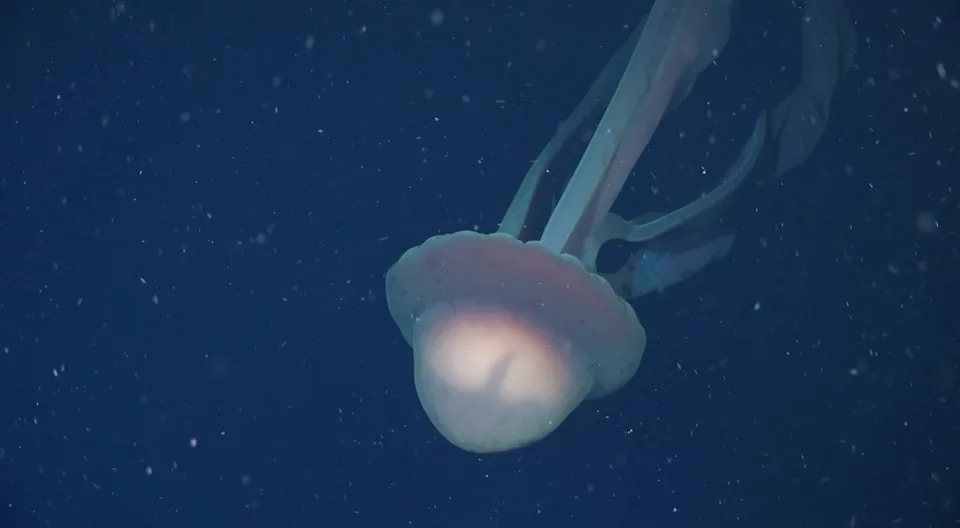
A Stygiomedusa gigantea discovered in the deep sea off the coast of Argentina by the Schmidt Ocean Institute.
Expedition Highlights
The sighting occurred during an Argentinian-led research voyage that followed the coast from Buenos Aires to waters offshore of Tierra del Fuego. Teams documented 28 suspected new marine species and reported what they describe as the largest-known Bathelia candida coral reef in the global ocean, along with several additional rich reef complexes.
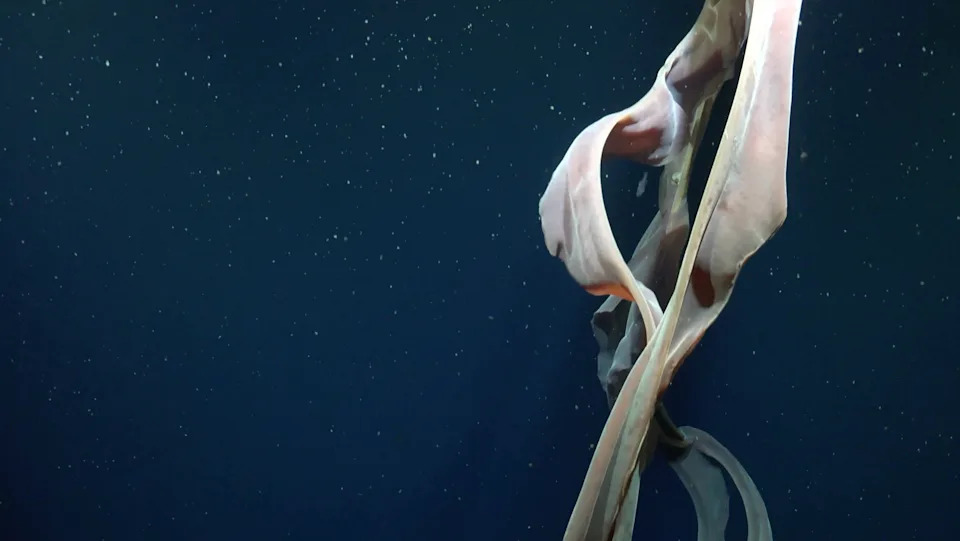
The jellyfish's tentacles can be 33 feet long and in total the jelly can grow to be as long as a school bus.
We collected an unprecedented number of chemical, physical and biological samples that will be used to understand connections in our waters for years to come.
About the Giant Phantom Jelly
Close-up clips show small fish swimming among the jelly's flowing appendages, which appear as long, pink ribbons drifting through the sea. The Schmidt Ocean Institute notes that these rare jellies lack stinging tentacles; instead, they use broad, trailing arms to capture prey. While the footage makes it difficult to measure the exact size of the individual observed, giant phantoms can have tentacles up to 33 feet (about 10 m) long and bells up to 3.3 feet (about 1 m) in diameter.
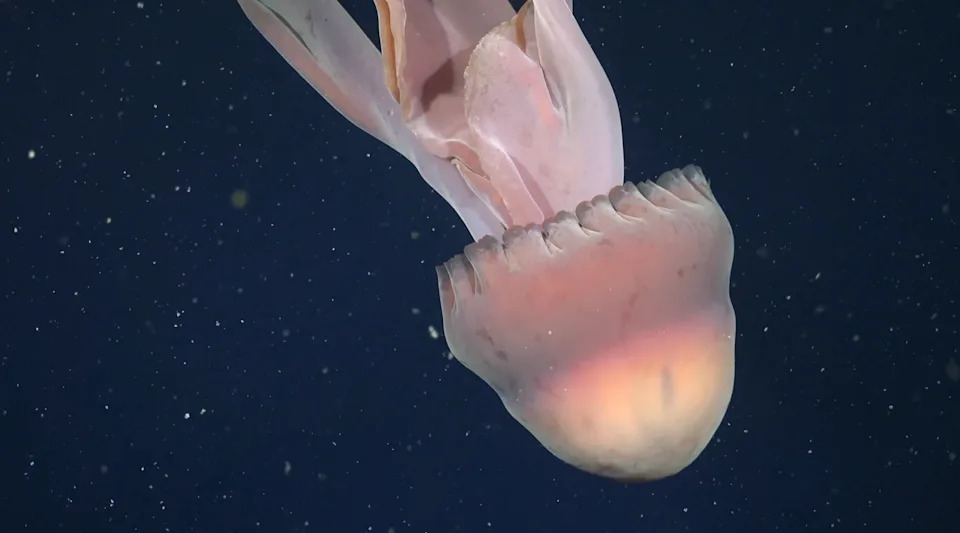
The bell of the phantom jelly can grow to be 3.3 feet in diameter.
This footage provides a striking and uncommon glimpse into deep-sea life and highlights the scientific value of targeted exploration in poorly known marine regions.
Help us improve.