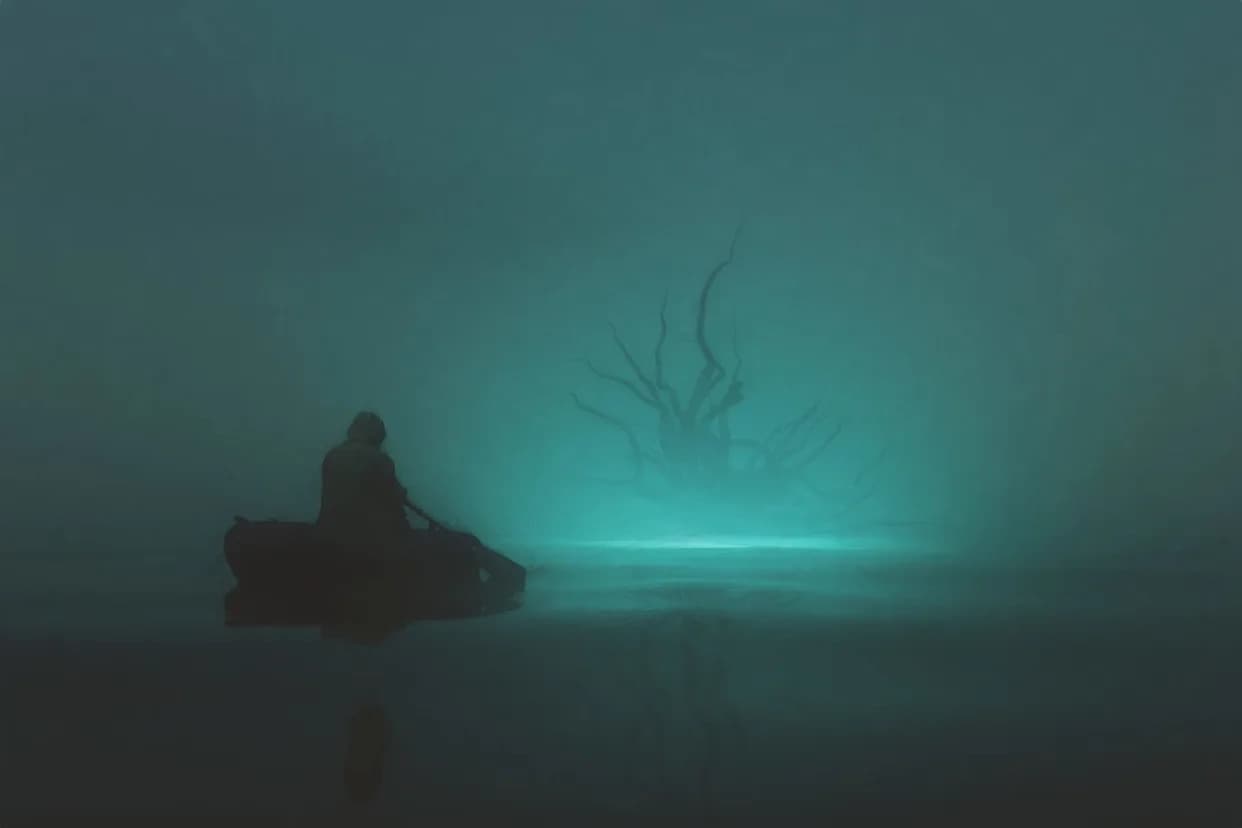
Stygiomedusa gigantea, the giant phantom jelly, drifts through the ocean’s bathypelagic “midnight” zone with ribbon‑like arms that can reach about 30 feet. Remote‑vehicle footage from the Schmidt Ocean Institute and MBARI has captured rare, close views of this elusive species. Unlike many jellyfish, it lacks typical stinging tentacles and appears to trap prey by ensnaring organisms with long, net‑like arms. The species has been recorded in all major oceans, and the Pelagic Brotula is often seen sheltering among its arms.
Meet the Giant Phantom Jelly: The 30‑Foot 'Ghost' of the Midnight Zone
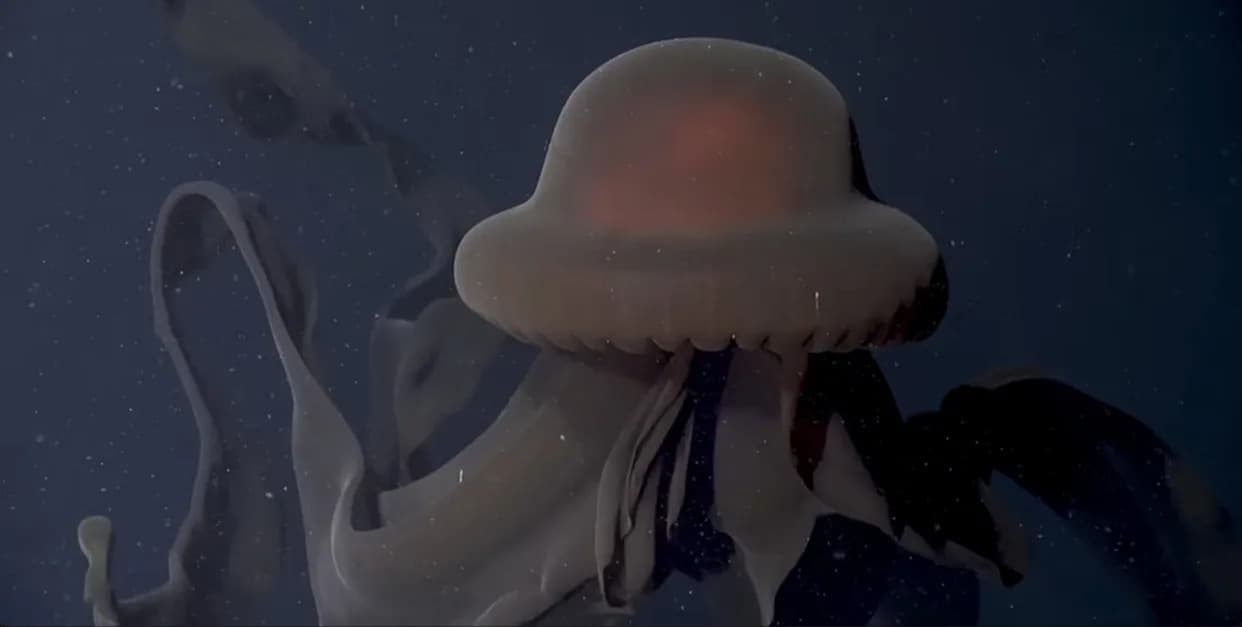
© MBARI (Monterey Bay Aquarium Research Institute) / YouTube
Deep in the ocean’s bathypelagic or “midnight” zone drifts one of the sea’s most mysterious giants: the phantom jelly, Stygiomedusa gigantea. Rarely seen by humans, this jellyfish can trail ribbon‑like arms up to about 30 feet long as it glides through inky black waters that average roughly 39°F.
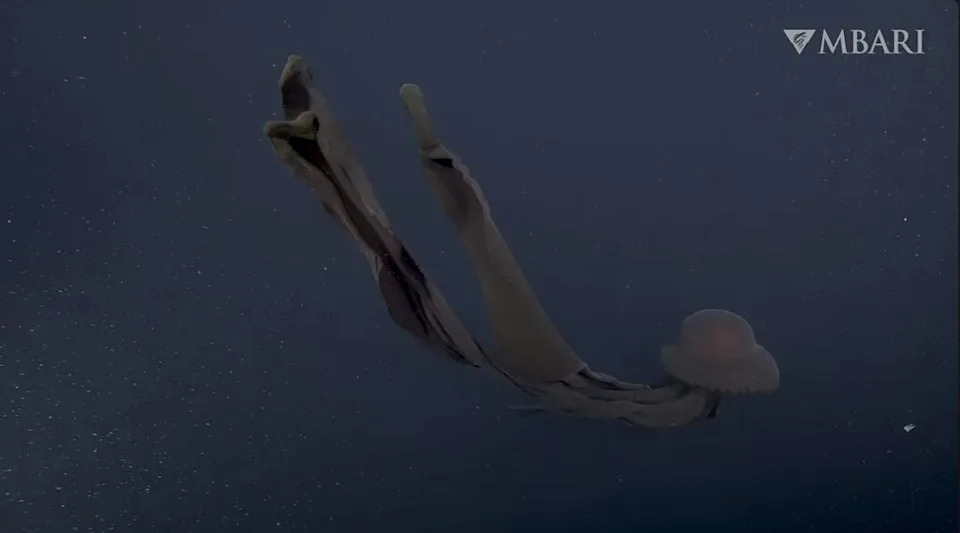
Few scientists have captured footage of the giant phantom jelly, and sightings are extremely rare due to where it lives.©MBARI (Monterey Bay Aquarium Research Institute) / YouTube –Original
What It Looks Like
The giant phantom jelly has a reddish‑brown, bell‑shaped body with long, silky arms that fold and ripple like flowing fabric. From a distance those folds cast eerie shadows in the dark water, giving the animal a ghost‑like appearance—hence its common name.
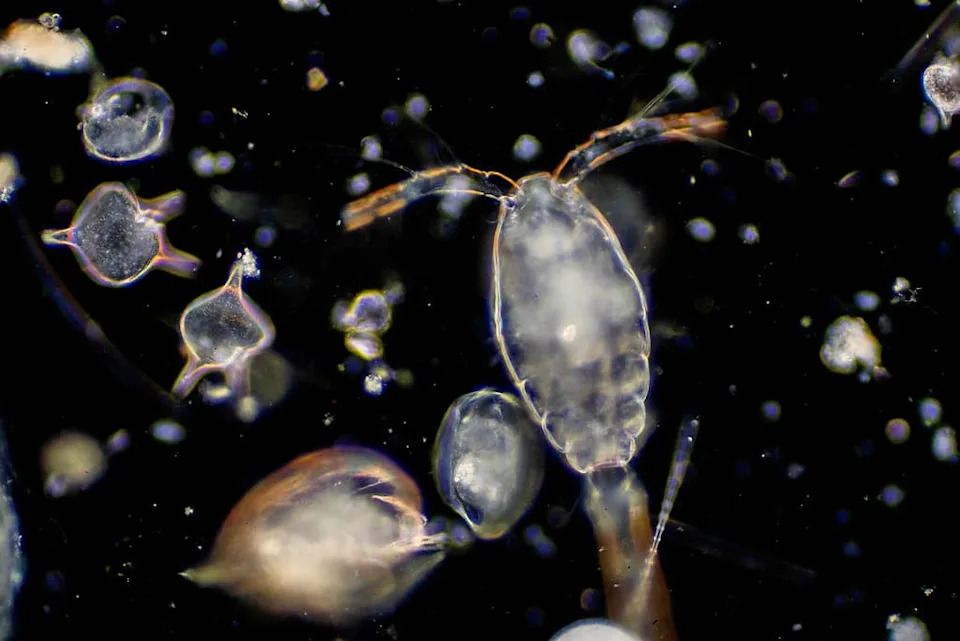
Plankton are organisms drifting in oceans and seas.©tonaquatic/iStock via Getty Images
How It Hunts
Unlike many familiar jellyfish, the phantom jelly does not rely on obvious stinging tentacles. Instead, its long, ribbon‑like arms appear to function more like nets, ensnaring plankton and small fish. Footage shows small fish darting among the arms and sometimes escaping; scientists have confirmed the arms act as capture surfaces, but the detailed mechanics of feeding and ingestion remain poorly documented.
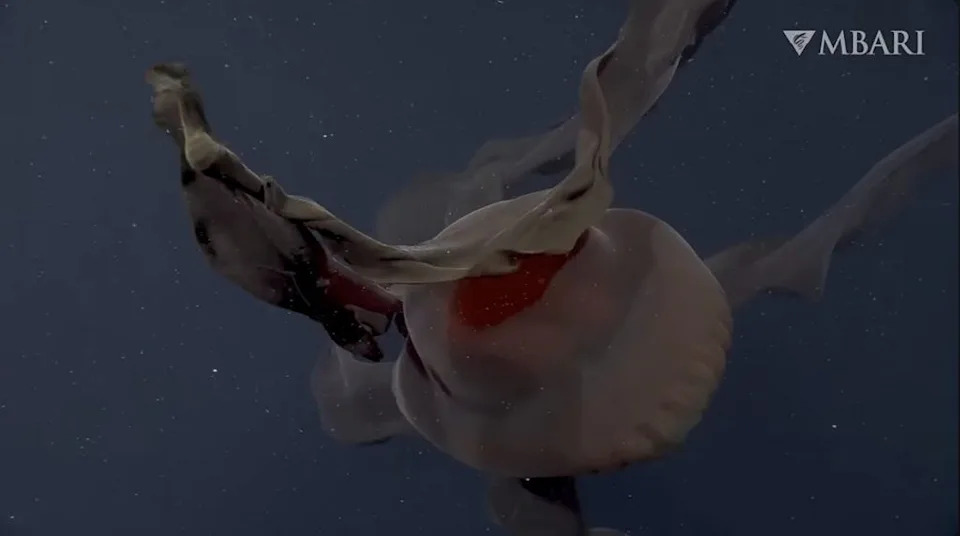
Giant phantom jellyfish have 30-foot-long tentacles that help them net prey, and also stabilize them while floating in the deep sea.©MBARI (Monterey Bay Aquarium Research Institute) / YouTube –Original
Where It Lives And Why Sightings Are Rare
Stygiomedusa gigantea inhabits the midnight zone, thousands of feet below the surface where sunlight is absent and pressures are extreme. Because of this remote habitat, human encounters and recordings are exceedingly uncommon. Recent remotely operated vehicle (ROV) footage from institutions such as the Schmidt Ocean Institute and MBARI has provided some of the closest views researchers have seen.
Ecological Notes And Potential Predators
The species has been recorded in all major oceans, including Antarctic waters, suggesting a broad distribution. No confirmed predators have been identified; the jelly’s size, deep habitat, and occasional sheltering relationships — notably with the Pelagic Brotula (a brotula fish) — suggest it faces few natural enemies. In theory, very large deep‑sea predators (for example, colossal squid) could prey on it, but current data are insufficient to confirm regular predators.
Why This Matters
Each rare sighting sheds light on life in one of Earth’s least explored realms. Stygiomedusa gigantea challenges our expectations about jellyfish biology—showing how diverse hunting strategies and ecological roles can be in the deep sea. Continued ROV exploration and better footage will be crucial to understand its behavior, diet, and role in deep‑ocean ecosystems.
Credits: Recent close footage comes from ROV missions by the Schmidt Ocean Institute and MBARI.
Help us improve.