Researchers from the Schmidt Ocean Institute filmed a rare giant phantom jellyfish (Stygiomedusa gigantea) about 253 meters (≈830 ft) below the Pacific off Argentina, footage shared on January 2, 2026. Only around 118 confirmed sightings have been recorded in 110 years, though the species is thought to be widespread apart from the Arctic. MBARI reports individuals can measure roughly 1 m across and up to 10 m long when arms are extended, and many small animals shelter among gelatinous midwater species in the Midnight Zone.
Rare 'Giant Phantom' Jellyfish Filmed 830 Feet Below the Pacific Off Argentina

The mysterious jellyfish was spotted about 830 feet beneath the waves.
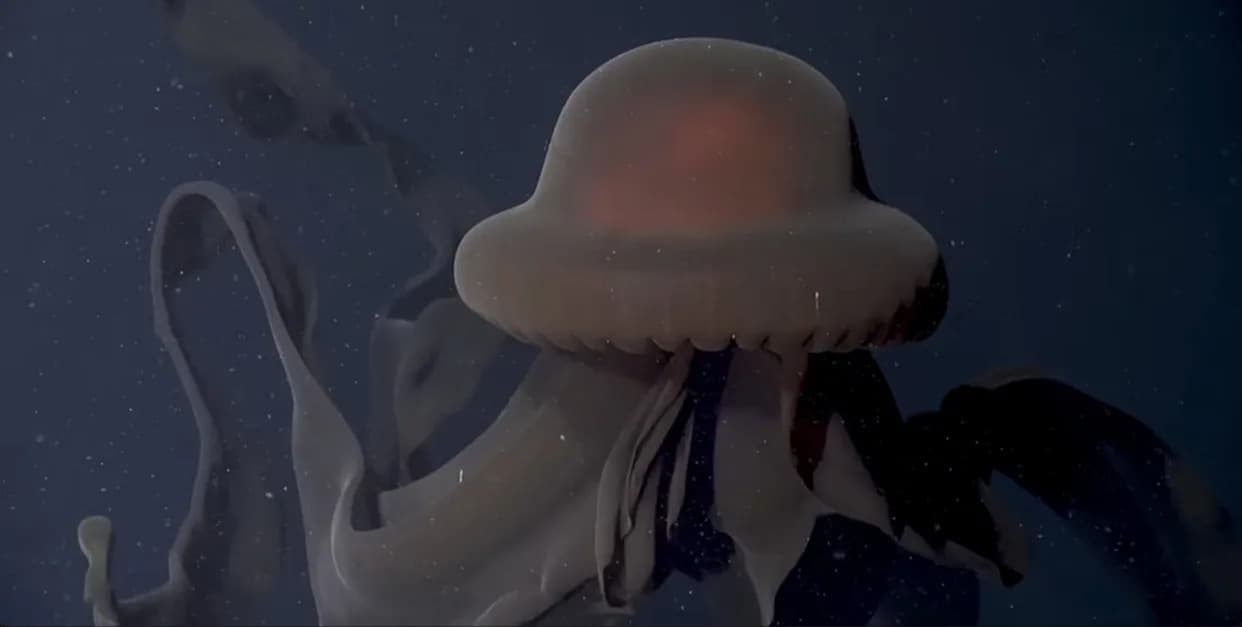
Scientists from the Schmidt Ocean Institute captured video of a rare giant phantom jellyfish (Stygiomedusa gigantea) during an ROV survey of the Colorado-Rawson submarine canyon wall off the coast of Argentina. The animal was recorded at roughly 253 meters (about 830 feet) below the surface and the institute shared the footage on January 2, 2026.
The Sighting
During a winter-holiday dive, pilots operating a remotely operated vehicle (ROV) filmed the enormous deep-sea jelly as it drifted near the canyon wall. The sighting is notable because Stygiomedusa gigantea is rarely observed in the wild: scientists report only about 118 confirmed sightings over the past 110 years, despite the species likely being widespread across temperate and tropical oceans (with the Arctic Ocean as the main exception).
About the Species
Giant phantom jellies are distinctive for their large, bulbous bell and four long oral arms. Unlike the stinging tentacles of many jellyfish, these oral arms are used to capture and guide prey toward the mouth rather than to deliver potent stings. Reported individual sizes vary, with Monterey Bay Aquarium Research Institute (MBARI) records indicating bell diameters around 1 meter (about 3.3 feet) and total lengths—when arms are extended—approaching 10 meters (about 33 feet).
Ecological Notes
Previous ROV footage from MBARI’s Tiburon vehicle documented a small fish sheltering and swimming among the arms of a giant phantom jelly in the Gulf of California. In the ocean’s so-called Midnight Zone (approximately 1,000–4,000 meters, or about 3,300–13,100 feet), shelter is scarce, so many smaller animals use gelatinous organisms like jellyfish for protection and transport.
Why It Matters: Each in-situ observation of Stygiomedusa gigantea helps scientists learn more about deep-sea biodiversity, species distribution, and the ecological roles of gelatinous animals in midwater ecosystems.
Help us improve.