Former Bolivian president Evo Morales has not been seen publicly for nearly a month, prompting widespread speculation. Supporters say he is recovering from dengue, while opponents allege he may be in exile. Authorities assert he has not left Bolivia through official channels, and a Jan. 8 helicopter overflight of the Chapare—described as a data‑collection mission involving foreign agencies including the DEA—has intensified fears among coca growers. Morales retains a loyal base prepared to resist any attempt to detain him.
Where Is Evo Morales? Bolivia’s Ex-President Missing From Public View for Nearly a Month
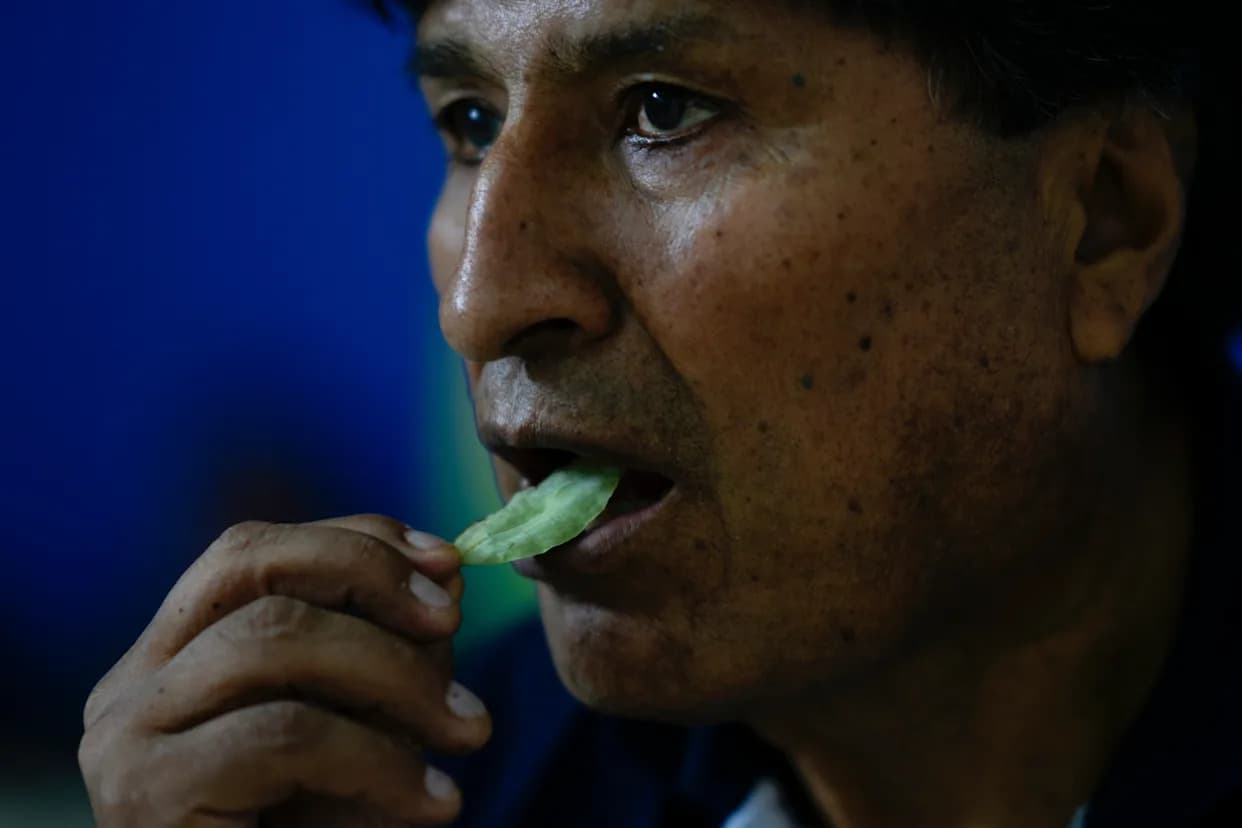
FILE - Bolivia's former President Evo Morales chews coca in Lauca N, Chapare region, Bolivia, Nov. 3, 2024, amid an ongoing political conflict with the government of President Luis Arce. (AP Photo/Juan Karita, File)(ASSOCIATED PRESS)
LA PAZ, Bolivia — Evo Morales, Bolivia’s former president and long‑time socialist leader, has been largely absent from public life for almost a month, an unexplained disappearance that has unsettled supporters, energized critics and fueled widespread online speculation.
Context
Morales missed a traditional ceremony on Monday where he normally greets students returning for the school year and did not host his weekly political radio program for the fourth consecutive week. Since early January he has also skipped meetings with coca‑grower union leaders in the remote Chapare region, and his steady stream of social media posts and live broadcasts has slowed to a near halt.
What Allies and Rivals Are Saying
Allies say Morales is convalescing from dengue fever, a mosquito‑borne illness whose acute symptoms typically resolve within about a week. “We have asked our brother Evo Morales to rest completely,” said Dieter Mendoza, vice president of the Six Federations, the coca‑growers’ organization.
Opponents have seized on the silence, suggesting Morales may have gone into exile. Right‑wing lawmaker Edgar Zegarra declared Morales was in Mexico and demanded authorities prove otherwise. Bolivian police, however, have been terse: “The former president has not left Bolivia,” Police Commander Gen. Mirko Sokol said, adding that there is no record of him departing by official channels.
Security, Helicopter Sighting And The DEA
On Jan. 8, coca growers in the Chapare reported seeing a Super Puma helicopter make an unusual overflight of the region, stoking fears of an operation to seize Morales. Deputy Social Defense Minister Ernesto Justiniano later described the flight as a data‑collection mission in cooperation with several foreign agencies, including the U.S. Drug Enforcement Administration (DEA). The prospect of the DEA’s return has alarmed many in the Chapare, a coca‑growing heartland still scarred by earlier anti‑drug campaigns.
Political Backdrop
Morales remains a polarizing figure in Bolivian politics. His Movement Toward Socialism (MAS) party dominated national politics for nearly two decades, and Morales cultivated ties with governments and companies outside the U.S. during his 14 years in office. The election of centrist President Rodrigo Paz signaled a shift in direction: his administration has pursued closer ties with the United States, lifted visa requirements for U.S. tourists and reopened talks that could bring the DEA back to Bolivia after nearly 20 years.
Risks Of Escalation
Coca holds deep cultural and spiritual significance in Bolivia while also being the raw material for cocaine. Morales retains a strong base in the Chapare, and some loyalists have vowed to resist any attempt to detain him. Right‑wing figures who ran for president, including former President Jorge Quiroga, had pledged to apprehend Morales if elected, and they are using the uncertainty around his absence to pressure the Paz administration.
“Our brother president is doing very well,” said Leonardo Loza, a former senator and close ally. “He is in a corner of our greater homeland.”
Morales could reappear at any time and end the speculation. For now, however, his inner circle has left his status deliberately vague, and Bolivia—already polarized—remains on edge over what his absence might mean for the country’s fragile political balance.
DeBre reported from Buenos Aires, Argentina.
Help us improve.