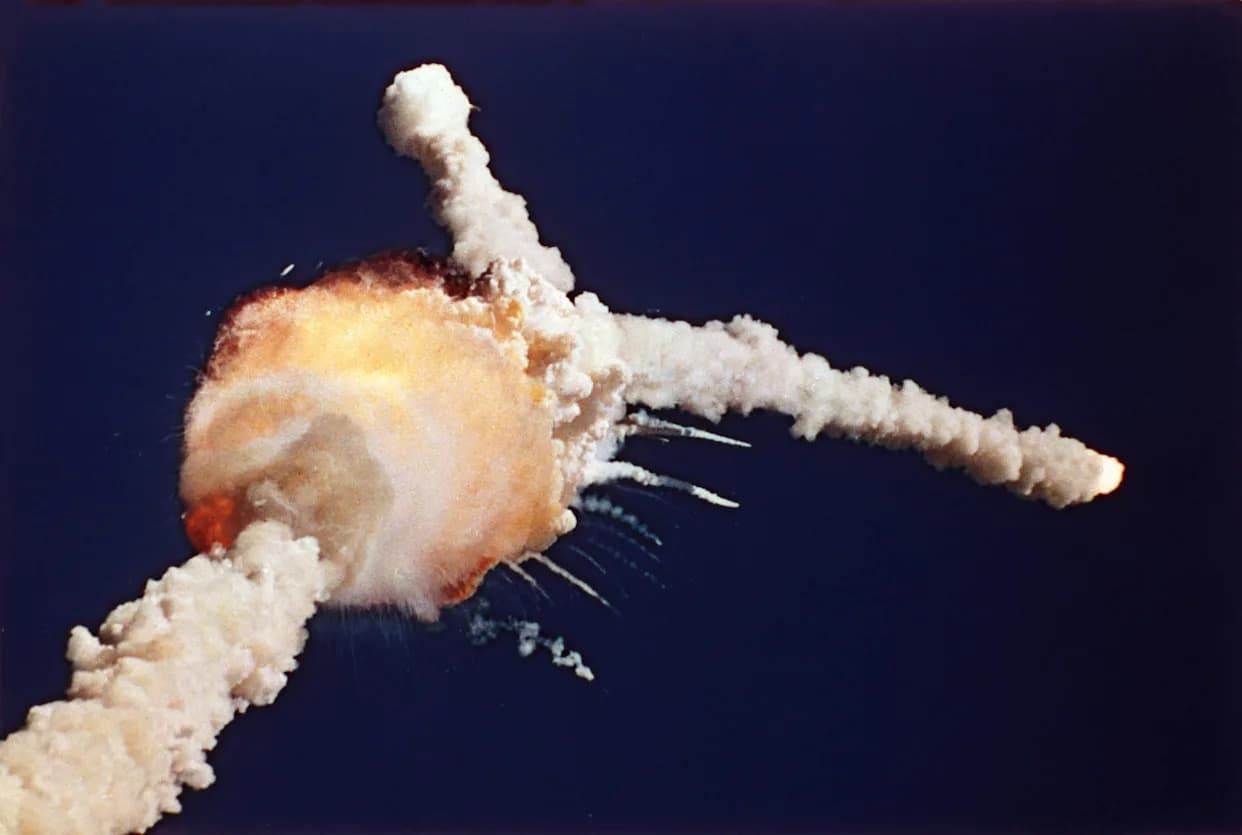
On Feb. 1, 2003, Space Shuttle Columbia (STS-107) broke apart during reentry, killing all seven crew members after a foam strike during the Jan. 16 launch damaged the orbiter's left wing. Mission Control lost contact about 16 minutes before the scheduled landing, and debris was observed over Texas. A formal investigation found that foam shedding had punctured Columbia's thermal protection, allowing superheated gases to cause catastrophic structural failure. The accident led to major safety reforms and a temporary grounding of the shuttle fleet.
Remembering Space Shuttle Columbia: The 2003 Loss of STS-107 and Its Legacy
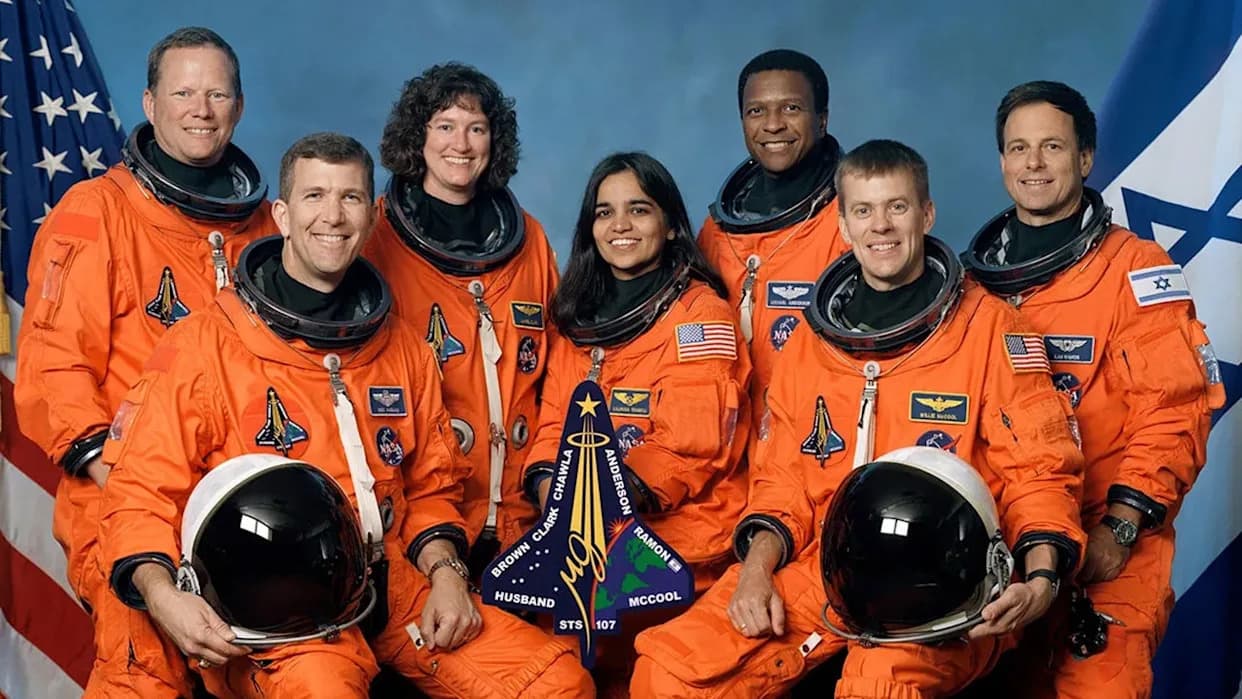
STS-107 Crew (L-R): Mission Specialist 1 David M. Brown, Commander Rick D. Husband, Mission Specialist 4 Laurel Blair Salton Clark, Mission Specialist 2 Kalpana Chawla, Payload Commander Michael P. Anderson, Pilot William C. McCool, Payload Specialist 1 Ilan Ramon (NASA)
On Feb. 1, 2003, Space Shuttle Columbia (mission STS-107) broke apart during atmospheric reentry, killing all seven crew members just minutes before a planned landing at Kennedy Space Center. The accident prompted a major investigation, sweeping safety reforms, and a national outpouring of grief.
What Happened
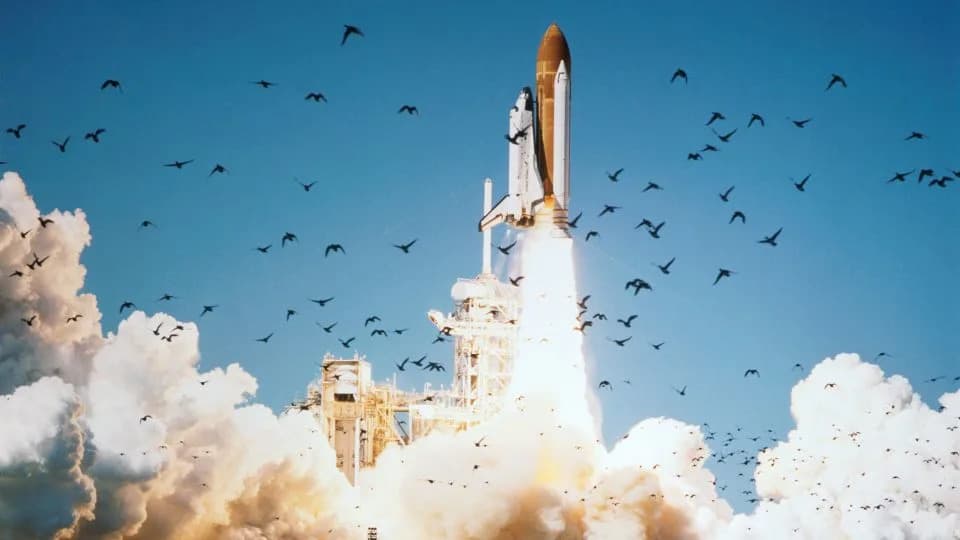
Columbia launched from Kennedy Space Center on Jan. 16, 2003. During ascent, a piece of insulating foam detached from the shuttle's external fuel tank and struck the orbiter's left wing. Flight controllers later reviewed launch imagery and observed the debris strike and a cloud of material, but the extent of the damage was not recognized at the time.
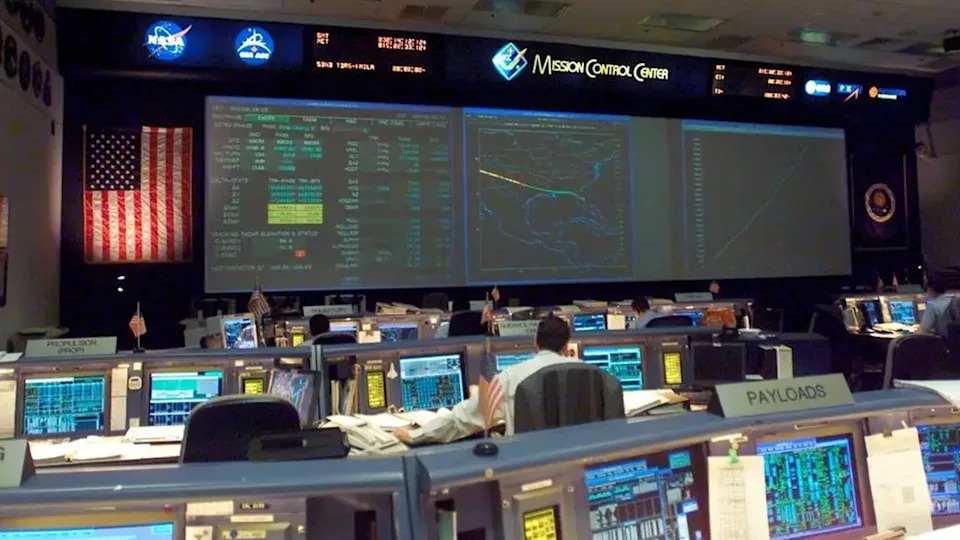
The Mission Control Center at the moment of loss of contact with Columbia on Feb. 1, 2003. (NASA)
About 16 minutes before the scheduled landing on Feb. 1, Mission Control at the Johnson Space Center in Houston lost contact with Columbia. Witnesses across Texas reported bright white streaks as the vehicle disintegrated. All seven crew members were killed: Commander Rick D. Husband, Pilot William C. McCool, Payload Commander Michael P. Anderson, Mission Specialists Kalpana Chawla, David M. Brown and Laurel B. Clark, and Payload Specialist Ilan Ramon, the first Israeli astronaut.
Investigation Findings
An official investigation by the Columbia Accident Investigation Board (CAIB) concluded that the foam impact had breached the orbiter's left-wing thermal protection system. During reentry, superheated gases entered the damaged structure, causing internal overheating, structural failure and breakup of the vehicle. The board also found that NASA had experienced repeated foam-shedding events on prior flights and had underestimated the risk posed by those impacts.
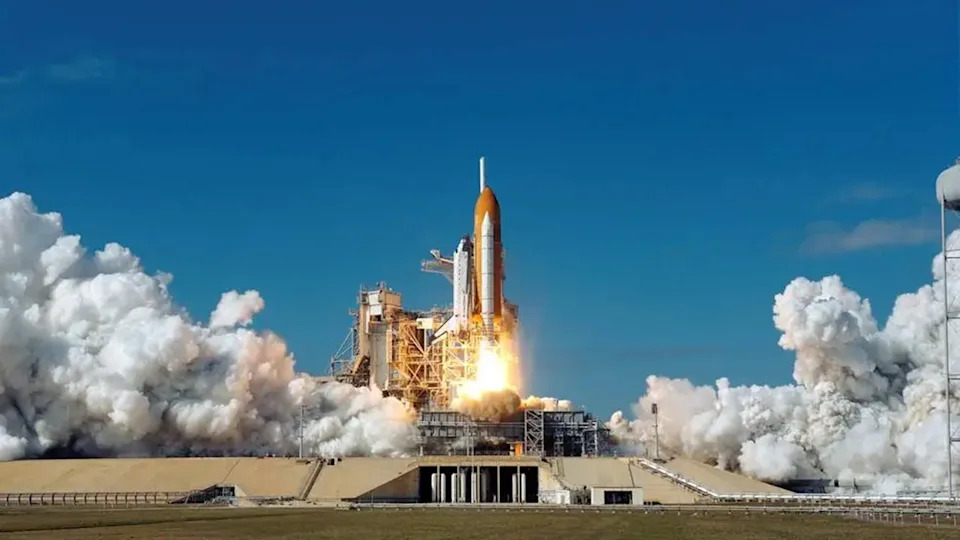
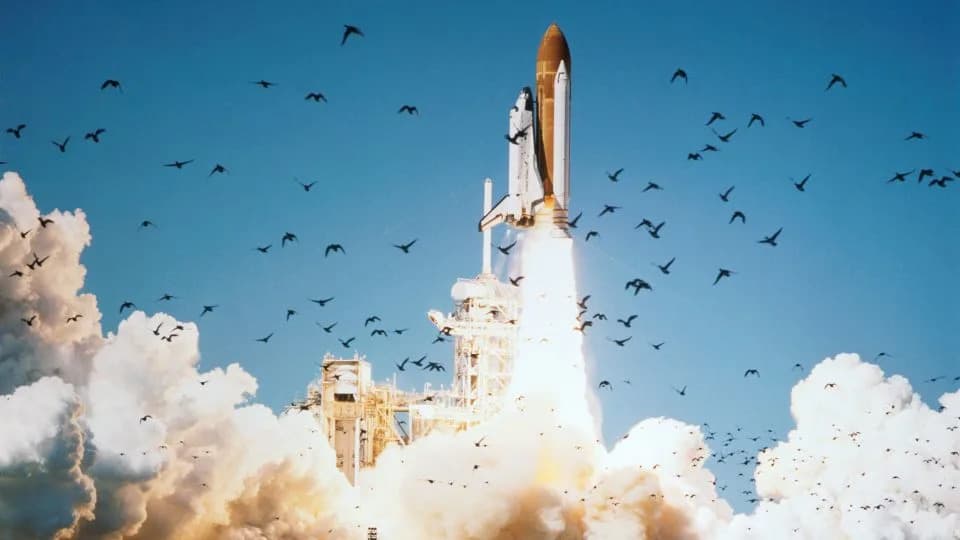
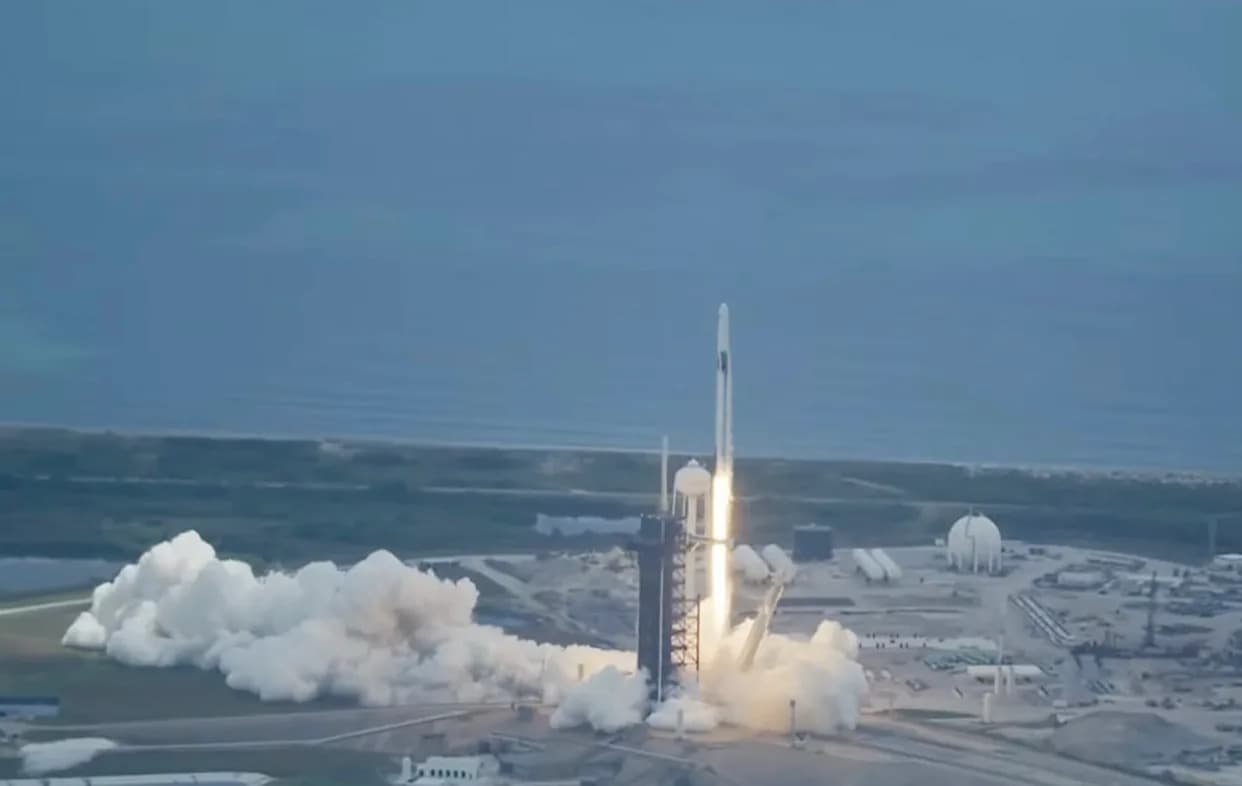
Columbia lifted off from Launch Pad 39A at the Kennedy Space Center on Jan. 16, 2003. (NASA)
The CAIB examined whether the crew could have been saved. Two theoretical options were identified: an unprecedented, accelerated launch of another shuttle (such as Atlantis) to attempt a rescue, or a hazardous on-orbit spacewalk and repair by Columbia's crew. Both options were judged to carry extreme risk and no guarantee of success; even a successful rescue would not have returned Columbia itself intact.
President George W. Bush addressed the nation on the morning of Feb. 1, 2003, named the seven crew members, paid tribute to their courage and service, and affirmed that the nation's quest to explore space would continue.
Aftermath and Legacy
The Columbia accident led to a 29-month grounding of the shuttle fleet while NASA implemented CAIB recommendations: redesigns to the external tank to reduce foam shedding, improved on-orbit inspection and repair procedures, stronger safety oversight, and cultural changes within the agency. The shuttle program returned to flight with STS-114 (Discovery) in July 2005.
Columbia's loss remains a solemn reminder of the risks of human spaceflight and the sacrifices made by those who push the boundaries of exploration. Memorials, scholarships and renewed safety practices continue to honor the crew and their scientific mission.
Help us improve.