On Jan. 28, 1986, the space shuttle Challenger disintegrated 73 seconds after liftoff, killing all seven crew members, including teacher Christa McAuliffe. The Rogers Commission found that a failed O-ring on a solid rocket booster, compromised by unusually cold temperatures, allowed hot gases to ignite the external fuel tank. The report also cited communication and organizational failures at NASA and implicated contractor Morton Thiokol. Shuttle flights were grounded for nearly three years while boosters were redesigned and safety reforms implemented; NASA honors the lost crews each year on a Day of Remembrance.
Challenger — 40 Years On: What Happened on Jan. 28, 1986, and How the Crew Is Remembered
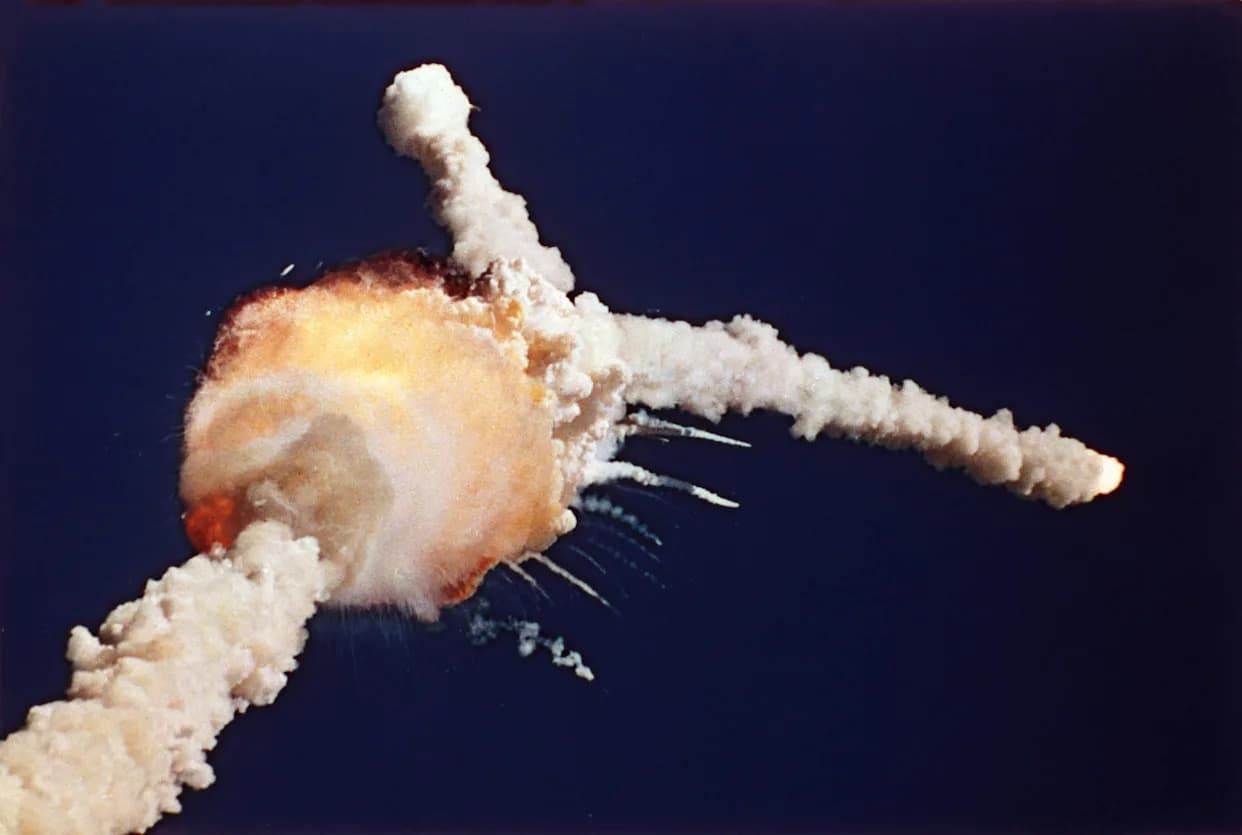
The Space Shuttle Challenger explodes shortly after lifting off from Kennedy Space Center, in Florida, on Jan. 28, 1986. All seven crew members died in the explosion.(Bruce Weaver/AP)
Forty years after the space shuttle Challenger broke apart shortly after launch, the disaster remains one of the most wrenching episodes in U.S. space history. Mission STS-51-L combined technical objectives with a powerful human story: the flight carried scientific payloads and Christa McAuliffe, a New Hampshire high school teacher chosen to be the first educator to fly in space.
The Mission and the Crew
STS-51-L was scheduled to deploy a Tracking and Data Relay Satellite and to carry the Spartan Halley probe to observe Halley’s Comet at its perihelion; Spartan Halley was to be released and retrieved by the shuttle two days later. The seven-person crew reflected a broad cross-section of American life:
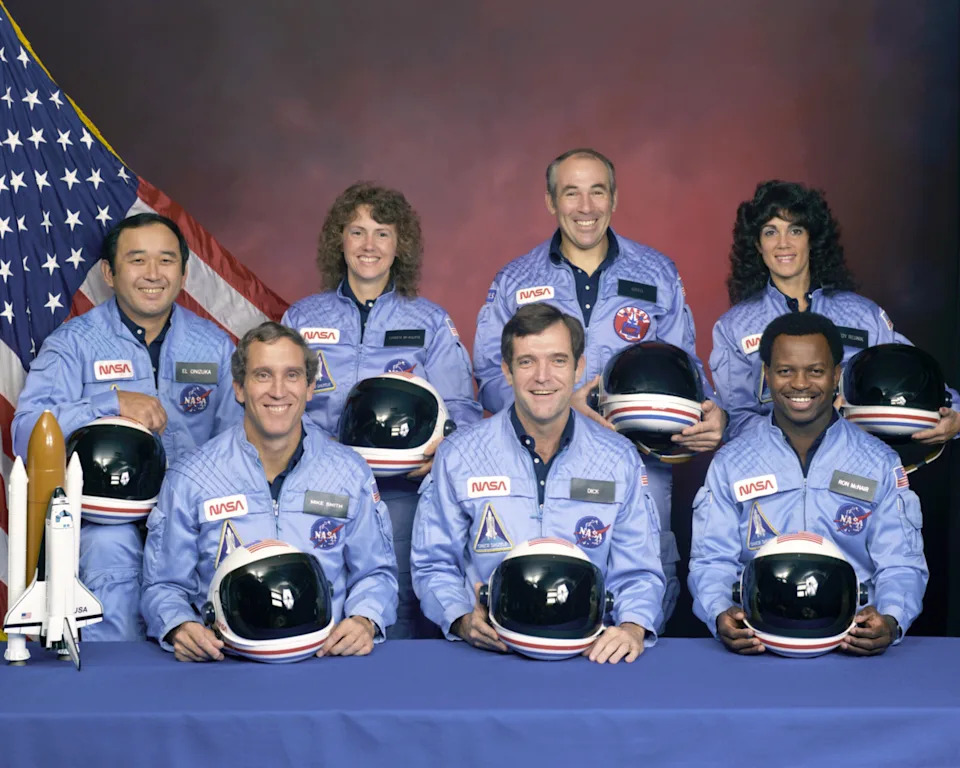
The crew of the Space Shuttle Challenger mission 51L. From front left: Pilot Michael J. Smith, Commander Francis R. (Dick) Scobee, and mission specialist Ronald E. McNair. From rear left: mission specialist Ellison Onizuka, teacher Christa McAuliffe, payload specialist Gregory Jarvis, and mission specialist Judith Resnik.(NASA via AP)
- Commander: Francis R. “Dick” Scobee
- Pilot: Michael J. Smith
- Mission Specialist: Ellison S. Onizuka
- Mission Specialist: Judith A. Resnik
- Mission Specialist: Ronald E. McNair
- Payload Specialist: Gregory B. Jarvis
- Payload Specialist: Christa McAuliffe, New Hampshire high school teacher and the Teacher in Space Project selectee
The Accident
On the morning of Jan. 28, 1986, Challenger lifted off from Cape Canaveral, Fla., after a delay that pushed launch to 11:38 a.m. ET because unusually cold weather had left ice on the pad. Seventy-three seconds after liftoff, as the shuttle passed through Max-Q (the period of greatest aerodynamic stress), the vehicle broke apart and was consumed by an explosion and subsequent fire. Recovery teams found no survivors.
Cause and Findings
The presidential Rogers Commission later concluded the immediate cause was the failure of an O-ring seal on one of the solid rocket boosters. Cold temperatures on the morning of the launch compromised the O-ring material, allowing flame and hot gases to escape and ignite the external liquid-fuel tank. The commission also documented serious communication and organizational breakdowns: some engineers had warned that the low temperatures made the seals unreliable, but those concerns were not effectively heeded in decision-making. The contractor Morton Thiokol, which designed and built the solid rocket motors, was implicated in the investigation.
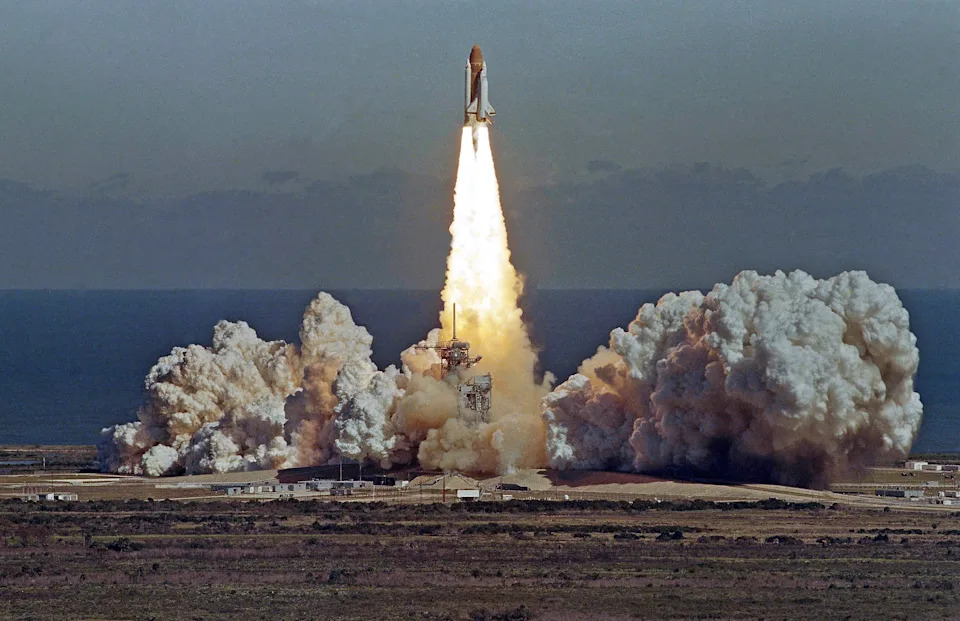
The space shuttle Challenger lifts off from the Kennedy Space Center in Cape Canaveral, Florida, shortly before it exploded with a crew of seven aboard on Jan. 28, 1986 .(Thom Baur/AP)
Aftermath and Reforms
Shuttle flights were suspended for nearly three years while NASA redesigned the solid rocket boosters, revised launch procedures and implemented organizational and safety reforms intended to improve how engineering concerns and risks are communicated and managed. The accident prompted a wide-ranging review of NASA culture and decision-making practices.
Remembering the Crew
Each year near the end of January, NASA observes a Day of Remembrance honoring the crews lost aboard Apollo 1 and the shuttles Challenger and Columbia. Families, colleagues and the public continue to mark the anniversary with ceremonies and moments of reflection. At a recent memorial at the Kennedy Space Center, family members and fellow teachers recalled the personal impact of the loss: Alison Smith Balch, daughter of pilot Michael Smith, said the event changed her life forever, and Jane Smith-Holcott, his widow, reflected on the daily absence she still feels.
"We remember them not to retreat from risk, but to respect it — to learn, to improve, and continue onward," NASA said in a news release. "Their sacrifice and the strength of their families will forever inspire us as we continue to reach for the stars."
The Challenger tragedy remains a powerful reminder of both the promise and the peril of human spaceflight: a mission intended to bring science and inspiration into classrooms ended in loss, but the lessons learned shaped safety practices for years to come.
Help us improve.