Forty years after the Challenger disaster claimed Christa McAuliffe and six crewmates, their families founded the Challenger Center for Space Science Education to continue the crew’s mission of inspiring students. The nonprofit now runs 32 centers, virtual programs and free lesson plans, reaching an estimated 7 million students worldwide. Educator-astronaut initiatives, including the 2004 Educator Astronaut Project, have since sent teachers to space, while alumni of Challenger programs work across NASA and industry. As Artemis and commercial spaceflight expand access to space, these education efforts aim to prepare students for a growing range of STEM careers.
From Tragedy to Inspiration: How Christa McAuliffe’s Mission Lives On 40 Years After Challenger
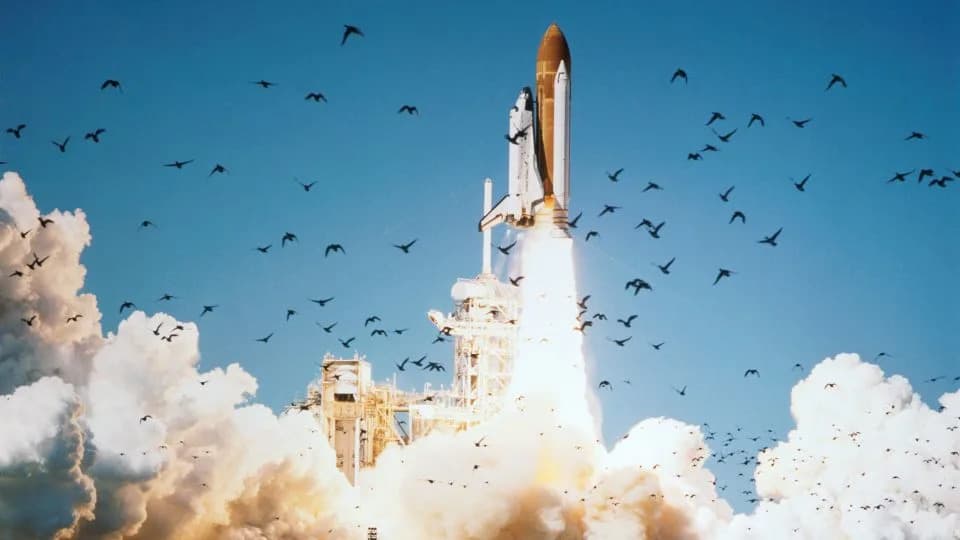
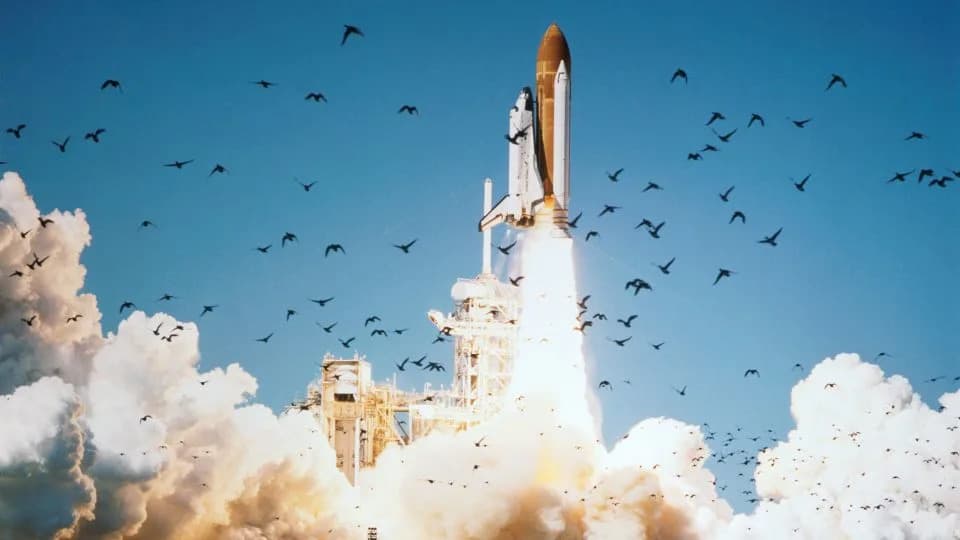
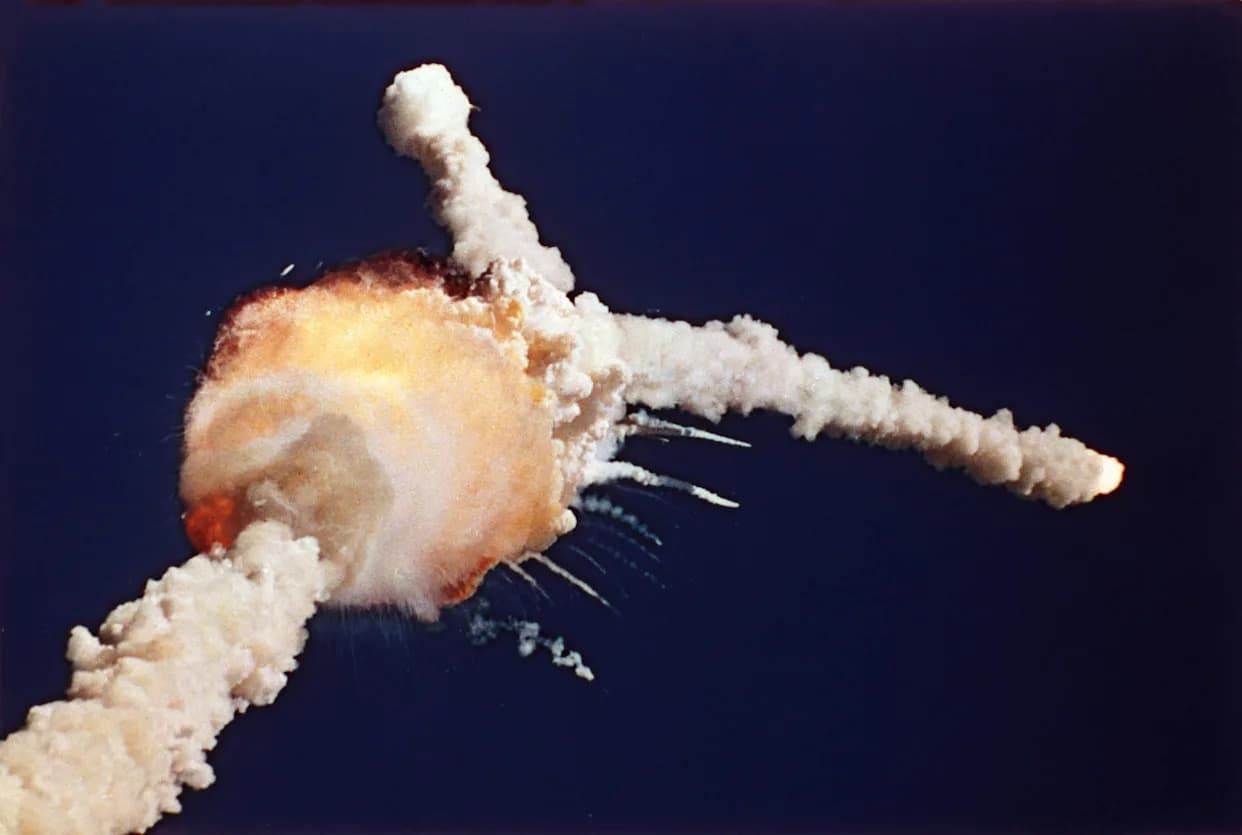
The space shuttle Challenger lifted off on January 28, 1986. An explosion 73 seconds after liftoff claimed the lives of the crew. - NASA
Forty years after the Space Shuttle Challenger disaster, the educational mission Christa McAuliffe brought to NASA endures. Though Challenger broke apart 73 seconds after liftoff on January 28, 1986, killing seven crew members including McAuliffe, her legacy has been transformed into a sustained effort to inspire students in science, technology, engineering and math.
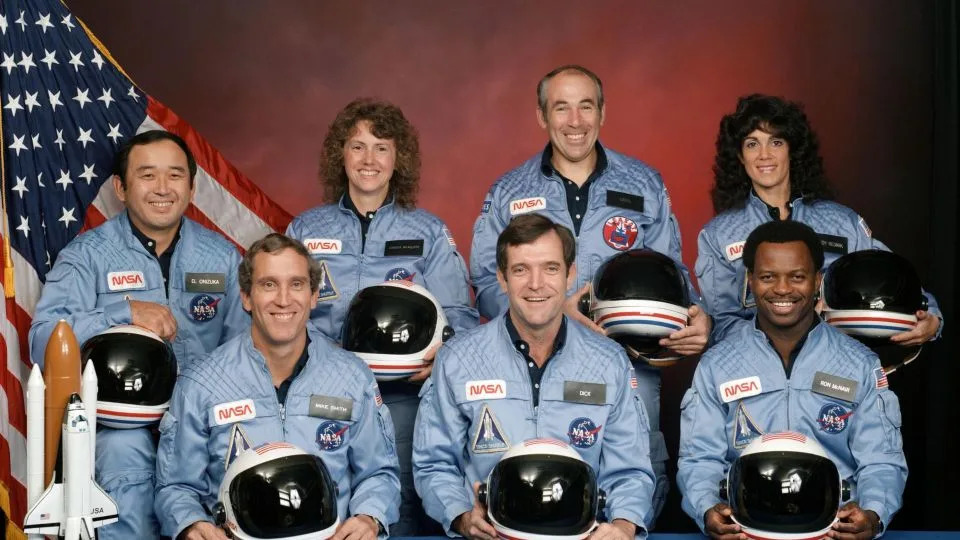
Challenger crew members (left to right, front row) Michael J. Smith, Francis R. (Dick) Scobee and Ronald E. McNair, (back row, left to right) Ellison S. Onizuka, Sharon Christa McAuliffe, Gregory Jarvis and Judith A. Resnik pose together in December 1985. - NASA
Families Turn Grief Into A Lasting Educational Mission
In the months following the accident, family members of the Challenger crew asked how they could continue the crew’s work of inspiring young people. Dr. June Scobee Rodgers, widow of Commander Francis R. "Dick" Scobee, recounted discussing this with then-First Lady Nancy Reagan and conceiving an idea: honor the fallen by creating an education-focused organization that would bring space science to students.
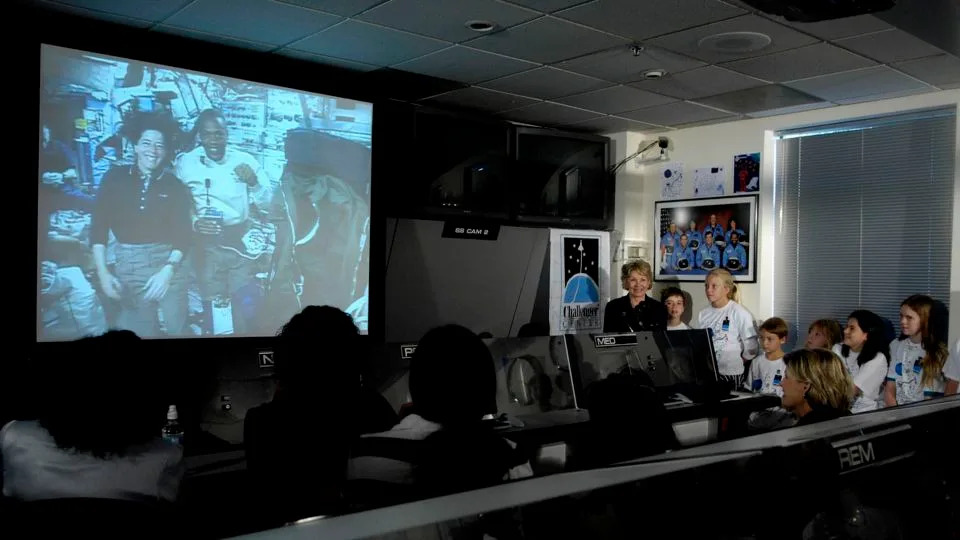
Dr. June Scobee Rodgers, founder of the Challenger Center, greets astronauts Barbara Morgan and Benjamin Drew Jr. during a live downlink for students at the center on August 16, 2007. - Paul E. Alers/NASA
The result was the Challenger Center for Space Science Education, founded in April 1986. The first center opened in Houston in 1988. Today, the nonprofit operates 32 physical centers across the United States, offers virtual programming, and provides free classroom lesson plans—reaching an estimated 7 million students worldwide with immersive STEM simulations and curriculum resources.
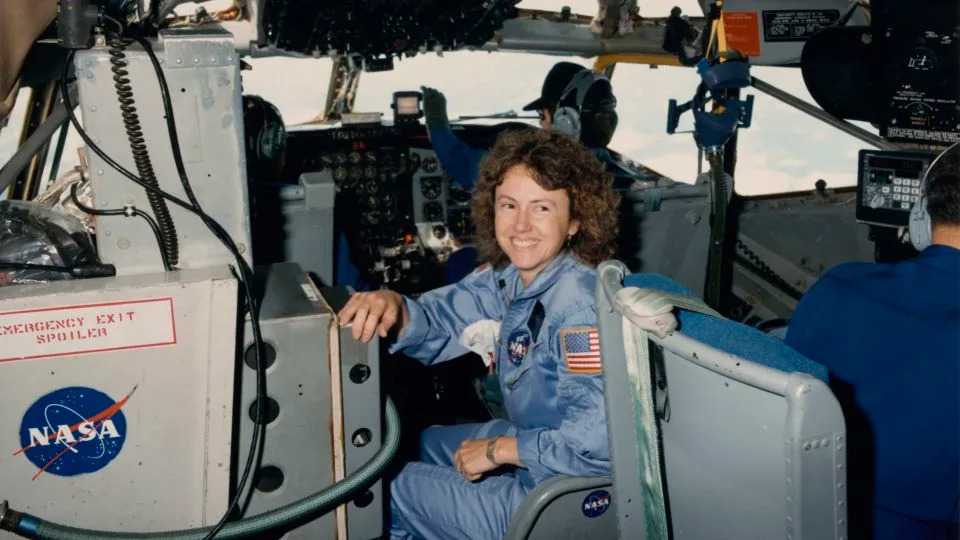
Christa McAuliffe smiles before participating in zero gravity rehearsals in October 1985. - Space Frontiers/Hulton Archive/Getty Images
Keeping McAuliffe’s Classroom In Orbit—By Other Paths
McAuliffe had been selected for NASA’s Teacher in Space Project and planned to broadcast lessons from orbit and help deploy an astronomy experiment to study Halley’s Comet. After Challenger, the original Teacher in Space effort ended, but its spirit lived on through other educator-focused programs.
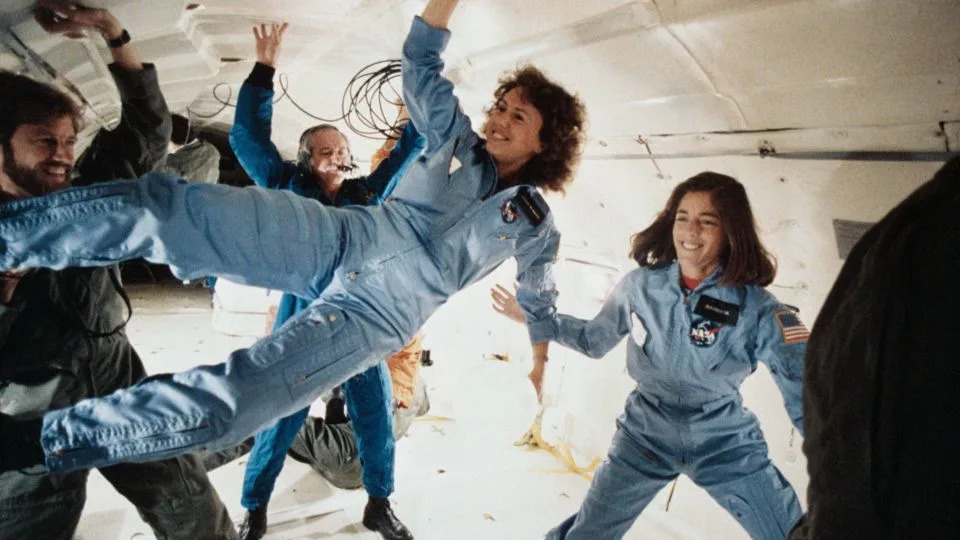
The two representatives of the Teacher in Space Program, McAuliffe (left) and Morgan (right) conducted zero gravity training to prepare for future missions. - Keith Meyers/New York Times/NASA
Barbara Morgan, McAuliffe’s backup, continued outreach and curriculum work with NASA and later joined the astronaut corps, flying in 2007 to support construction of the International Space Station. In 2004, NASA launched the Educator Astronaut Project, selecting teachers for full astronaut training. Educator-astronauts such as Dottie Metcalf-Lindenburger, Joseph Acaba and Richard “Ricky” Arnold later brought space-based lessons to life aboard the ISS and other missions.
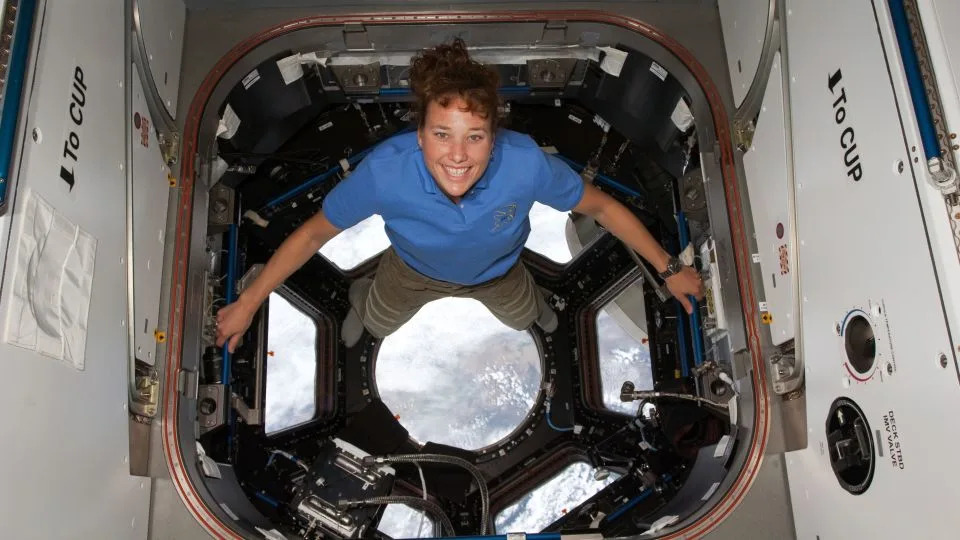
Dottie Metcalf-Lindenburger poses for a photo in the cupola of the International Space Station on April 17, 2010, while space shuttle Discovery remains docked with the station. - NASA
Hands-On Simulations That Spark Careers
Challenger Centers use mission simulations, experiments and online tools to build students’ STEM confidence, teamwork and problem-solving skills. Educators and alumni report dramatic engagement: students who might otherwise disengage become fully involved in simulated missions that mirror real-world engineering and science challenges.
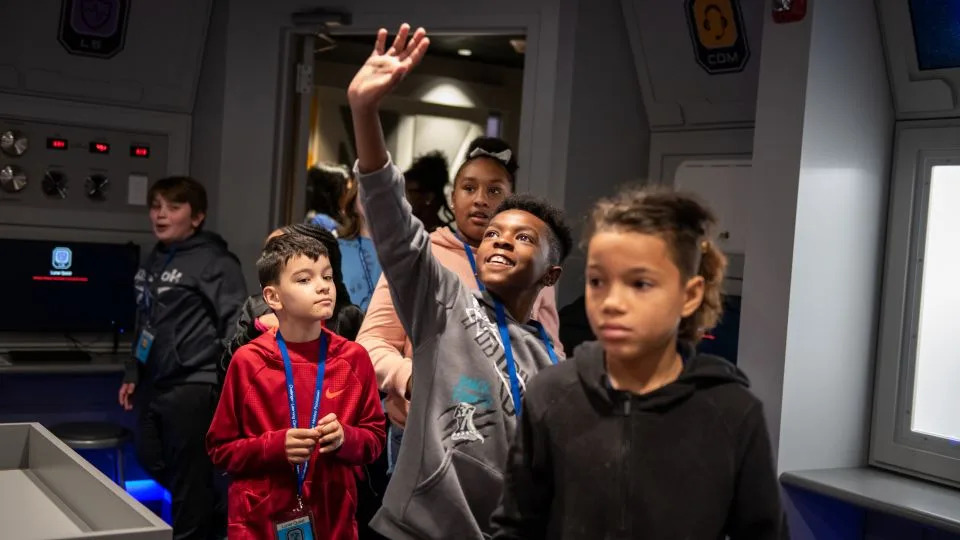
Students explore a simulation room in the Challenger Learning Center in Pottstown, Pennsylvania. - Challenger Center
“There was not one kid that wasn’t totally engaged in doing this,” said Dottie Metcalf-Lindenburger after visiting a Challenger Center, describing how the simulations draw out curiosity and collaboration.
Alumni of these programs have gone on to careers at NASA and in industry. Kenneth F. Harris II, now a senior project engineer at The Aerospace Corporation, credits a Challenger Center field trip and persistent curiosity—sparked by images such as Hubble’s "Pillars of Creation"—for steering him into aerospace engineering. He emphasizes the value of perseverance and teamwork, and he encourages alumni to mentor the next generation.
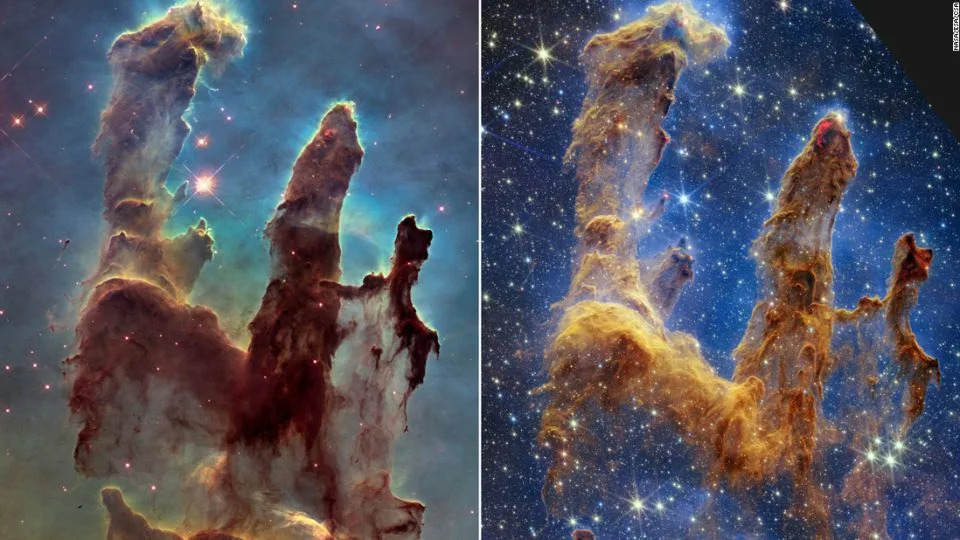
Hubble (left) and Webb each captured very different perspectives of the Pillars of Creation. - NASA/ESA/CSA
Why It Matters Now
As NASA prepares for deep-space missions under Artemis and commercial companies expand access to space, the range of STEM career pathways is broader than ever. Mike Kincaid, president and executive director of the Challenger Center, stresses that preparing students, parents and educators to understand and navigate these diverse opportunities is essential to ensure a robust, inclusive future workforce in the space sector.
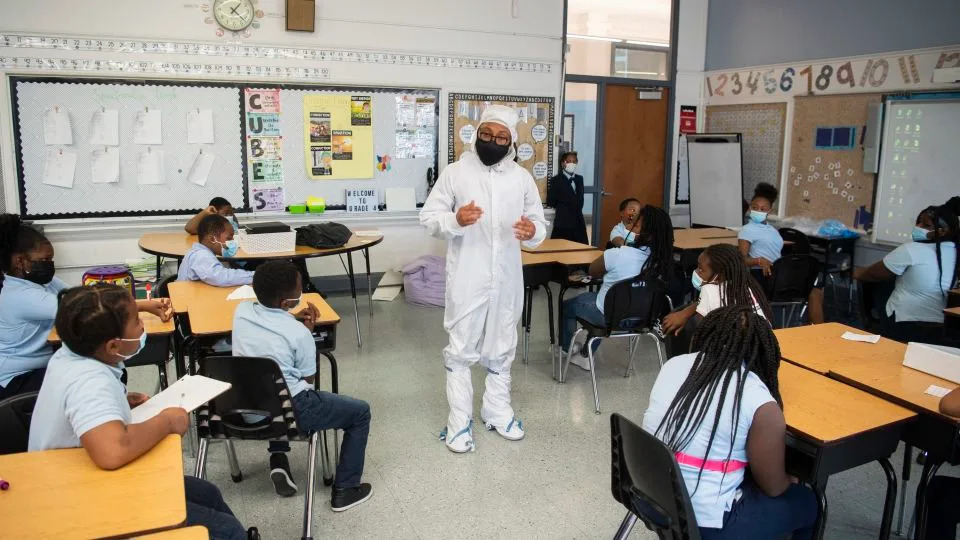
Kenneth Harris II is seen in a bunny suit, worn during spacecraft assembly to prevent contamination, as he speaks with students on November 18, 2021, at Garfield Elementary School in Washington, DC. - Joel Kowsky/NASA
Christa McAuliffe’s dream—that space can be for everybody—continues to guide education programs, astronaut training initiatives and community outreach, turning a painful loss into a global effort to inspire millions of students to reach for the stars.
Help us improve.