Suakin, the Red Sea island once known as the "White City" for its coral‑stone buildings, is gradually being restored despite years of decline and the disruption of recent fighting in Sudan. Teams funded by the British Council with UNESCO support are repairing mosques and other heritage sites, while local leaders and conservators hope cultural events and tourists will return when security improves. The town's fortunes were curtailed after the 1905 shift of commerce to Port Sudan and later by stalled projects following political upheaval and the 2023 fighting.
Suakin's Revival: Restoring Sudan's 'White City' for Tourism and Heritage
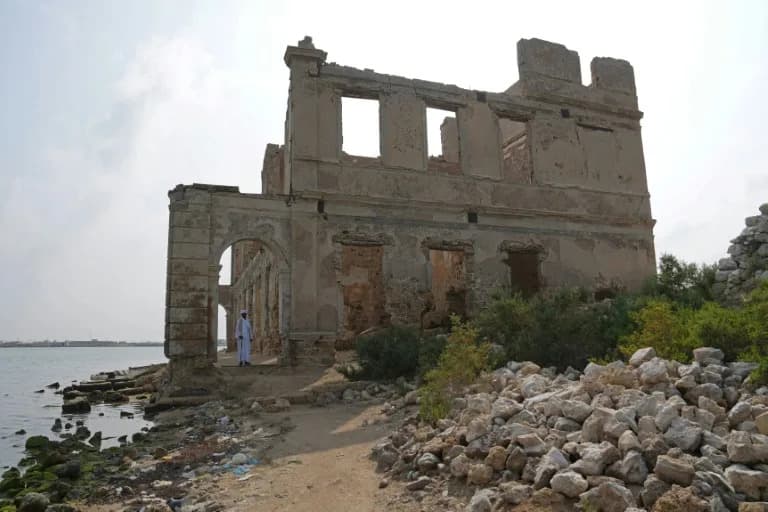
Local officials in the historic Sudanese city of Suakin hope the once-booming transit port turned tourist draw can be revived (Mutawakil ISSA)(Mutawakil ISSA/AFP/AFP)
Suakin, an ancient Red Sea port once nicknamed the "White City" for its coral‑stone architecture, is the focus of a small but determined campaign to restore its ruined buildings and revive tourism once peace returns to Sudan.
A City of Coral and History
Set on an oval island within a blue lagoon, Suakin served for centuries as a strategic trading hub and waystation for merchant caravans and pilgrims bound for Mecca and Jerusalem. Under Ottoman rule the town flourished, growing to an estimated population of about 25,000 and becoming a crowded, cosmopolitan crossroads, according to local officials and the Rome‑based heritage institute ICCROM.
"It was called the 'White City'," said Mayor Abu Mohamed El‑Amin Artega, a 55‑year‑old leader of the Artega tribe and part of the Beja ethnic group. He attributes the name to the town's distinctive houses and public buildings, built from coral stone quarried from the seabed.
Decline and Interrupted Renewals
The town's decline began in 1905, when the British developed a deeper commercial harbor 60 kilometres (37 miles) to the north at Port Sudan to handle growing traffic after the opening of the Suez Canal. Merchants and residents gradually migrated north, and Suakin's grand coral townhouses and public buildings were left to decay under humid winds and heat.
Suakin saw brief revivals: a passenger terminal opened in the 1990s linking the island with Jeddah, and in 2017 then‑president Omar al‑Bashir granted a 99‑year lease on the old port to Turkey for touristic development. A Turkish company restored several buildings, including the governor's palace, customs house and two mosques, but work stalled after Bashir's fall in 2019 and later because of renewed instability.
Restoration Amid Conflict
Despite ongoing national unrest and the April 2023 outbreak of fighting between the Sudanese army and the Rapid Support Forces (RSF) that halted tourism, small teams of conservators and volunteers are working to stabilise and repair heritage sites.
An engineer with Safeguarding Sudan's Living Heritage from Conflict and Climate Change (SSLH), Ahmed Bushra, says a restoration crew is rebuilding a mosque that contains the tomb of a Sufi sheikh. The project is funded by the British Council with technical support from UNESCO, and includes young professionals such as 23‑year‑old architecture student Doha Abdelaziz Mohamed, who says she was "stunned by the architecture" and by the traditional techniques used in construction.
"We are here to keep our people's heritage," Doha said.
Local ferry operator Tarco still runs daily crossings from the modern port near Suakin, carrying roughly 200 passengers per trip, but the international cruise and dive traffic that once stopped at the island largely disappeared after the 2023 fighting. A rusting cargo ship now lies stranded on a sandbank in the lagoon, a visible sign of the interruption to normal life.
Hope, Challenges And The Road Ahead
Restoration teams envision cultural events—Bushra hopes the mosque will host a traditional music festival when work is complete, saying the repairs could finish "in five months"—and they believe renewed international interest can return if and when security and investment follow.
Key obstacles remain: ongoing conflict, fragile funding, complex property and lease arrangements from the 2017 agreement, climate pressures on coral stone structures, and limited local resources. Advocates argue that careful, community‑led conservation could preserve Suakin's unique built heritage while providing sustainable tourism opportunities and economic benefits to local residents.
Suakin's story is both a reminder of the vulnerability of cultural sites in conflict zones and an example of how small-scale restoration, supported by international partners and local stewards, can keep alive a city's chance for renaissance.
Help us improve.