The UK publicly calls for accountability over atrocities in Sudan while reportedly rejecting more forceful measures behind the scenes, raising questions about its credibility. Simultaneously, British International Investment co-owns Berbera port in unrecognised Somaliland with UAE-linked DP World, creating a perceived conflict with London’s official support for Somalia’s territorial integrity. Analysts warn this dual-track approach risks undermining local accountability, political bargaining and Britain’s moral authority in the Horn of Africa.
Is the UK Playing a Double Game in the Horn of Africa? Sudan and Somaliland Under Scrutiny
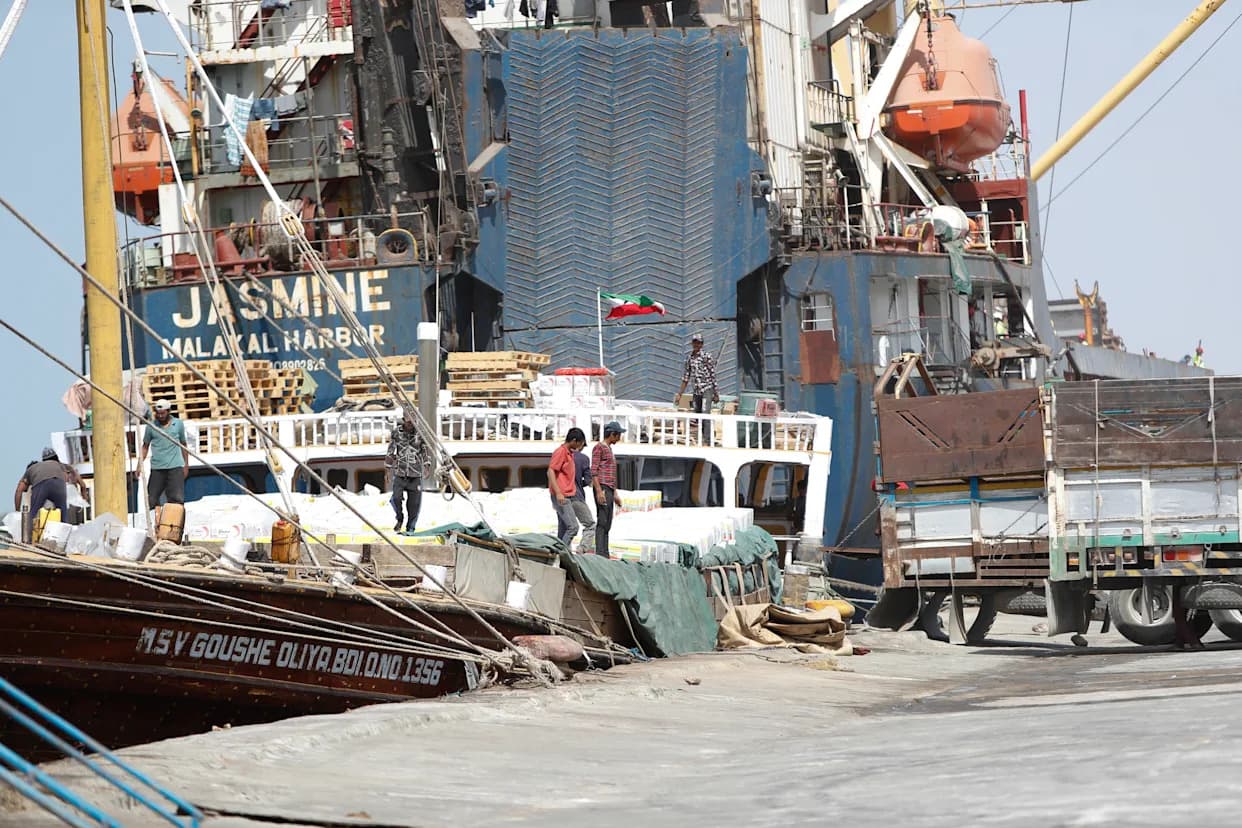
Workers offload goods from a docked ship at the seaport of Berbera in Somaliland, a breakaway region of Somalia, Thursday, February 10, 2022 [Brian Inganga/ AP Photo]
As the war between Sudan’s regular army and the Rapid Support Forces (RSF) continues to inflict heavy civilian suffering, the UK has publicly called for accountability. Yet reporting suggests London privately rejected more assertive measures to prevent atrocities — a discrepancy that analysts say raises questions about Britain’s credibility across the Horn of Africa.
UK Response in Sudan
British officials have repeatedly warned of mass civilian deaths and destruction in Sudan and urged a ceasefire, humanitarian access and a transition to civilian rule. At the same time, internal documents and reporting indicate the UK favoured what some described as the "least ambitious" diplomatic approach as violence escalated — even while allegations emerged that external actors, notably the United Arab Emirates, supplied or supported the RSF. Abu Dhabi has denied these claims.
"The crisis in Sudan is the worst we have seen in decades — the UK government is working with allies and partners to end the violence and prevent further atrocities from occurring. We need both the parties to support a ceasefire; this means unrestricted humanitarian access and a peace process with transition to a civilian government." — UK Foreign Office, response to Al Jazeera
Berbera, Somaliland and Commercial Ties
Further east, London officially supports Somalia’s territorial integrity while the UK — through its development finance arm, British International Investment (BII) — co-owns a stake in Berbera port. The port is operated by DP World (a UAE-based firm) in partnership with Somaliland’s de facto authorities, despite neither the UK nor the UAE formally recognising Somaliland’s independence.
Berbera sits near a vital maritime corridor between the Red Sea and the Indian Ocean and has been described in a UK Foreign Office-commissioned impact assessment as "a strategic gateway" and a potential alternative corridor for landlocked Ethiopia. Historically, Berbera has been treated as strategic infrastructure: a British coaling station, a Soviet naval base, and now a regional logistics hub shaped by Gulf and Western investments.
Allegations, Perceptions and Regional Politics
United Nations experts and international media have linked networks in the region to alleged supply routes used to arm the RSF; the UAE has rejected these accusations. Critics say the UK’s commercial entanglement with a port operated by a close regional partner accused of backing one side in Sudan creates a perception problem that undermines its moral standing.
"When people believe your words and your actions diverge, they stop treating you as a broker and start treating you as an interest manager." — Amgad Fareid Eltayeb, Sudanese policy analyst
Analysts' Concerns
Analysts and regional experts describe London’s posture as a "dual-track" policy: formally backing Mogadishu while engaging Somaliland as a functioning de facto authority because it provides stability, port access and counterterrorism cooperation. Critics warn this risks weakening incentives for meaningful political negotiations, undermining local accountability, and blurring lines between economic engagement and political influence.
Matthew Sterling Benson (LSE) warns that large external investments can change local "fiscal contracts" — shifting who controls revenues, who benefits economically, and who gains political leverage. Abdalftah Hamed Ali, an independent Horn of Africa analyst, says ports are "nodes in a security and influence ecosystem," and investment inevitably acquires political meaning.
Recent Developments
The diplomatic sensitivity around Somaliland increased after Israel became the only country recently to formally recognise Somaliland’s independence — a move condemned by Mogadishu and rejected by much of the international community. In 2023, critics also accused the UK of suppressing a report into civilian killings in Somaliland; British officials said security and diplomatic considerations guided that decision.
Conclusion
Read together, decisions in Sudan and Somaliland suggest a consistent UK approach: preserve access and partnerships while avoiding actions that would limit flexibility or provoke regional partners. While this strategy may protect short-term influence, analysts warn it can carry longer-term costs — including damaged credibility and diminished ability to press effectively for political compromise and accountability in a tightly contested region.
Help us improve.