Sidi Bou Said, the iconic blue-and-white village above Carthage, faces heightened landslide risk after Tunisia’s heaviest rainfall in more than 70 years, which killed at least five people. Mudslides, fallen trees and blocked streets have damaged century-old homes and forced closures, including the Ennejma Ezzahra Museum. Experts warn the clay-rich hill loses much of its cohesion when saturated and point to marine erosion, rising construction and climate change as drivers of instability. Authorities have imposed access restrictions but have not yet released a formal protection plan.
Record Rains Leave Tunisia’s Iconic Sidi Bou Said at Risk of Landslides
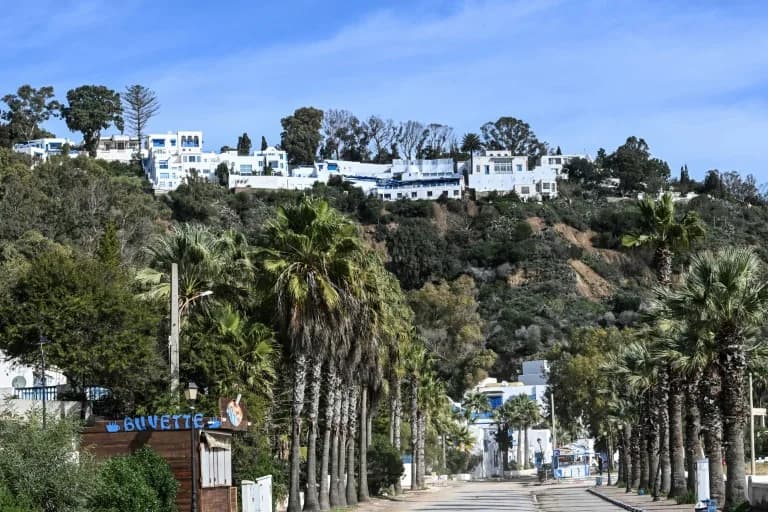
A photograph shows buildings on the heights of Sidi Bou Said on January 27, 2026, after the region was hit by Storm Harry. Authorities have ordered the evacuation of several homes at risk of collapsing in the tourist village. (FETHI BELAID)(FETHI BELAID/AFP/AFP)
Perched above ancient Carthage, the blue-and-white hilltop village of Sidi Bou Said now faces an increased risk of landslides after Tunisia suffered its heaviest rainfall in more than 70 years. The storm has killed at least five people, with others still reported missing, and ripped through sections of the village’s slopes.
Immediate Impact
Narrow lanes in the village north of Tunis — famed for pink bougainvillea and ornate wooden doors — were blocked by fallen trees, displaced rocks and thick clay. Portions of the hillside have detached and slipped, prompting officials to ban heavy vehicles from entering the area and to order temporary closures of some businesses and cultural sites, including the Ennejma Ezzahra Museum.
Residents’ Accounts
Many residents were forced from their homes. "Everything happened very fast," said Maya, 50, who declined to give her full name after abandoning her century-old family villa. "I was with my mother and, suddenly, extremely violent torrents poured down. I saw a mass of mud rushing toward the house, then the electricity cut off. I was really scared."
"Some homes are threatened by imminent danger," said Mounir Riabi, Regional Director of Civil Defence in Tunis, adding that the situation "requires urgent intervention."
On-site worker Said Ben Farhat described waterlogged earth sliding from the hill and destroying part of a kitchen wall. "Another rainstorm and it will be a catastrophe," he warned.
Economic And Cultural Consequences
Shop owners say the ban on heavy vehicles and the disruption to tourist access compounds their losses; many businesses depend on tourist buses. When President Kais Saied visited the village, vendors were heard shouting, "We want to work." Trader Mohamed Fedi told AFP that many shops have closed and that local businesses support the livelihoods of roughly 200 families.
Why The Hill Is Vulnerable
The village is not only architecturally distinctive but also historically and spiritually significant: it is named after the 12th-century Sufi saint Abu Said al-Baji, whose shrine still crowns the hill. Sidi Bou Said — once home to figures such as philosopher Michel Foucault and writer André Gide — is protected under Tunisian preservation law and is awaiting a UNESCO decision on a World Heritage nomination.
Geologist Chokri Yaich told Tunisian radio Mosaique FM that the hill’s clay-rich soil can lose up to two thirds of its cohesion when saturated with water, making slopes highly unstable. He also cited marine erosion and the additional weight of urbanisation, noting construction on the hill has risen by about 40 percent over the past three decades. Yaich and other experts warn that climate change is likely to make intense storms more frequent.
What Experts Recommend
Suggested measures to protect Sidi Bou Said include stricter limits on new development, construction of additional retaining walls, and major upgrades to drainage systems to reduce runoff and waterlogging. So far, authorities have not announced a formal protection plan, leaving residents and shopkeepers anxious as the weather remains unpredictable.
Current status: Emergency access restrictions and temporary closures are in place; assessments and protective measures are urgently needed to prevent further damage and potential loss of life.
Help us improve.