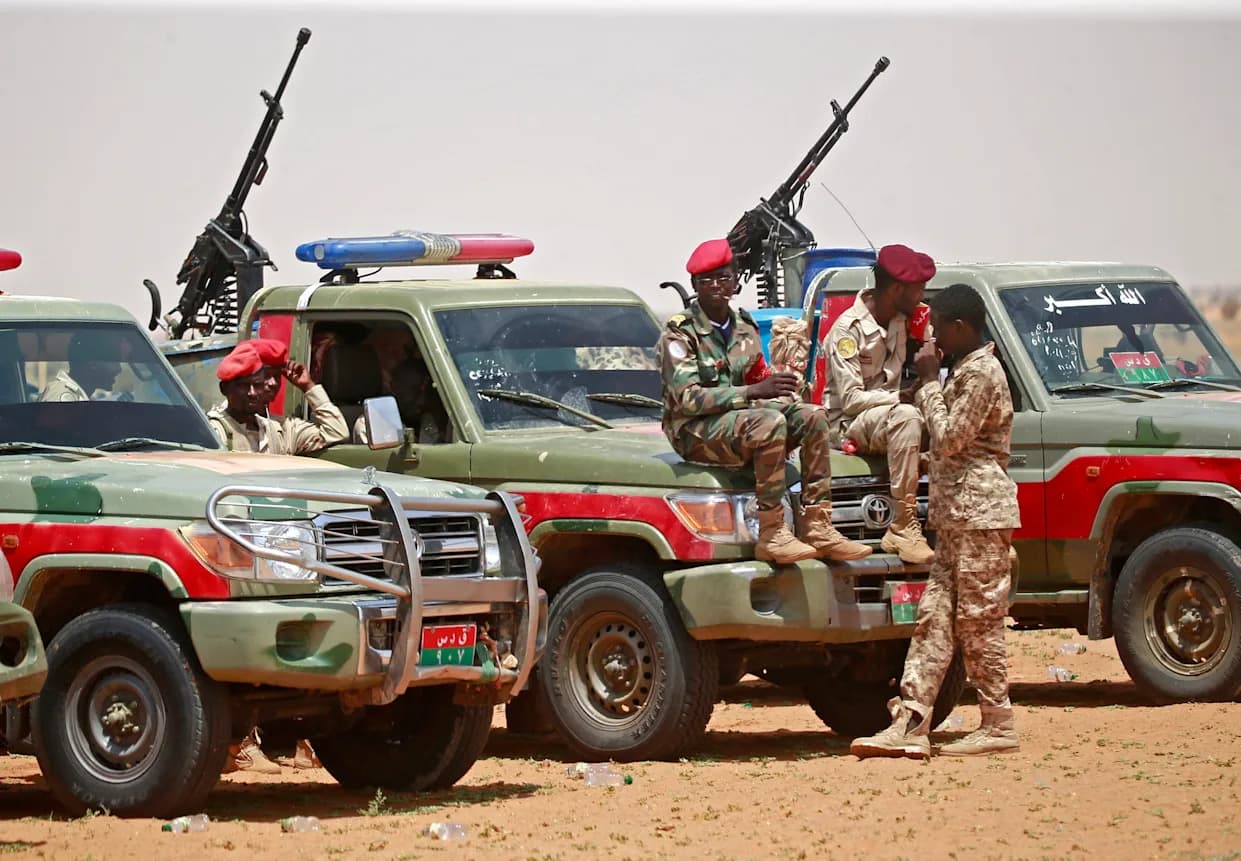
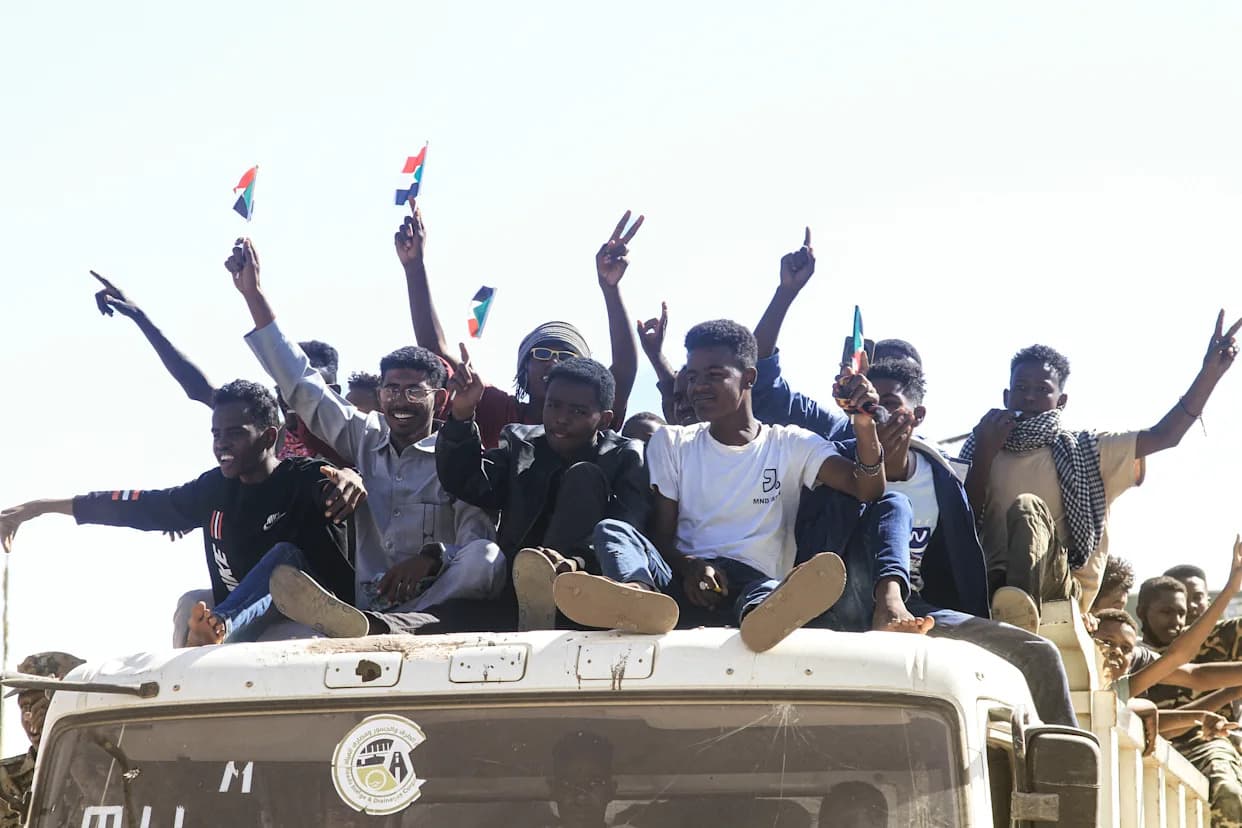
Diplomatic talks resumed in Cairo as mediators urged Sudan’s warring sides to accept a nationwide humanitarian truce with the conflict nearing its third year. Egypt warned it would not tolerate Sudan’s disintegration or the recognition of rival authorities, while the U.N. and regional partners pushed for withdrawals and protected humanitarian corridors. The U.S. brokered the first aid delivery to besieged el‑Fasher in 18 months, even as recent attacks in Jarjira and Sinja killed dozens and displaced thousands. Humanitarian groups accuse the RSF of war crimes and call for stronger protections for civilians.
Cairo Talks Restart as Sudan War Nears Three-Year Mark — Mediators Push Nationwide Humanitarian Truce
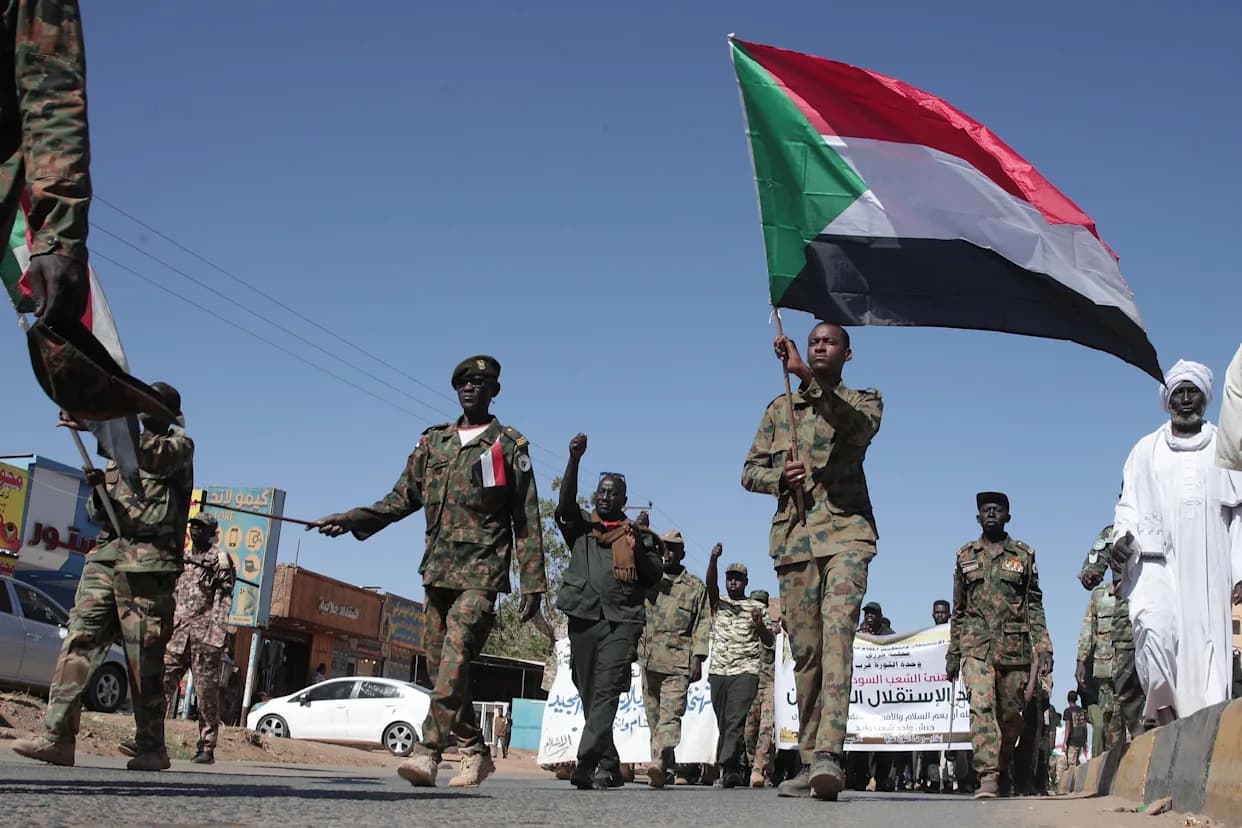
Sudanese army soldiers parade in the streets of Omdurman, a district of Khartoum, Sudan, Wednesday, Dec. 31, 2025, to mark the 70th anniversary of the Sudan Independence. (AP Photo/Marwan Ali)
CAIRO (AP) — Diplomacy resumed in Cairo on Wednesday as Egypt and the United Nations urged Sudan’s warring parties to accept a nationwide humanitarian truce, with fighting between the Sudanese military and the paramilitary Rapid Support Forces (RSF) approaching its third year.
Egyptian Foreign Minister Badr Abdelatty told reporters that Cairo would not tolerate the collapse of Sudan or its institutions, nor any attempt to divide the country — calling such outcomes “red lines.” Abdelatty said Egypt would not stand idle and would take necessary measures to help preserve Sudan’s unity.
“There is absolutely no room for recognizing parallel entities or any militias. Under no circumstances can we equate Sudanese state institutions, including the Sudanese army, with any other militias,” he said on the sidelines of the fifth meeting of the Consultative Mechanism to Enhance and Coordinate Peace Efforts. Ramtane Lamamra, the U.N. secretary‑general’s personal envoy for Sudan, said the meeting showed diplomacy remains a viable route to peace.
The RSF and Sudan’s military have been at war since April 2023. The conflict has been marked by repeated atrocities and has pushed Sudan into one of the world’s worst humanitarian crises.
Abdelatty said regional actors have agreed on measures intended to secure an immediate humanitarian truce, including specified withdrawals and the creation of protected humanitarian corridors to allow aid to reach besieged communities.
Humanitarian Aid
Massad Boulos, the senior U.S. adviser for Arab and African Affairs, attended the talks and said more than 1.3 metric tons of humanitarian supplies entered el‑Fasher, the capital of North Darfur, on Wednesday — the first such delivery since the RSF besieged the city 18 months earlier and captured it in October. Boulos wrote on X that the delivery followed American-led negotiations.
“As we press the warring parties for a nationwide humanitarian truce, we will continue to support mechanisms to facilitate the unhindered delivery of assistance to areas suffering from famine, malnutrition, and conflict-driven displacement,” he wrote.
Egyptian President Abdel Fattah el‑Sissi spoke with Boulos about boosting coordination between the two countries to help stabilize Sudan; the Egyptian presidency said el‑Sissi expressed appreciation for U.S. President Joe Biden’s efforts to help end the conflict.
The United States, together with Saudi Arabia, Egypt and the United Arab Emirates — a group often referred to as the Quad — proposed a humanitarian truce that both sides reportedly accepted in principle, but sustained fighting has continued.
U.S. officials have accused the RSF of committing genocide in Darfur during the conflict, and human rights groups have accused the RSF of war crimes during sieges and captures of cities including el‑Fasher. The Sudanese military has faced separate accusations of human rights violations.
Latest Wave Of Violence
The U.N. Office for the Coordination of Humanitarian Affairs (OCHA) reported that at least 19 civilians were killed during ground operations in Jarjira, North Darfur, on Monday. A Darfur rebel faction allied with the military said it carried out a joint operation with the army in Jarjira, liberating the area and forcing RSF fighters to retreat south.
OCHA and the Sudan Doctors Network reported a drone strike on Monday in Sinja, the capital of Sennar province, that killed at least 10 people and injured nine others. The Sudan Doctors Network blamed the RSF for the strike and said civilians were being deliberately targeted in what it described as a "full‑fledged war crime.” The group held the RSF fully responsible and demanded an immediate end to attacks on civilians and civilian infrastructure.
Recent violence has displaced more than 8,000 residents from North Darfur villages; many have moved to safer locations within the province while others have crossed into Chad, according to the International Organization for Migration.
The Cairo meeting underscored regional and international urgency to halt hostilities and expand humanitarian access, but officials and aid groups warned that securing a sustained truce will require verification, access guarantees and pressure on all armed actors to comply.
Help us improve.