Quili.AI will route all prompts on January 31 to human responders in Quilicura, Chile, as part of a 24-hour “day without AI.” The action, led by Corporación NGEN, highlights the heavy water use of data centers amid Chile’s prolonged megadrought and aims to make AI’s environmental costs more visible. Up to 50 volunteers — artists, teachers and neighbors — will answer queries, and the Quili.AI site will estimate how many liters of water users saved by consulting people instead of models.
Quili.AI’s ‘Day Without AI’: Chilean Town Replaces Algorithms With Human Answers to Spotlight Data Center Water Use
[Photo: Quili.AI]
On January 31, anyone who submits a question to Quili.AI will get an answer from a resident of Quilicura, Chile — not a large language model. The one-day experiment, organized by environmental group Corporación NGEN, aims to demonstrate the environmental cost of AI and encourage people to think more deliberately about when they rely on automated systems.
What Happens On The Day
Instead of routing queries through remote servers and data centers, Quili.AI will forward each prompt to a live responder in Quilicura. Up to 50 volunteers — including artists, teachers and other community members — will gather in a shared space to read and reply to questions over a 24-hour period. Responses will come from lived experience, cultural knowledge and human judgment; they may not always be instant, but organizers say volunteers will strive to answer as many prompts as they can.
Why Quilicura?
Quilicura — on the outskirts of Santiago — has become a hub for data center development. Local authorities have approved roughly 16 facilities for the area since 2012, and Google opened a Latin American data center there in 2015. Data centers consume large amounts of electricity and substantial quantities of water to cool equipment, a concern made urgent by Chile’s ongoing 15-year megadrought.
“We’re inviting people to have a day without AI,” says Lorena Antiman of Corporación NGEN through a translator. The group also works to protect Quilicura’s threatened wetlands.
Environmental Context
Estimating AI’s water footprint is complex, but reporting has offered concrete illustrations. A Washington Post analysis estimated that producing a 100-word response with GPT-4 could consume roughly 519 milliliters of water. Reporting based on environmental records has also put the water use of one Quilicura data center at about 50 liters per second — a rate comparable to the combined usage of thousands of households, though companies have disputed or clarified some figures in follow-up statements.
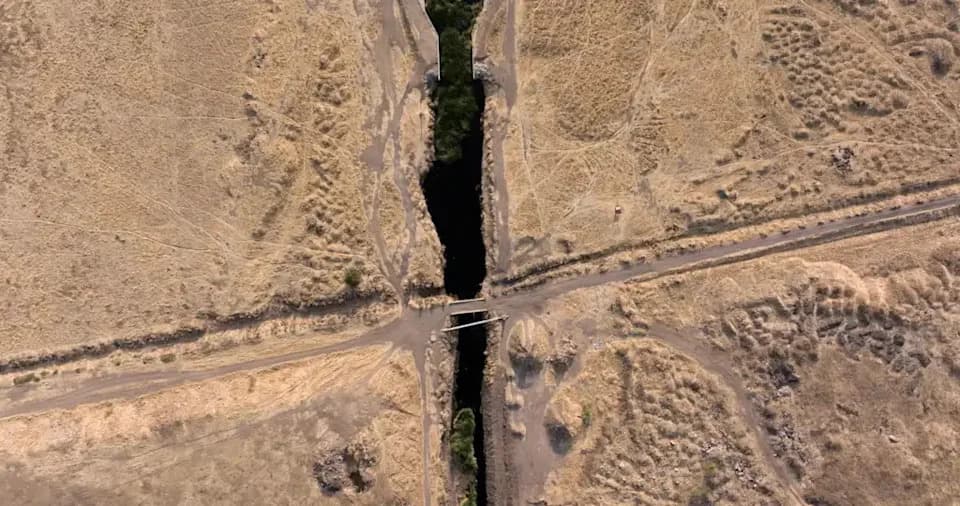
Activists in Quilicura have documented wetland loss with before-and-after photos that show parched areas even in seasons that should be wet. Organizers say Quili.AI is designed to make those often-invisible impacts more visible to users of AI around the world.
Human Answers, Digital Visibility
Volunteers will respond with their own skills: ask Quili.AI for an image and a local artist might draw it; request a recipe and a neighbor may share a family favorite. The Quili.AI site will also estimate and display how many liters of water a user “saved” by consulting a person instead of querying an automated model, turning the environmental trade-offs into a tangible metric.
Antiman hopes the action encourages people to adopt more deliberate habits around AI — similar to efforts to save water and electricity — and to rediscover local knowledge and neighborly help. “The most magical thing about the Quili.AI project is that the community is the one working on it,” she says. “They’re all coming together to make this happen.”
Originally reported by Fast Company. Quili.AI is open to anyone worldwide on January 31; responses are provided by volunteers in Quilicura during the 24-hour event.
Help us improve.