Chile faces one of its most severe wildfire crises in years: at least 20 dead, over 50,000 evacuated and thousands of hectares burned. Scientists point to a dangerous mix of a decade-long drought, record heat, powerful winds and extensive pine and eucalyptus plantations that create continuous, highly flammable fuels. Wind-driven embers, human-caused ignitions and post-fire runoff are producing cascading health and environmental hazards. Experts say firefighting must be paired with prevention, fuel management and community redesign to reduce future risk.
Why Chile’s Wildfires Are Spreading Faster and Burning Hotter
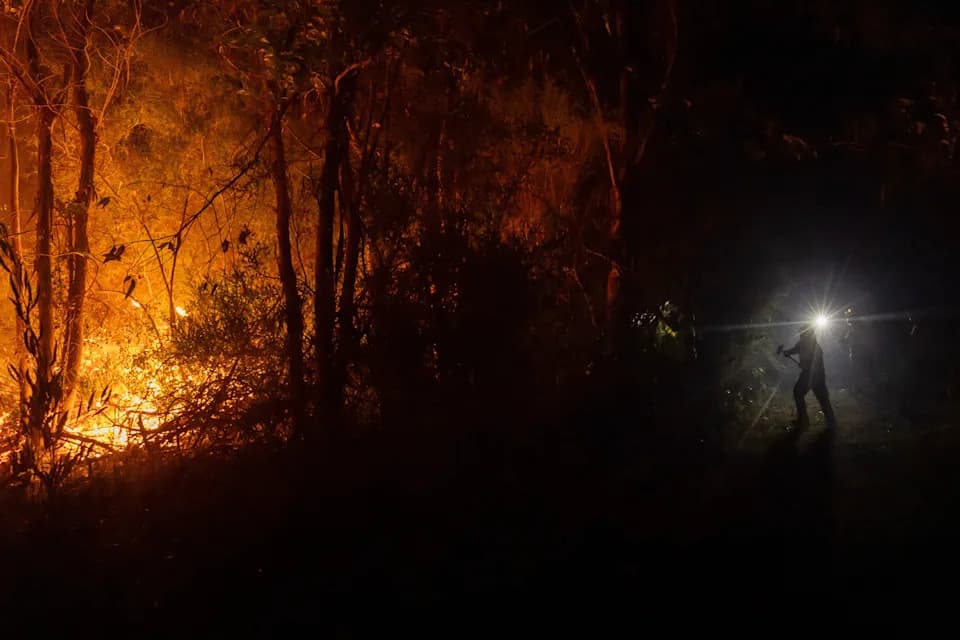
FILE - Firefighters battle a wildfire spreading through a forested area near Concepcion, Chile, Tuesday, Jan. 20, 2026. (AP Photo/Javier Torres, File)(ASSOCIATED PRESS)
Chile is confronting one of its worst wildfire emergencies in years as fast-moving, high-intensity blazes sweep through central and southern regions. The fires have reduced large tracts of forest and entire communities to ash, killed at least 20 people, forced more than 50,000 residents to evacuate and left many families sifting through charred ruins.
Fire scientists say the current conflagrations are driven not only by extreme heat, prolonged drought and strong winds, but also by how human-shaped landscapes — especially industrial plantations — interact with a warming climate. That combination is producing fires that move faster, burn hotter and are far harder to control.
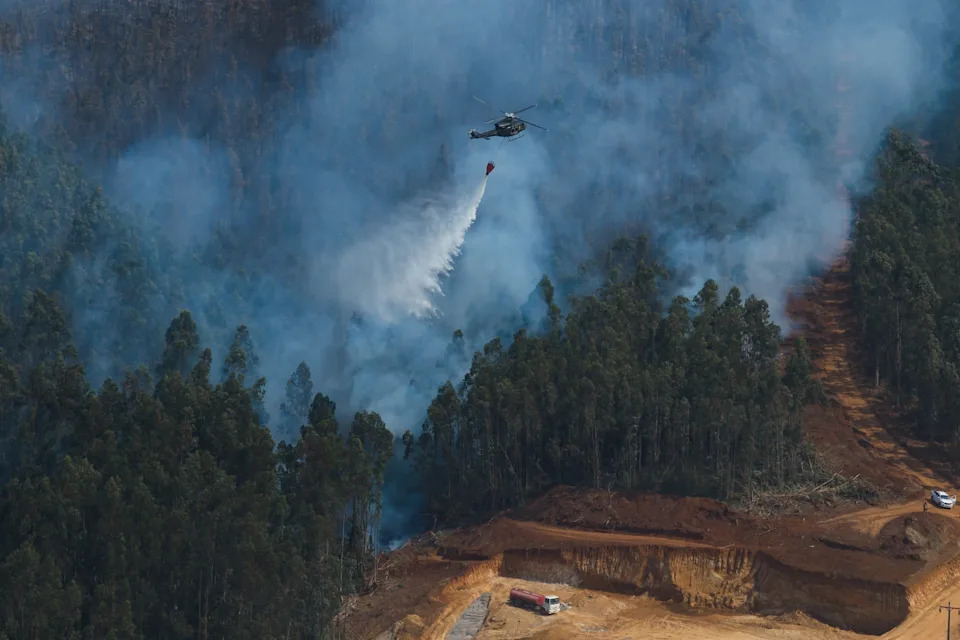
FILE - A helicopter drops water to battle wildfires near Concepcion, Chile, Jan. 19, 2026. (AP Photo/Javier Torres, File)(ASSOCIATED PRESS)
The largest outbreaks began in mid-January in the Biobío and Ñuble regions, roughly 500 kilometers (about 300 miles) south of Santiago. Within days the government declared a state of catastrophe — a rare emergency designation that enables military coordination for firefighting and relief operations — as dozens of active blazes threatened towns and infrastructure.
Scale and Speed of the Fires
What stands out this season is not a surge in the number of ignitions but the vastly greater area those fires are consuming. "We are almost tripling the amount of affected area," said Miguel Castillo, director of the Forest Fire Engineering Laboratory at the University of Chile, even though the total number of fires is within or below typical ranges. In other words, fewer fires are causing much larger losses — a pattern seen increasingly in extreme wildfire seasons worldwide.
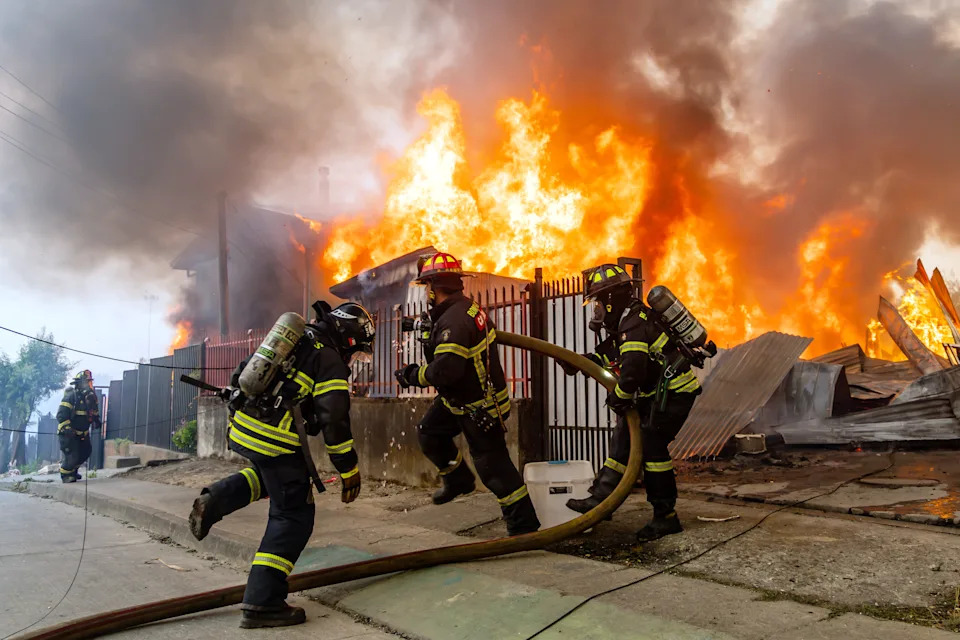
FILE - Firefighters battle a blaze at a house as wildfires burn in Lirquen, Chile, Jan. 18, 2026. (AP Photo/Javier Torres, File)(ASSOCIATED PRESS)
"This is a huge challenge for firefighters," said Virginia Iglesias, director of Earth Lab at the University of Colorado Boulder. She noted that multiple blazes of different sizes are often advancing toward communities at once.
Heat, Drought and Wind
Chile is emerging from a more-than-decade-long drought that has left forests, plantations and scrub unusually dry. High summer temperatures and erratic, powerful winds have further amplified the hazard. "The hotter and drier things are, the more fuel becomes available to burn," said Mark Cochrane, a fire ecologist at the University of Maryland's Center for Environmental Science.
Winds both push flames across the landscape and loft burning embers ahead of the main front, igniting new fires well beyond containment lines. In steep terrain and during strong wind events, embers and spot fires make suppression extremely difficult.
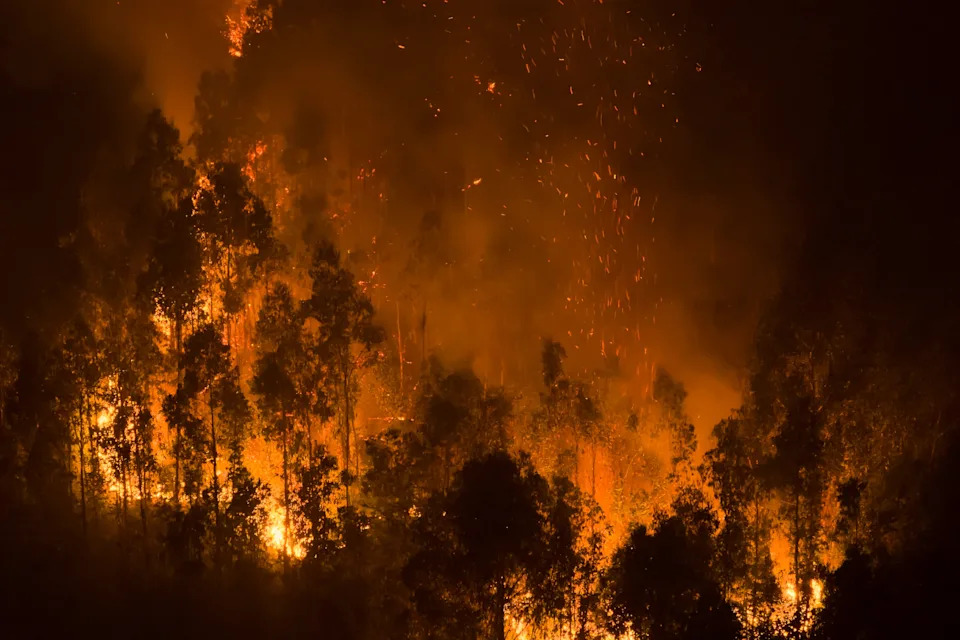
FILE - Wildfires burn near Concepcion, Chile, Jan. 19, 2026. (AP Photo/Javier Torres, File)(ASSOCIATED PRESS)
Why Plantations Burn Differently
Large swaths of central and southern Chile are planted with industrial pine and eucalyptus for timber and pulp. These monoculture plantations often have continuous, high fuel loads and uniform tree ages. When not actively managed, they develop dense understory and "ladder fuels" — branched growth that lets flames climb into the crowns and trigger intense crown fires.
"Pine and eucalyptus are very flammable and can send embers far ahead of the main fire," Cochrane said. Native forests, by contrast, are typically more diverse and, in many areas, retain higher humidity levels that can slow fire spread.
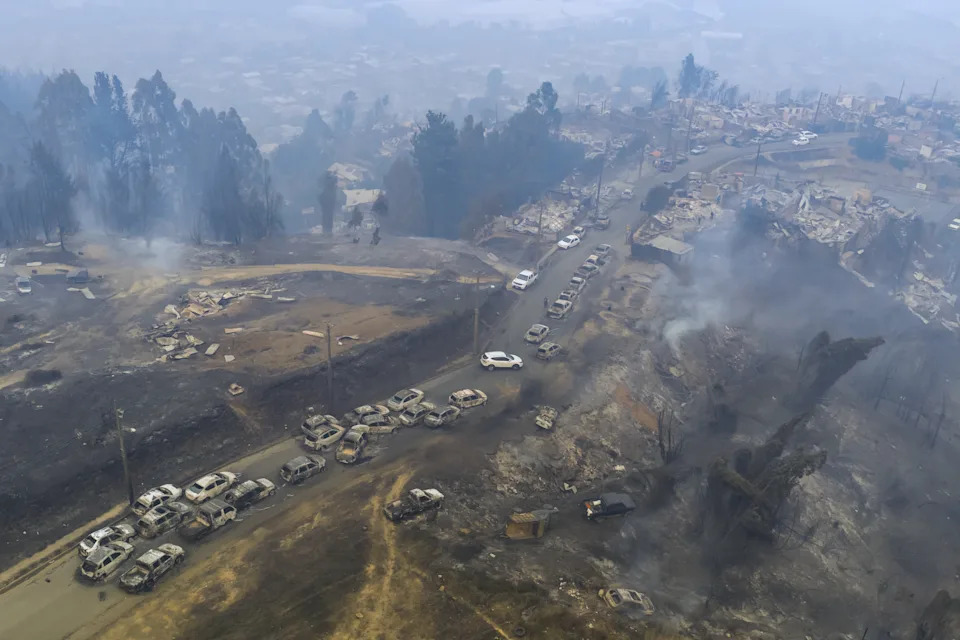
FILE - Damaged vehicles line a road after wildfires swept through residential areas in Lirquen, Chile, Jan. 18, 2026. (AP Photo/Javier Torres, File)(ASSOCIATED PRESS)
Causes and Cascading Environmental Impacts
Experts say nearly all recent wildfires in Chile are linked to human activity, whether accidental or deliberate. Ignitions can come from power lines, agricultural burns, recreation and infrastructure, and human-caused starts can extend the fire season beyond lightning-driven events.
The impacts go beyond burned trees. Thick smoke degrades air quality over wide areas, posing serious health risks for vulnerable populations. After intense burns, soils may become water-repellent, increasing runoff and the risk of floods and landslides. Sediment and ash washed into rivers can contaminate drinking-water supplies and raise treatment costs.
Alejandro Miranda of Chile’s Center for Climate and Resilience Research warns that intense fires can permanently change ecosystems: invasive species — including some commercial pines — may regenerate faster than native species, potentially locking landscapes into a more fire-prone state.
What Comes Next
Scientists and officials emphasize that while firefighting capacity is vital, prevention and long-term planning are equally important. Practical steps include reducing ignition sources, improving plantation and landscape management, creating defensible space around homes, investing in early warning systems and addressing the underlying driver of many extreme seasons: climate change.
"These are concrete actions we can take to reduce the fire problem," Iglesias said. The scale of this season underscores how rapidly climate, land use and human activity together can transform wildfire behavior — and how urgent it is to adapt policies and practices to reduce risk.
Reporting compiled from Associated Press coverage and expert interviews.
Help us improve.