Foreign adversaries are spending billions and using generative AI to scale disinformation targeting U.S. voters. Russia, China and Iran have sharply increased budgets for state media and influence operations, while AI makes mass manipulation cheaper and faster. The author warns that treating elections as a short-term crisis is a strategic mistake — resilience must be built year-round through coordinated, White House-led action.
Billions and Bots: How China, Russia and Iran Are Using AI To Influence the U.S. Midterms
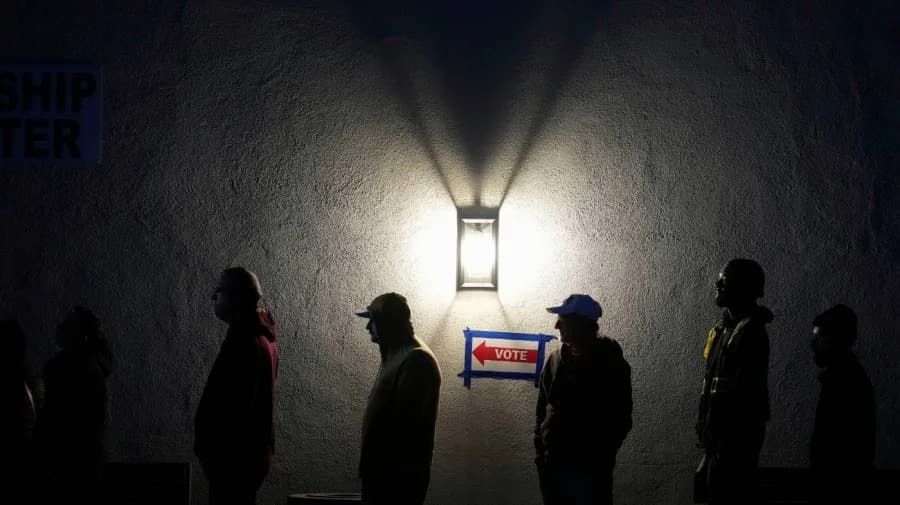
On Jan. 15, Lt. Gen. Joshua Rudd, President Trump’s nominee to lead the National Security Agency and U.S. Cyber Command, told the Senate Armed Services Committee he would employ the nation’s full cyber capabilities to guard the United States against foreign meddling in the upcoming midterm elections.
That reassurance is important, but modern information warfare demands far more than military vigilance at Fort Meade. Protecting American elections requires a coordinated, whole-of-government strategy across the interagency — and decisive political leadership from the White House.
Why the Threat Is Growing
Adversary states are dramatically increasing spending on influence operations and pairing that money with industrial-scale artificial intelligence. Russia’s 2026 budget, for example, boosts funding for state media and information operations by 54 percent — an additional $458 million — reflecting a deliberate shift toward a steady “firehose of falsehood.”
China is retooling its influence apparatus as well. Forensic analysis of the 15th Five-Year Plan (2026–2030) and current fiscal trends shows Beijing reorganizing its efforts into a capital-intensive “Cognitive Domain” approach. Aggregate annual spending on foreign influence is projected to exceed $10 billion this year; the United Front Work Department alone could see a budget on the order of $4 billion, more than the operating budget of China’s Ministry of Foreign Affairs.
Even Iran — despite hyperinflation above 40 percent — has prioritized information operations. The 2025 appropriation for the Islamic Republic of Iran Broadcasting was set at about $580 million, a 46 percent year-over-year increase, signaling that Tehran is diverting scarce resources to sustain its propaganda reach.
AI Has Changed the Economics of Influence
The dollars are underwriting a new category of weapon: generative AI at industrial scale. Where interference in 2016 often relied on human-run troll farms, today’s tools automate that labor. A single actor can now manage thousands of distinct personas and produce vast volumes of convincing, original content. At the same time, the barrier to entry has collapsed: commercial AI subscriptions make sophisticated influence capabilities widely available to state and nonstate actors alike.
There is no quick fix: years of adversarial conditioning and narrative-building cannot be erased in a single news cycle.
The Problem With the 'Super Bowl Fallacy'
Too many U.S. agencies still treat elections as the "Super Bowl" of influence: a predictable, short window that warrants a late-season surge of attention. But the information environment is a constantly shifting mosaic, and democratic resilience is forged in the quieter off-season. Adversaries exploit those gaps — deepening social fissures, planting damaging narratives and building AI-enabled networks long before ballots are cast.
What Must Be Done
Gen. Rudd’s pledge to use cyber tools is necessary, but not sufficient. Congress and the White House should commit to a sustained, whole-of-government strategy that invests in long-term resilience: public-awareness campaigns, support for independent media and civil society, stronger platform accountability, robust intelligence-sharing with allies, and continuous disruption of adversary influence operations.
If policymakers wait until the weeks before the election, they will be contesting narratives and networks that adversaries began building years earlier. Delay is costly and avoidable.
Darjan Vujica served as a senior official at the State Department and was most recently the emerging technology coordinator at the U.S. Embassy in New Delhi and director of the Global Engagement Center’s Analytics Directorate.
Copyright 2026 Nexstar Media, Inc. All rights reserved. This material may not be published, broadcast, rewritten, or redistributed.
Help us improve.