A study published in Nature Communications compares resettlement counts from 300 rural dam projects (1975–2010) across 35 countries with major grid-based population datasets and finds that rural populations may be underestimated by 53%–84% in some sources. Researchers matched dam compensation records with satellite imagery to produce on-the-ground tallies, arguing these provide a useful validation check. Experts caution that while rural undercounts are plausible and important for policy, the claim that billions of people are missing from global totals requires additional independent validation.
New Study Suggests Rural Populations May Be Vastly Undercounted — But Experts Urge Caution
Are There More Humans on Earth Than We Thought?Alexander Spatari - Getty Images
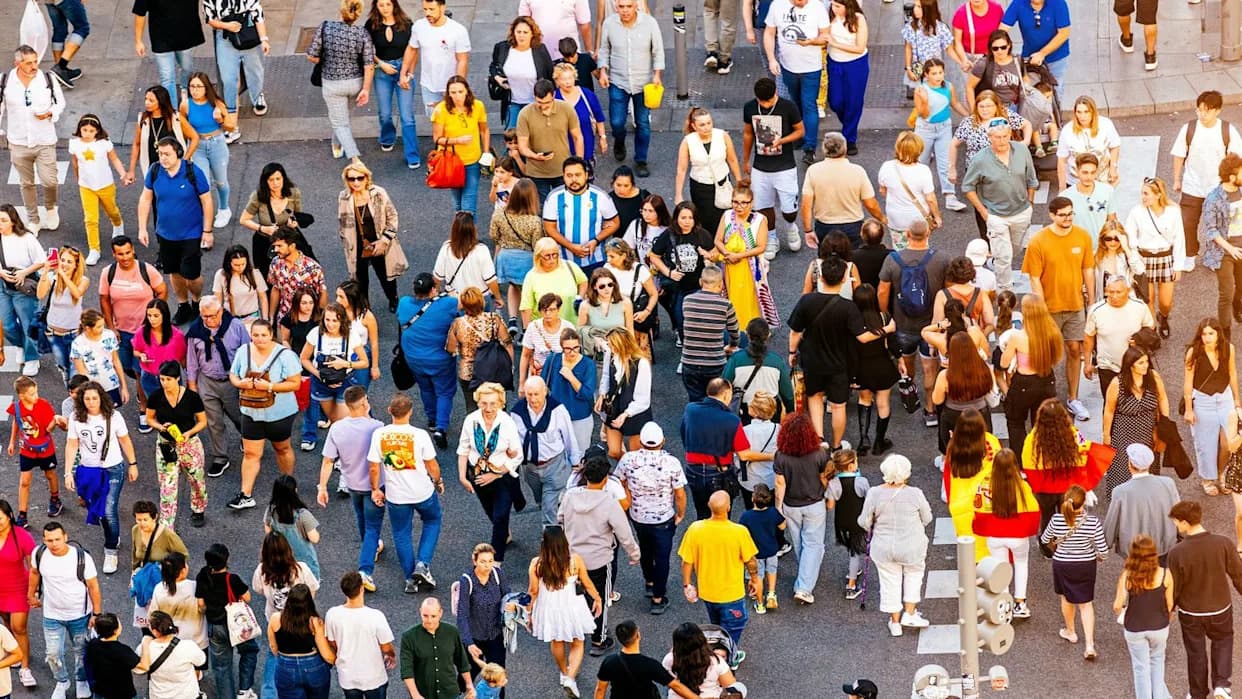
Most estimates put the global population at roughly 8.2 billion, but a recent study argues that widely used population datasets may substantially undercount people living in rural areas. The research, led by Josias Láng-Ritter, a postdoctoral researcher at Aalto University, was published in Nature Communications and compares local resettlement records from dam projects to major grid-based population datasets.
The team analyzed compensation and relocation counts associated with 300 rural dam projects across 35 countries for the period 1975–2010. These project records—which developers typically create to determine and pay compensation—were combined with satellite imagery to map affected communities and then compared with estimates from WorldPop, GWP, GRUMP, LandScan and GHS-POP.
Key Findings
The authors report large discrepancies: depending on the dataset, rural populations in the sampled areas appear to have been underestimated by roughly 53% to 84% over the study period. The study’s central claim is that dam resettlement records offer a ground-truth check on grid-based population products that are frequently used in research and policy planning.
“We were surprised to find that the actual population living in rural areas is much higher than the global population data indicates,” Láng-Ritter said in a statement. “These datasets have supported thousands of studies and decisions, yet their accuracy has not been systematically evaluated against many local on-the-ground counts.”
Why The Discrepancy Might Exist
Several factors could explain why grid-based datasets miss people in rural regions: censuses are costly and logistically difficult in remote areas, administrative boundaries can mask dispersed settlements, and gridded models may redistribute population to nearby built-up cells rather than where small, scattered households actually live. The study suggests that local, project-level records—particularly when paired with satellite imagery—can reveal pockets of undercounted residents.
Implications And Skepticism
If rural undercounts are widespread, the consequences could be significant: misallocated funding, inadequate health and education services, and misleading assessments of land use and development needs. However, many demographers and census experts urge caution. Stuart Gietel-Basten of the Hong Kong University of Science and Technology told New Scientist that while improving rural data collection is important, the notion that the world might be short by millions or billions of people is highly unlikely without stronger corroborating evidence.
The authors and outside experts agree on one point: more independent validation is needed. Future work should expand the sample of local, ground-truth datasets, apply updated remote-sensing methods, and assess whether the observed undercounts persist in more recent years and in different geographic contexts.
Bottom Line
The study raises an important challenge to commonly used global population products and highlights the difficulty of counting people in remote rural areas. It does not definitively prove that global totals are drastically wrong, but it does point to potential blind spots that merit further investigation and verification.
Help us improve.