The United Nations University Institute for Water, Environment and Health warns the world is approaching irreversible "water bankruptcy" after decades of overuse, pollution and shrinking freshwater stores. Nearly three-quarters of people live in water-insecure countries and 4 billion face at least one month of severe scarcity each year. The report links groundwater depletion, salinisation and climate impacts to over $300 billion in annual losses and calls for a new global water agenda. Experts note population growth is an underemphasized driver of the crisis.
UN Warns World Is Nearing ‘Water Bankruptcy’ — Billions, Food Supplies and Economies at Risk
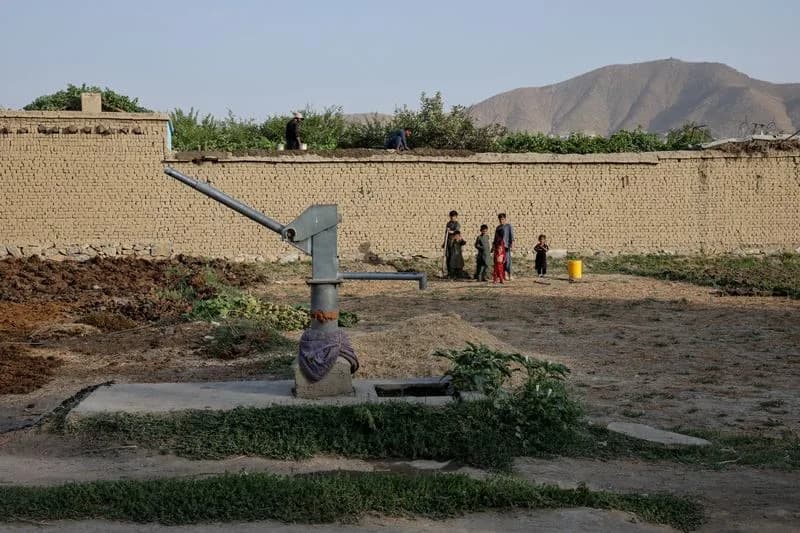
Children stand nearby a dried-up hand-pump, amid serious water crisis in Kabul, Afghanistan, August 29, 2025. REUTERS/Sayed Hassib
The United Nations University Institute for Water, Environment and Health on Tuesday warned that the world is approaching an irreversible state of "water bankruptcy," driven by decades of unsustainable extraction, pollution and shrinking freshwater sources such as lakes, rivers, glaciers and wetlands.
Key Findings
The institute's report finds that nearly three-quarters of the global population live in countries classified as "water insecure" or "critically water insecure," and that 4 billion people experience severe water scarcity for at least one month each year. Groundwater depletion, drying glaciers and damaged wetlands mean many regions are consuming more water than can be replenished.
- More than 170 million hectares of irrigated cropland — an area larger than Iran — face high or very high water stress.
- Economic losses from land degradation, groundwater depletion and climate change exceed $300 billion annually.
- Three billion people and over half of global food production are concentrated in areas with unstable or declining water storage.
- Salinisation has degraded more than 100 million hectares of cropland.
"Many regions are living beyond their hydrological means, and many critical water systems are already bankrupt," said Kaveh Madani, lead author and director of the institute. "By acknowledging the reality of water bankruptcy, we can finally make the hard choices that will protect people, economies and ecosystems."
What the Report Recommends
The authors urge a shift away from attempting to "return to normal" toward a new global water agenda focused on minimizing further damage, prioritizing sustainable water management, protecting remaining natural storage systems, and investing in resilient food and water systems.
The report also highlights that current approaches to water management are no longer fit for purpose and calls for urgent policy changes, improved governance and stronger international cooperation.
Expert Comment
Jonathan Paul, a geoscience professor at Royal Holloway, University of London, said the report underplays population growth as a major driver of the crisis, noting that rapid and uneven population increases are mentioned only briefly despite their significant impact on water demand.
Reporting: David Stanway; Editing: Hugh Lawson.
Help us improve.