
The DHS is reviewing body-camera footage in the death of Alex Pretti while the Renee Good killing was captured only on a cellphone. Cellphone and bystander videos challenged initial official narratives but left critical legal and policy questions unresolved that body-camera footage could help answer. Federal adoption of body cameras has been uneven: CBP has deployed thousands, ICE far fewer, and a 2024 rollout target for ICE was not met amid policy reversals and funding gaps. Ongoing congressional negotiations could make broader camera mandates a condition of DHS funding.
Minneapolis Shootings Highlight Why DHS Needs Body Cameras—and Why Rollout Has Lagged
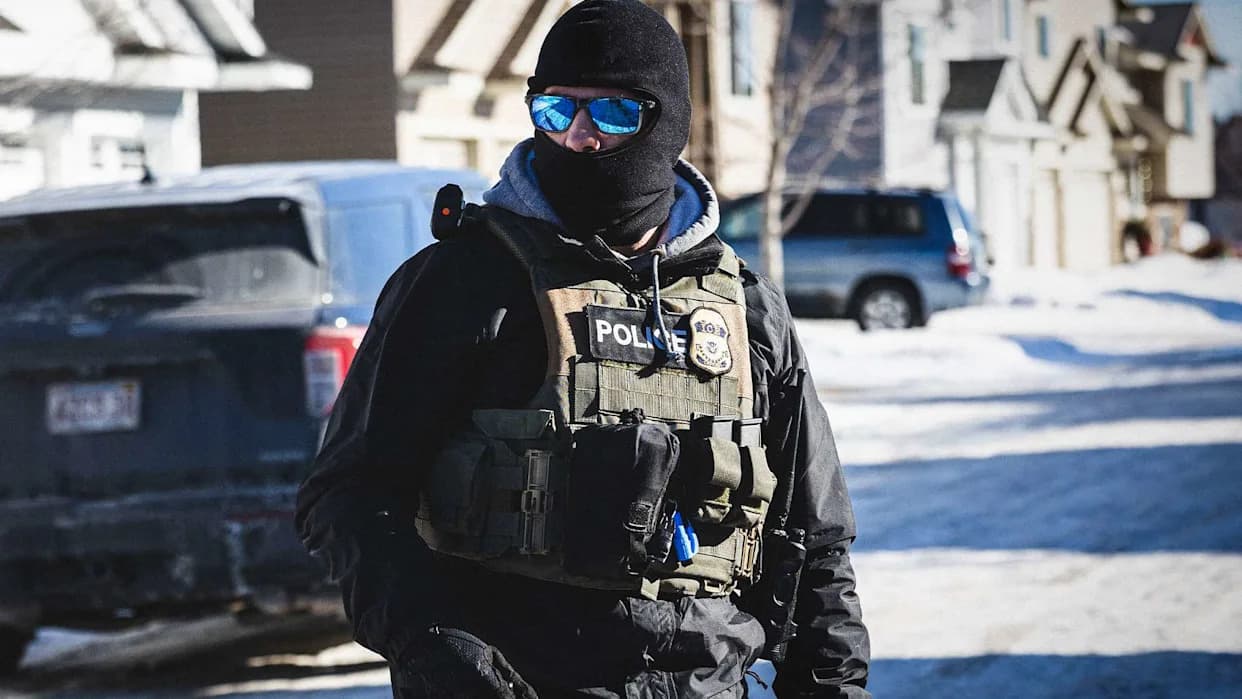
The Minneapolis Shootings Underline the Advantages of Body Cameras, Which DHS Has Been Slow To Adopt
The Department of Homeland Security is reviewing body-camera footage from the Minneapolis encounter that ended with protester Alex Pretti's death. That footage could be critical to understanding how a Border Patrol agent and a Customs and Border Protection (CBP) officer came to fatally shoot him.
By contrast, the January 7 killing of protester Renee Good by an Immigration and Customs Enforcement (ICE) agent, Jonathan Ross, was recorded on a cellphone rather than a body camera. Vice President J.D. Vance has said that video supports the claim of self-defense, but the available cellphone recording does not clearly show what happened at the instant the agent fired. It is also uncertain whether other ICE officers at the scene were wearing body cameras; the local ICE field office appears to have none.
Why Body Cameras Matter
Both incidents illustrate how body cameras can help resolve disputed uses of force. Cellphone and bystander videos in these cases undercut initial official accounts that depicted Pretti and Good as would-be attackers. The videos indicate that Pretti, who had a carry permit, did not draw his pistol or 'attack those officers,' and that Good likely did not deliberately try to run over Ross with her SUV.
But cellphone footage leaves many legal and policy questions unanswered. Investigators must determine whether officers reasonably believed deadly force was necessary under the 'totality of the circumstances.' Separately, policymakers and departments must ask what rules, training, and tactics could prevent rapid escalations that end in lethal force.
Where Official Accounts Differ From Video Evidence
CBP's Office of Professional Responsibility provided this summary of the Pretti shooting to Congress:
After 'CBP personnel attempted to take Pretti into custody,' the OPR report says 'Pretti resisted CBP personnel's efforts and a struggle ensued. During the struggle, a [Border Patrol agent] yelled, 'He's got a gun!' multiple times. Approximately five seconds later, a [Border Patrol agent] discharged his CBP-issued Glock 19 and a [CBP officer] also discharged his CBP-issued Glock 47 at Pretti. After the shooting, a [Border Patrol agent] advised he had possession of Pretti's firearm. The [Border Patrol agent] subsequently cleared and secured Pretti's firearm in his vehicle.'
Bystander video available publicly suggests additional facts not described in that account: the agent said to have secured Pretti's firearm may already have disarmed him before the shooting; Pretti appears to have been restrained with both arms pinned down when the first shots were fired; the first agent fired multiple rounds into Pretti's back at close range; and after Pretti collapsed the two officers fired further rounds into his prone body.
An unnamed DHS official told NPR there is 'body camera footage from multiple angles which investigators are currently reviewing.' That footage, including audio, could clarify what each officer saw, heard, and perceived just before and during the shooting: whether the agent ever actually saw the weapon, whether he realized it had been removed, and whether he appreciated that Pretti was physically restrained.
The Good Case and What Body Cameras Could Clarify
If officers at the Renee Good scene had been wearing body cameras, investigators might be able to confirm whether the car made contact with the agent, how fast the vehicle was moving, where the agent stood when each shot was fired, and whether the agent's statements and actions reflected fear or anger. Body-camera audio could also document on-scene commands and warnings that might affect legal and policy assessments.
Federal Adoption Has Lagged
Body cameras have become common among state and local police. By 2016 nearly half of general-purpose law enforcement agencies in the United States had begun using body cameras, and by 2020 most large departments reported camera programs. But federal adoption, especially across DHS, has been uneven.
In 2022 President Joe Biden issued an executive order directing federal law-enforcement agencies to implement body-camera programs. DHS reported that CBP had distributed roughly 7,000 cameras and that ICE would expand deployment based on a congressional pilot. A 2024 DHS report projected 'full implementation' across ICE by last September, but that rollout did not occur.
On the first day of his second term President Donald Trump rescinded the Biden directive, and his administration has not pushed broad expansion. In a January 19 declaration filed in litigation over the Minneapolis actions, Samuel J. Olson, director of Enforcement and Removal Operations at ICE's St. Paul office, said his office 'is not scheduled or funded for [body camera] deployment' and estimated the office required about 2,000 cameras to equip its personnel. Olson said ICE would need roughly 180 days to upgrade networks, ship and install equipment, and train staff if deployment were required immediately.
CBP guidance states cameras 'will be used to record official law enforcement encounters, except when doing so may jeopardize agents and officers or public safety.' But that policy applies to personnel 'who are equipped with and trained in' the devices, implying incomplete coverage across the agency.
As of last June, reporting showed ICE had about 4,400 cameras for roughly 22,000 personnel, while CBP had about 13,400 cameras for at least 45,000 armed officers. Congressional negotiations over DHS funding could press new mandates: a short-term funding deal recently passed the Senate, temporarily financing DHS while legislators debate measures that could require broader camera use.
Conclusion
Body cameras can provide crucial context for contested uses of force, helping to both document misconduct and exonerate officers where appropriate. The Minneapolis shootings underscore the need for clearer, more consistent federal policies, adequate funding for equipment and networks, and thorough training so that body-camera programs can serve both transparency and accountability.
Help us improve.





















