
Key Takeaway: Secretary Kristi Noem said DHS will immediately issue body-worn cameras to all officers in Minneapolis and plans to expand the program nationwide as funding allows. The announcement follows two fatal shootings during immigration-enforcement operations that prompted protests and calls for transparency. Video evidence in one case contradicted initial official accounts, and the Justice Department has opened a civil-rights probe into that shooting. Congress has included $20 million for body cameras in a recent Senate funding package.
DHS to Equip All Minneapolis Officers With Body-Worn Cameras, Noem Says — Nationwide Rollout Planned

Homeland Security Secretary Kristi Noem speaks during a news conference at Federal Emergency Management Agency headquarters, Saturday, Jan. 24, 2026, in Washington. (AP Photo/Julia Demaree Nikhinson)(ASSOCIATED PRESS)
Secretary of Homeland Security Kristi Noem announced Monday that every Department of Homeland Security officer deployed on the ground in Minneapolis — including agents from Immigration and Customs Enforcement (ICE) — will be immediately issued body-worn cameras. She said the program will be expanded nationwide as funding becomes available.
What Noem Announced
Noem posted on the social platform X that the department will "rapidly acquire and deploy body cameras to DHS law enforcement across the country." The move comes amid intense scrutiny of federal enforcement actions in Minneapolis following two fatal shootings involving federal officers.
The Incidents and Public Reaction
The announcement follows the deaths of two U.S. citizens during immigration-enforcement operations in Minneapolis, incidents that sparked protests and sharp criticism. In the hours after ICU nurse Alex Pretti was killed, Noem and other administration officials said Pretti "came with a weapon and dozens of rounds of ammunition and attacked" officers, and that officers acted to "defend their lives."
Multiple videos that later emerged cast doubt on those initial claims: footage shows Pretti holding only a mobile phone while officers wrestled him to the ground; one officer appears to remove a handgun from the back of his pants while another fires shots. Homeland Security has said at least four Customs and Border Protection (CBP) officers present during Pretti's shooting were wearing body cameras, but that footage has not been released publicly.
The department has repeatedly declined to confirm whether any ICE officers present during the January killing of 37-year-old mother of three Renee Good were wearing body cameras.
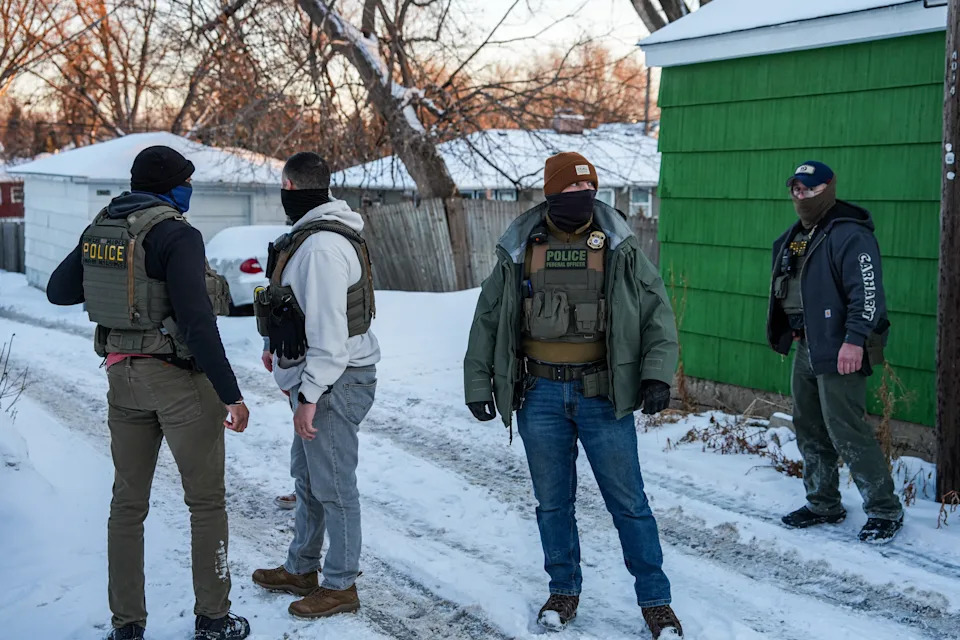
Federal agents conduct immigration enforcement operations in a neighborhood on Monday, Feb. 2, 2026, in Minneapolis. (AP Photo/Ryan Murphy)(ASSOCIATED PRESS)
Investigations, Leadership Changes and Calls for Accountability
The Justice Department has opened a federal civil-rights investigation into Pretti's death; it has not opened a similar probe in Good's case. The incidents prompted political and public demands for accountability and transparency, including calls from some Republicans.
President Donald Trump dispatched border operations official Tom Homan to Minneapolis to oversee operations, replacing Border Patrol commander Gregory Bovino, who has faced criticism in prior deployments to cities such as Chicago and Los Angeles.
Funding, Policy Context and Broader Debate
Lawmakers are negotiating DHS funding in Congress. A bipartisan Senate funding package approved ahead of a shutdown deadline included an additional $20 million for body cameras; the House had not approved the package at the time, producing a partial lapse in funding for some nonessential functions even as many DHS operations continued because they are deemed essential.
Advocates and critics have increasingly urged Homeland Security to require body cameras for immigration-enforcement officers. A federal judge in Chicago previously ordered uniformed agents, when cameras were available, to wear and activate them during arrests, frisks, building searches and deployments to protests. A 2022 executive order under President Joe Biden had directed federal officers to use body cameras; that directive was later rescinded by President Trump after the start of his second term.
"They generally tend to be good for law enforcement because people can’t lie about what’s happening," President Trump said after Noem's announcement, adding, "If she wants to do the camera thing, that’s OK with me."
Aaron Reichlin-Melnick, a senior fellow at the American Immigration Council, said Noem could implement the policy without waiting for additional funding, pointing to the large appropriation Congress approved last summer that provided ICE substantial funding for enforcement operations and technology. "That buys a lot of body cameras," he said.
What Remains Unclear
Key questions remain: when the body-camera footage from Pretti’s shooting will be released, whether ICE officers at the scene of Good’s killing were wearing cameras, and how quickly a nationwide rollout can proceed given budgetary and operational constraints.
Help us improve.





















