OceanXplorer is a former oil ship converted into a fully equipped ocean research and media vessel by the non-profit OceanX, founded by Ray and Mark Dalio. The ship houses labs for eDNA and metagenomic sequencing, two manned submersibles (one with 8K cameras) and an ROV rated to 6,000 metres. Rotating teams of local and international scientists conduct biodiversity surveys, bioprospecting and plastics-microbe research, producing peer-reviewed papers and rare footage while also supporting student education. OceanX says its work is publicly accessible and primarily funded by the Dalio family and external grants.
OceanXplorer: Inside the World's Most Advanced Ocean Research and Media Vessel
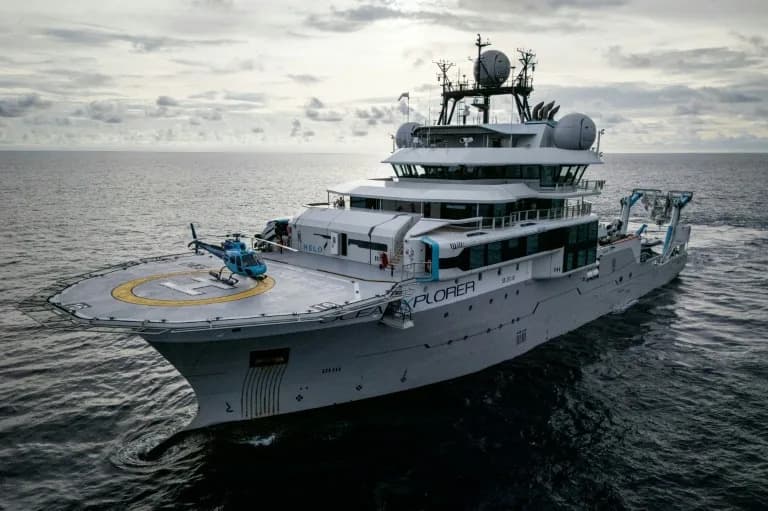
AFP reported from OceanXplorer, a high-tech marine research vessel owned by billionaire-backed non-profit OceanX (YASUYOSHI CHIBA)(YASUYOSHI CHIBA/AFP/AFP)
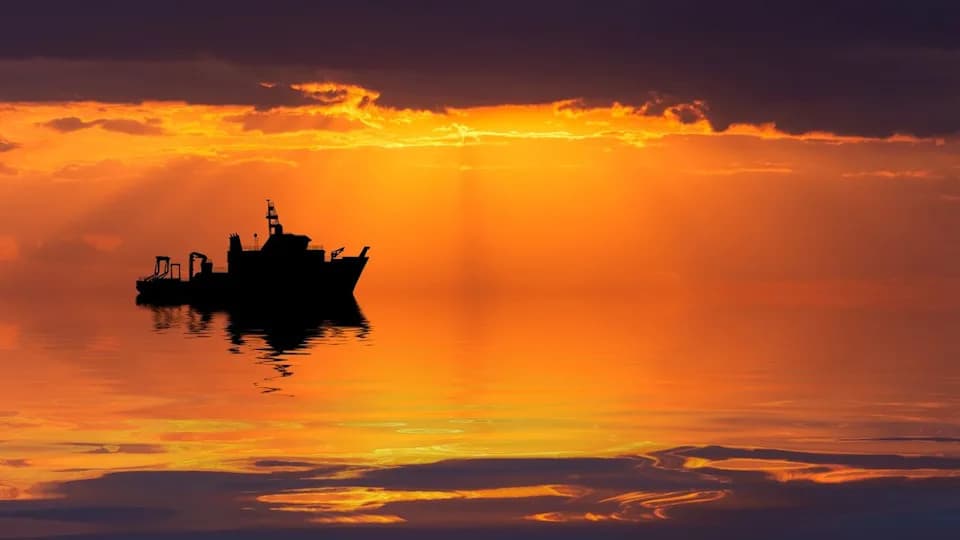
AFP recently reported from OceanXplorer, a purpose-refitted marine research vessel run by the non-profit OceanX. Once an oil-exploration ship, it has been transformed into a combined science and media platform that pairs cutting-edge oceanographic capability with high-end storytelling to bring marine biology and conservation to a broad audience.
A One-Stop Hub For Ocean Science
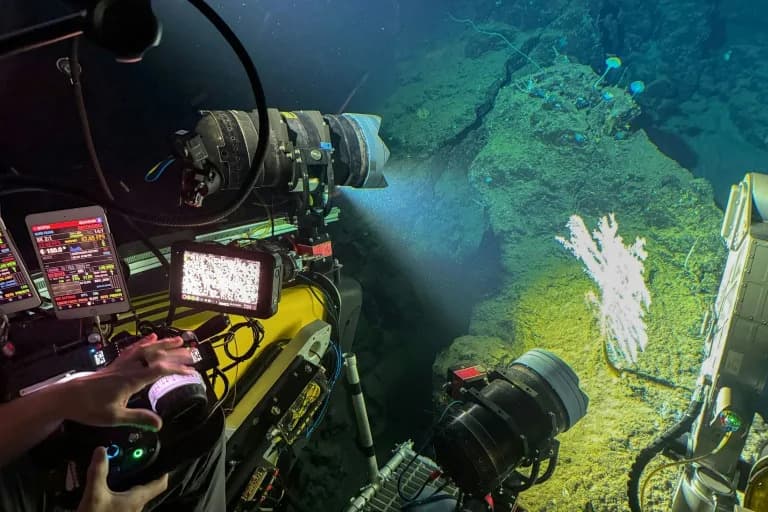
Owned and funded largely by OceanX — an organisation established by financier Ray Dalio and his son Mark — OceanXplorer has been extensively retrofitted with laboratories for genetic and metagenomic sequencing, helicopters for aerial surveys, and a wide array of oceanographic instruments. The ship carries two manned submersibles, one fitted with 8K cameras for ultra-high-definition footage, and a science sub capable of retrieving samples from depths down to 1,000 metres. For much deeper work, a remotely operated vehicle (ROV) rated to 6,000 metres is available. Onboard equipment also includes mapping radar, bongo nets for plankton collection and a CTD (conductivity, temperature, depth) profiler.
Rotating, Local-Led Science Teams
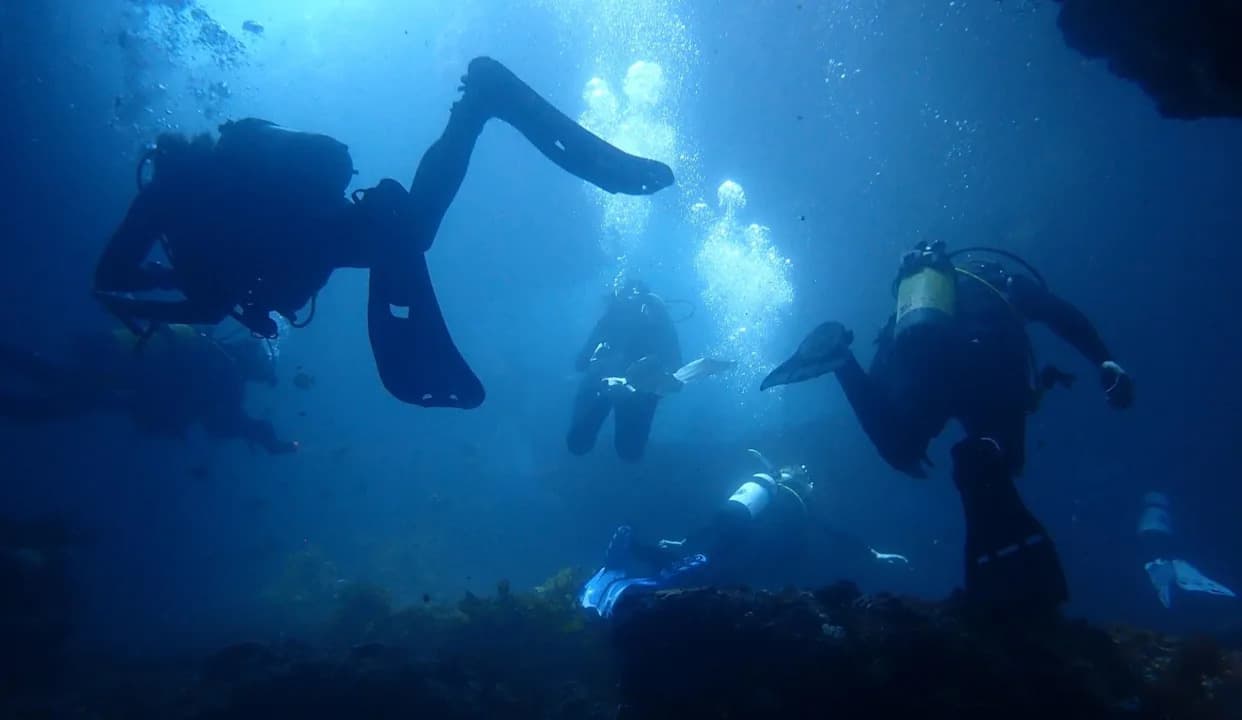
At sea almost continuously since 2021, OceanXplorer operates missions in partnership with local governments and research institutions, bringing aboard rotating teams of national and international scientists. Current missions off Sulawesi include cetacean specialist Sekar Mira from Indonesia's BRIN and genetics researcher Husna Nugrahapraja from Institut Teknologi Bandung, who is conducting bioprospecting and metagenomic analyses to search for novel compounds.
"It is essentially a one-stop shop for ocean science," said mission lead Andrew Craig. "There's nothing else like it in the world."
Full eDNA And Sequencing Workflows At Sea
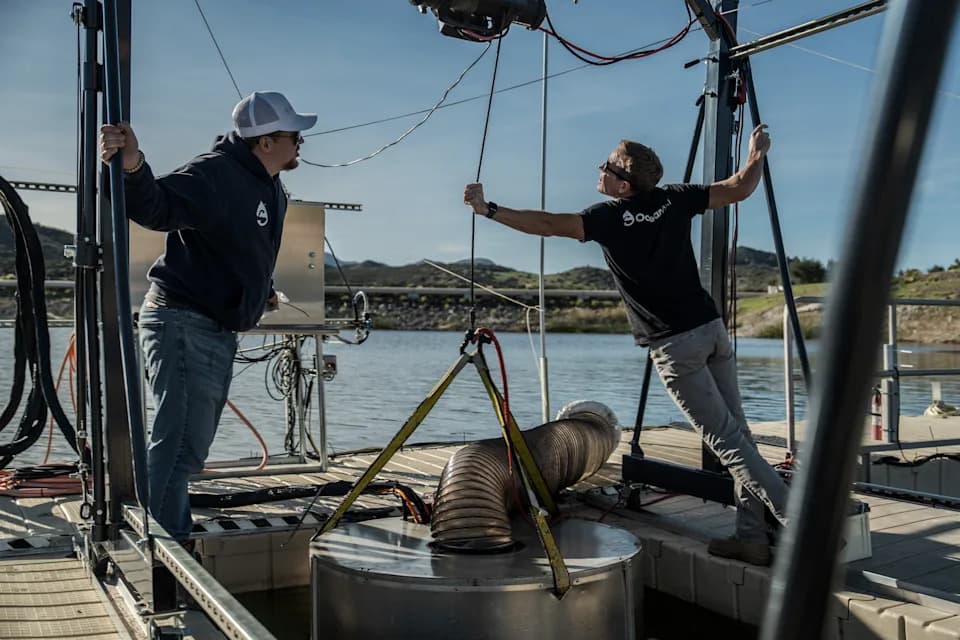
OceanXplorer can run complete environmental DNA (eDNA) workflows from sample collection to onboard bioinformatic analysis. eDNA allows researchers to detect organisms from traces such as scales, mucus, feathers or faeces left in the environment. Specialists like Larissa Fruehe support teams in filtering and analysing these traces, while coelacanth researcher Alex Masengi uses eDNA to hunt for signals of the ancient fish at depths around 900 metres—below its commonly observed range.
Research On Plastics, Microbes And Medicines
Scientists on board are also investigating deep-sea plastics for microbes that might degrade waste, and extracting DNA for metagenomic mining that could reveal enzymes or compounds with pharmaceutical potential. These efforts illustrate how OceanXplorer combines biodiversity surveys with applied biotechnology research.
Designed For Science And Storytelling
OceanX invested in cinematic design, hiring Hollywood creatives to make interiors telegenic: a futuristic "mission control," customisable lighting and production-ready spaces so scientific discovery can be shared with mass audiences. The media-first approach feeds OceanX's public outreach, including about four million followers on TikTok.
Funding, Access And Outputs
OceanX does not publicly list the ship's full running costs, but its parent organisation's 2024 US tax filing reported more than $44 million in expenses, with significant support from the Dalio family and additional grants. While private funding of science can raise concerns, OceanX emphasizes that its research is publicly accessible and frequently conducted in partnership with governments and institutions that lack the resources to mount complex ocean expeditions.
Discoveries, Publications And Education
OceanXplorer missions have produced dozens of peer-reviewed papers, documenting findings from deep-sea shark behaviour in the Red Sea to cetacean ecology around Indonesia. The vessel's cameras have captured rare footage of coelacanth groups and newly discovered Red Sea brine pools. Between missions, students are invited aboard as part of OceanX's education initiatives.
In short: OceanXplorer blends advanced scientific capability, onboard genomic and eDNA analysis, and high-quality media production to accelerate ocean research and broaden public engagement with marine science.
Help us improve.