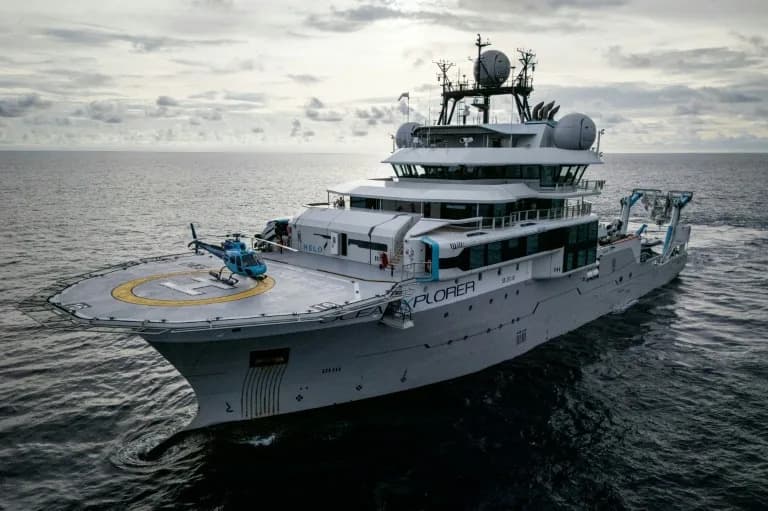
OceanX's OceanXplorer deployed two manned submersibles and a deep‑diving ROV to survey seamounts off Sulawesi, Indonesia. Scientists observed striking bioluminescence, documented fragile deep‑sea animals and retrieved samples including a bone‑white lobster, a hermit crab living inside a sea star, seawater, sediment and possibly new barnacles. The expedition demonstrates the scientific value of manned dives while underscoring how much of the deep ocean remains unmapped and threatened by pollution and warming.
Into the Abyss: OceanX Submersibles Reveal Strange, Bioluminescent Life on Seamounts Off Sulawesi
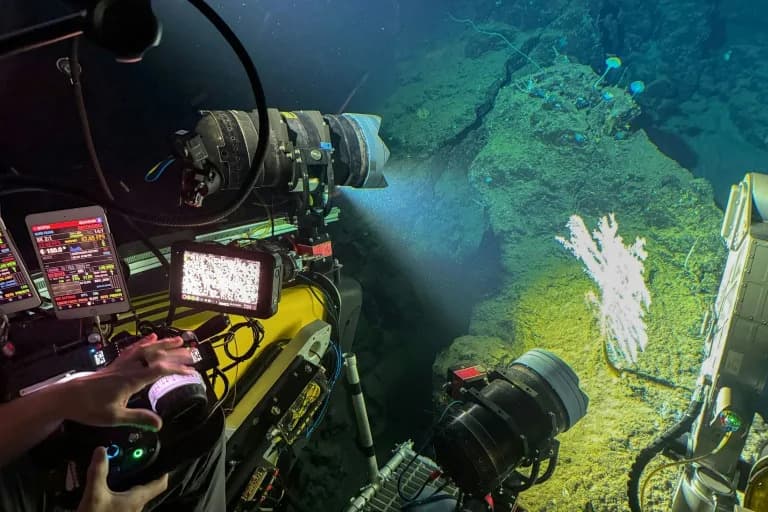
OceanXplorer's Nadir submersible is designed for high-end media content (Sara HUSSEIN)(Sara HUSSEIN/AFP/AFP)
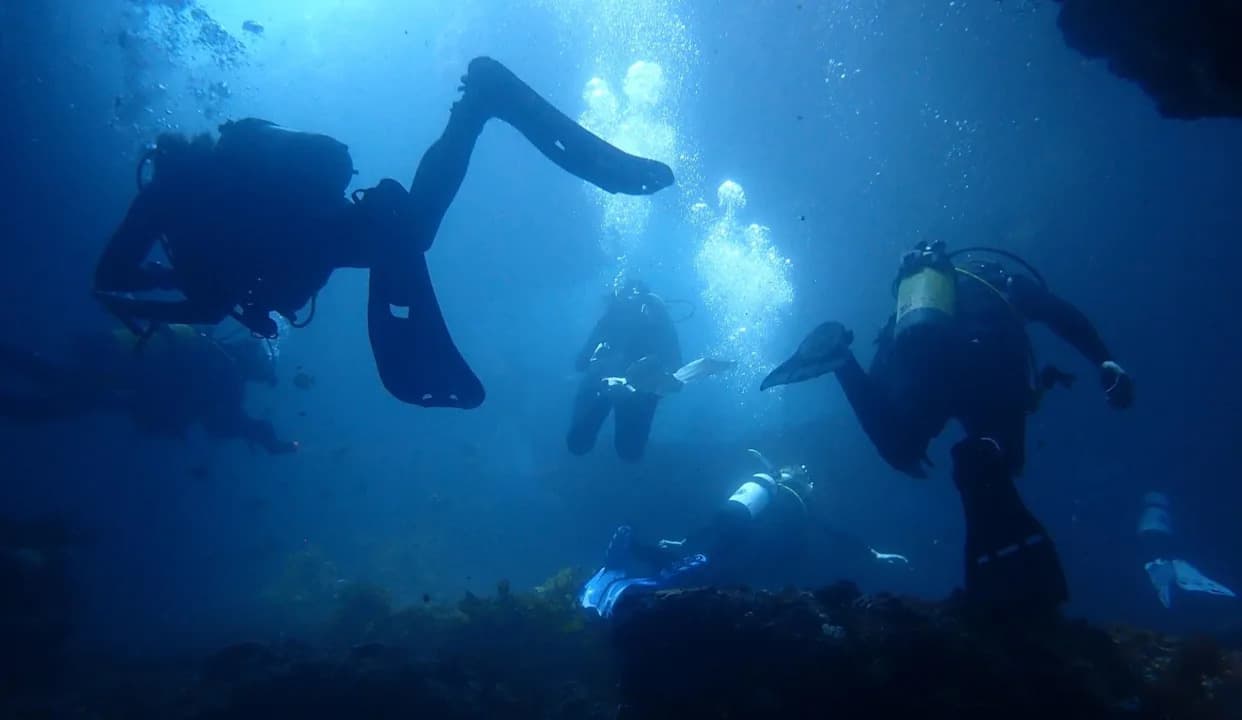
A dome‑fronted manned submersible slipped beneath the waves off Sulawesi, Indonesia, descending nearly 1,000 metres to search for unknown species, plastic‑eating microbes and chemical compounds that could one day become medicines.
This month AFP joined one of two research submersibles operated by OceanX — a non‑profit backed by Ray Dalio and his son — aboard the research vessel OceanXplorer. The ship is equipped with onboard genetic sequencing labs, a helicopter for aerial surveys and a remotely operated vehicle (ROV) that can reach depths of up to 6,000 metres (19,700 ft).
Mission And Technology
OceanXplorer carries two manned submersibles with complementary roles. Neptune is configured for scientific sampling and observation, fitted with hydraulic arms and suction tubing; Nadir is optimized for high‑end imaging and media. Together with the ship’s ROV, they enable researchers to both collect specimens and document life in situ.
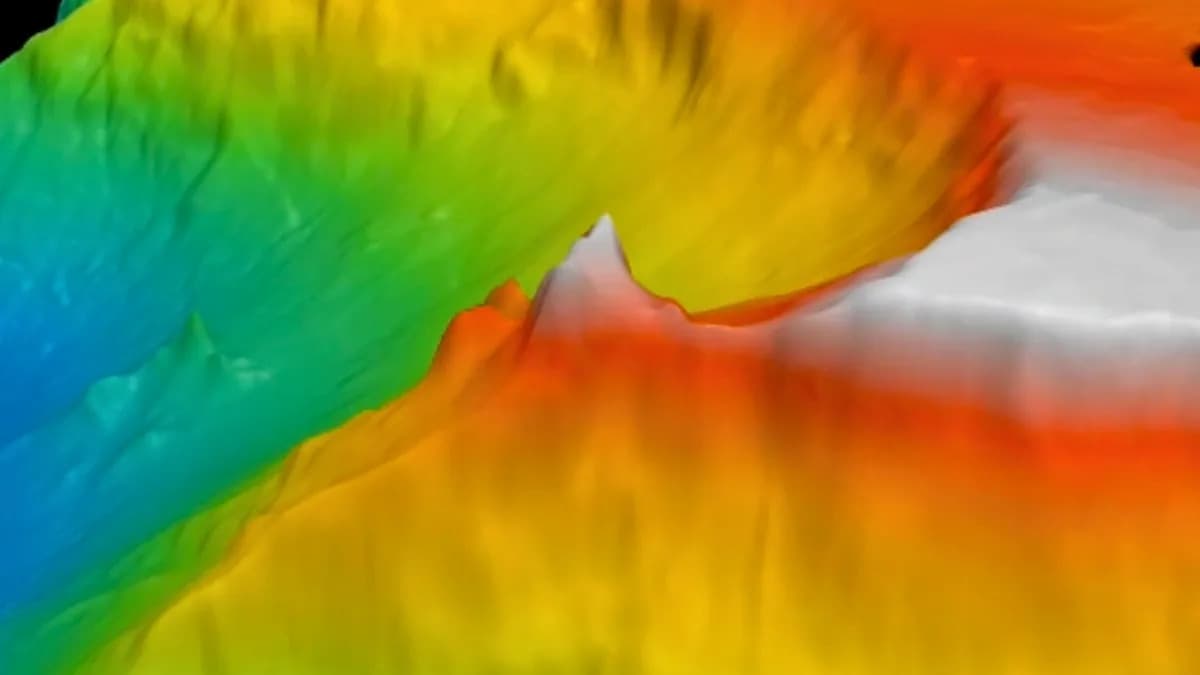
The current campaign is focused on a chain of seamounts off Sulawesi that the team mapped last year. A new cohort of Indonesian scientists is now cataloguing biodiversity directly from the habitats they study, using manned dives to complement the ROV’s deeper reach.
Descent Into Darkness
Below about 200 metres, sunlight fades to black and the submersible’s lights become the only illumination. Scientists aboard described a surreal, almost otherworldly environment: drifts of marine snow — a continuous fall of organic debris — and delicate, translucent animals that most people never see.
Comb jellies pulsed with fairy‑light bioluminescence; siphonophores — long, ribbon‑like colonies of animals — glowed as they floated past; and shoals of tiny silver fish skittered away from the sub’s wake. When the vehicle settled on the seabed, researchers saw delicate sea stars, fronded soft corals and many organisms new to the untrained eye.
Provoking Bioluminescence
Manned submersibles offer a unique, immersive vantage point and are especially effective for observing bioluminescent displays. The crew routinely switches off all exterior lights (even covering internal control panels), then flashes the sub’s lights several times while occupants close their eyes. On reopening them, passengers often witness a galaxy of bluish‑white flashes as plankton, jellies, shrimp and fish respond — a spectacle some researchers call unforgettable.
ROV Collections And Surprising Finds
For very deep work the team relies on the ROV, piloted from a mission control room where operators use multi‑joint joysticks to manipulate hydraulic arms. The ROV brought up a range of samples: seawater, sediment, a forearm‑length sea lily coated in bright orange goo, and multiple animals for closer study.
Notable specimens included a bone‑white lobster, a horned sea cucumber whose spines collapsed into black, noodle‑like strands when hauled aboard, and an unexpected hermit crab living inside a dead sea star — the crab had deposited bright orange eggs inside its unusual host. Tiny, pearl‑sized barnacles recovered in one haul may be new to science, prompting immediate excitement among crustacean specialists on deck.
Science, Safety And Conservation
OceanX emphasizes that its vehicles are designed, manufactured and inspected to industry standards set by DNV, with redundant systems and four days of emergency life support onboard. The public’s association of submersibles with high‑profile tragedies — notably the Titan implosion in 2023 — has heightened scrutiny, and OceanX’s team stresses rigorous maintenance and inspection regimes.
Scientists underline that large swathes of the deep seafloor remain unmapped and poorly understood. The expedition highlights both discovery potential and looming threats: plastic pollution, warming waters and ocean acidification imperil deep‑sea ecosystems even as international agreements aim to protect parts of international waters.
“Our Earth, our sea, is mostly deep sea,” said one researcher. “But there is so little we know about the biodiversity of the deep sea.”
The OceanX mission off Sulawesi underscores how manned submersibles and ROVs together provide complementary perspectives — immersive viewing and curated sampling — that advance understanding of some of the planet’s last unexplored frontiers.
Help us improve.