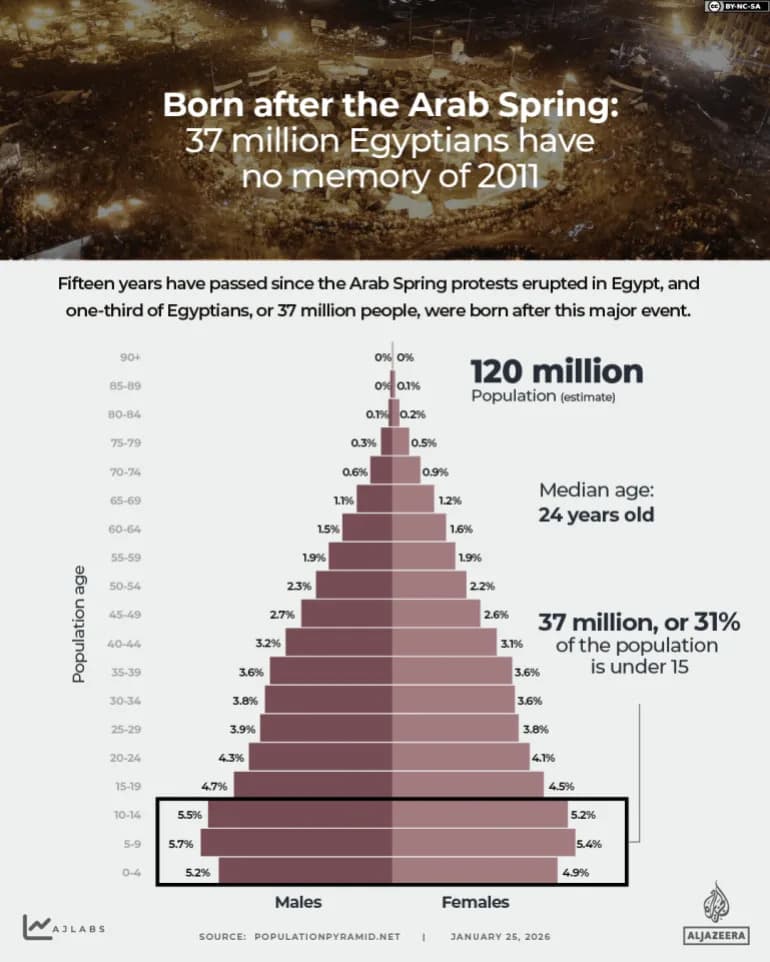
Fifteen years after Egypt’s 2011 uprising, about 37 million Egyptians — nearly a third of the population — were born after the Arab Spring and have no direct memory of it. The population has grown from roughly 83 million to nearly 120 million, GDP per capita rose modestly while the pound weakened sharply, and headline unemployment fell to 6.4% even as youth unemployment remains high at about 14.9%. Egypt faces a major jobs challenge: it needs about 1.5 million new positions a year but has averaged only 600,000.
Born After the Arab Spring: 37 Million Egyptians Have No Memory of 2011 — What That Means for Egypt Today
(Al Jazeera)
Fifteen years after Egypt’s 2011 uprising, roughly 37 million Egyptians — nearly a third of the population — were born after the Arab Spring and have no direct memory of it. That generational gap matters: the events that convulsed the country are now history taught by parents, recorded online, and filtered through the lenses of a much younger, digitally connected population.
Background
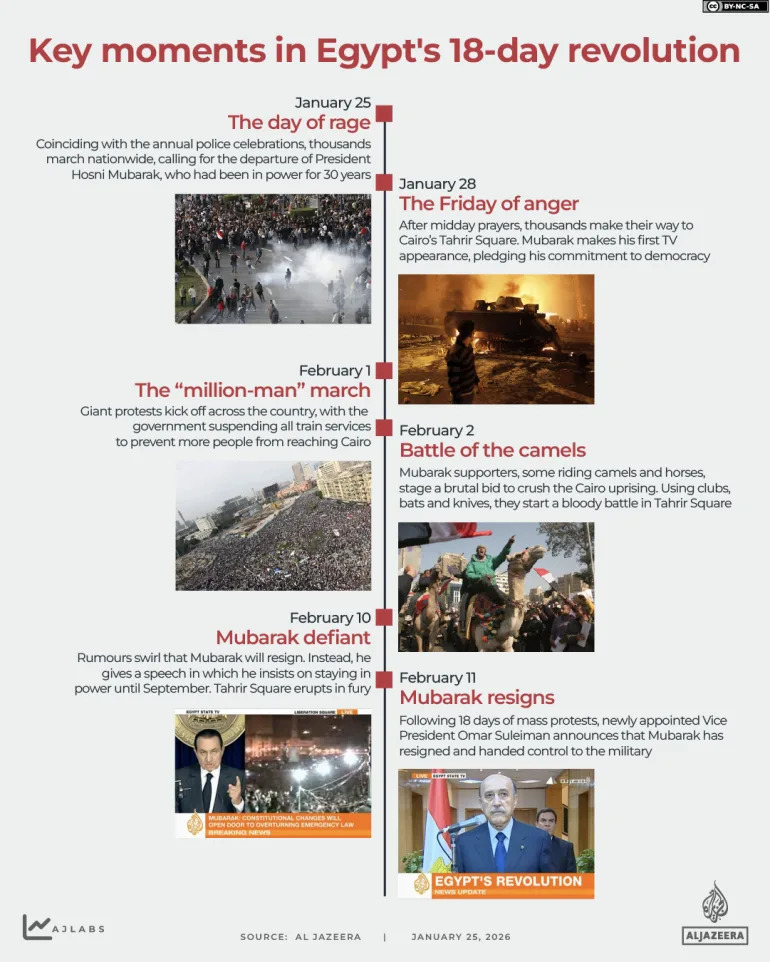
Encouraged by the fall of Tunisia’s president just 11 days earlier, Egyptians took to the streets in January 2011 demanding an end to decades of political repression, soaring unemployment and entrenched poverty. After 18 days of mass protests centered on Cairo’s Tahrir Square, President Hosni Mubarak resigned on 11 February 2011 and handed authority to the military.
INTERACTIVE - Key moments in Egypts 18 day revolution-1769322613
Demographic Shift
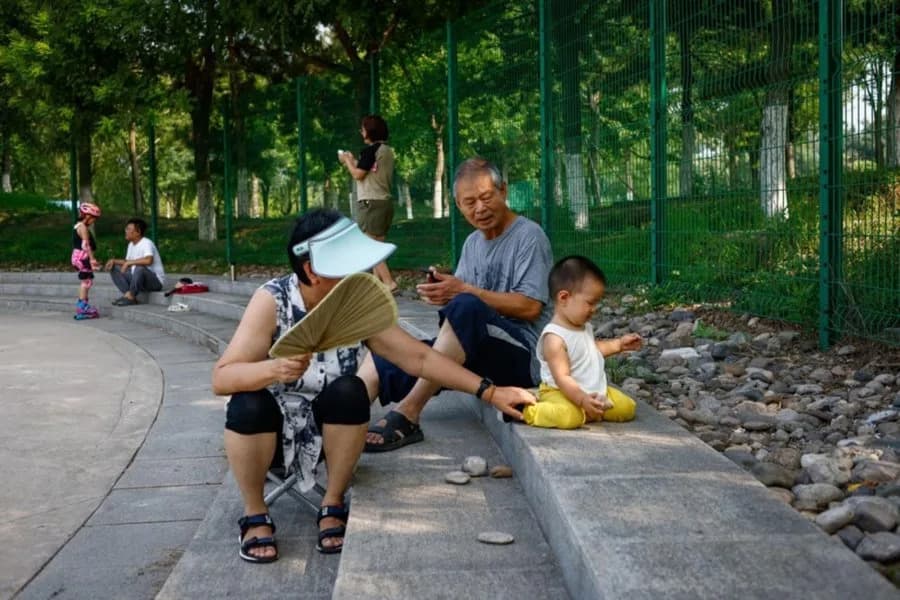
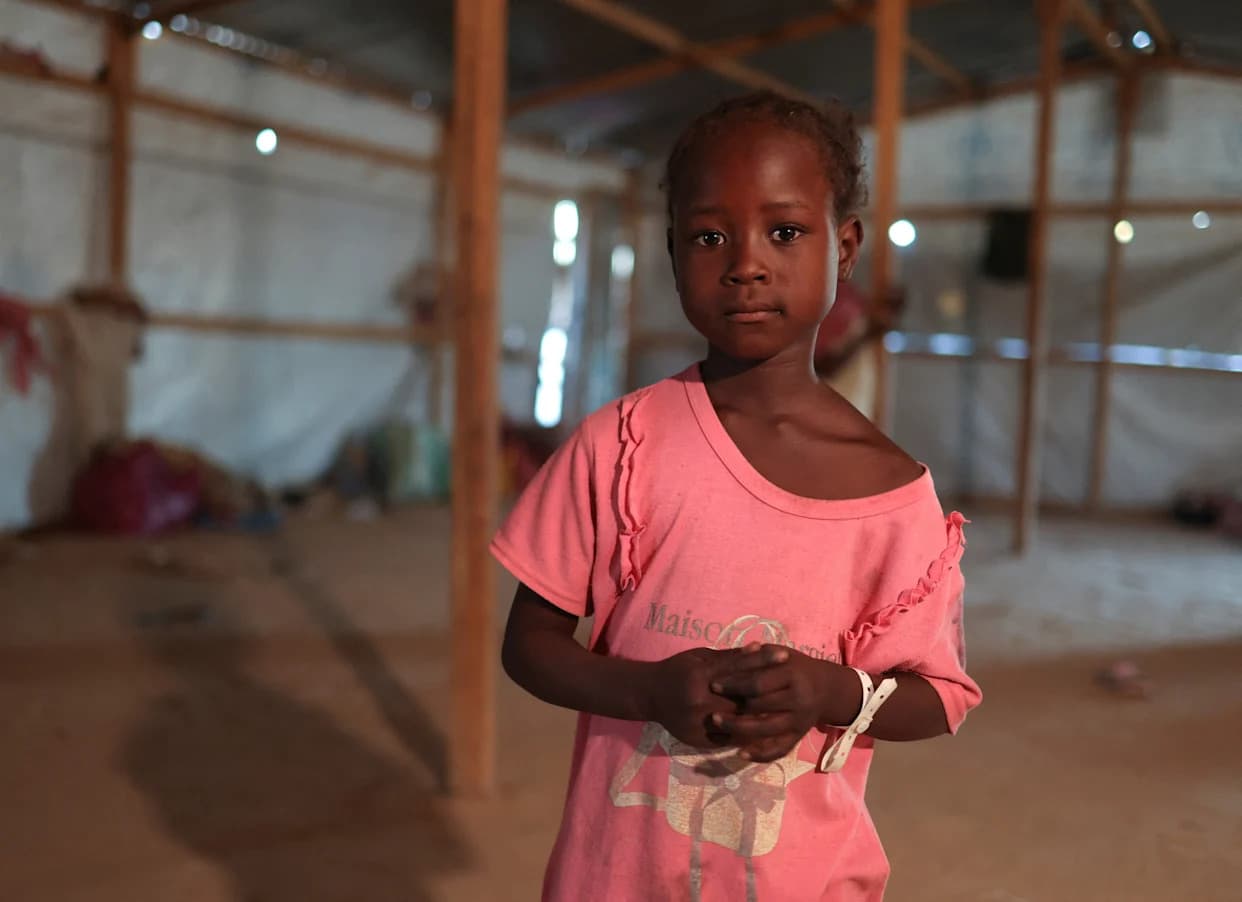
In 2011 Egypt’s population stood at about 83 million. Today it approaches 120 million — an increase of roughly 37 million people. Egypt remains one of the world’s younger countries: the median age is about 24, more than half of Egyptians are under 24, and some 31% (around 37 million people) are under 15 — meaning the Arab Spring is part of their family history rather than lived experience.
Economy, Currency and Jobs
Economic indicators have changed modestly on paper but not uniformly in people’s daily lives. GDP per capita (current US$) rose from $2,590 in 2011 to about $3,339 today. Yet the Egyptian pound has weakened dramatically: in 2011 one US dollar bought about 5.8 Egyptian pounds; today it buys roughly 47, eroding purchasing power for many households.
INTERACTIVE - Arab Spring countries youth populations-1769322697
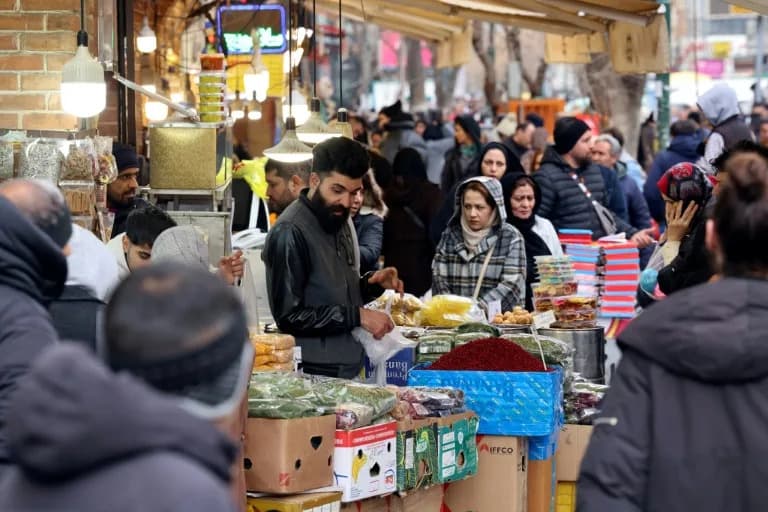
The headline unemployment rate has fallen to a record low of 6.4%, but youth unemployment (ages 15–29) remains elevated at about 14.9% (CAPMAS). The Economic Research Forum estimates Egypt needs to create about 1.5 million jobs each year to absorb new labour-market entrants; over the past two decades the country has averaged roughly 600,000 new jobs per year — a large shortfall.
Education and Connectivity
Higher education is expanding: about 3.6 million students are currently enrolled in universities and technical institutes, with a government target of 5.6 million by 2032 to support a modernising economy. Digital connectivity is now widespread — more than 80% of Egyptians are active internet users, driven largely by youth using mobile devices and social media.
Timeline Of The 18 Days (Key Moments)
January 25 — "Day of Rage": Nationwide demonstrations targeting Mubarak’s 30-year rule.
January 28 — "Friday of Anger": Thousands converge on Tahrir Square after midday prayers; Mubarak gives a televised address promising reform.
February 1 — "Million-Man" March: Protests swell nationwide; train services are suspended to limit travel to Cairo.
February 2 — "Battle of the Camels": Pro-Mubarak forces attack demonstrators in Tahrir Square, using horses, camels and makeshift weapons.
February 10 — Mubarak Declares He Will Stay: A speech declaring he would remain in office until September sparks renewed fury.
February 11 — Mubarak Resigns: After 18 days of sustained protests, Mubarak steps down and hands power to the military.
Regional Context
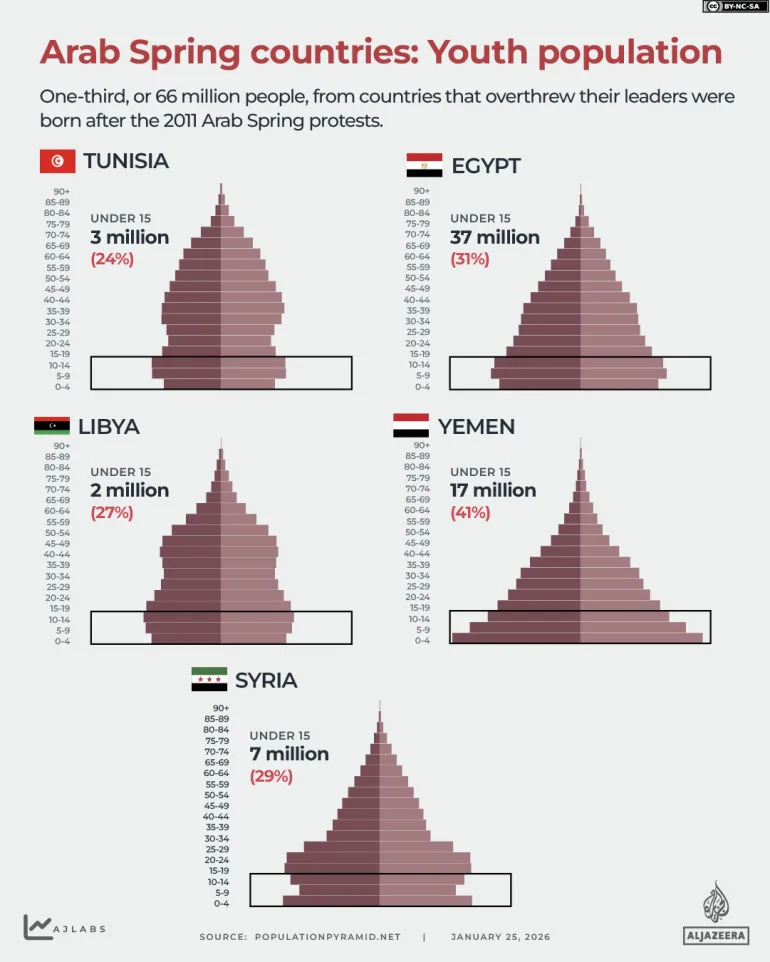
Like Egypt, other countries that ousted leaders during the Arab Spring — Tunisia, Libya, Syria and Yemen — also have large youth populations. For example, roughly 24% of Tunisians and 41% of Yemenis are under 15, reflecting the broader regional challenge of creating jobs and opportunities for young people.
Why This Matters: A generation that did not live through 2011 is now shaping Egypt’s politics, economy and culture. Policymakers face urgent tasks: bridging skills gaps, expanding quality jobs, stabilising the currency and ensuring that the benefits of growth reach young people.
Help us improve.