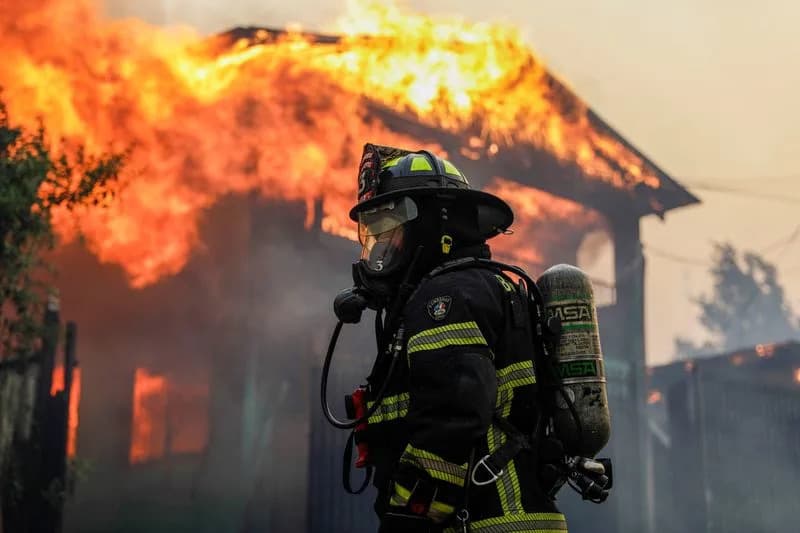
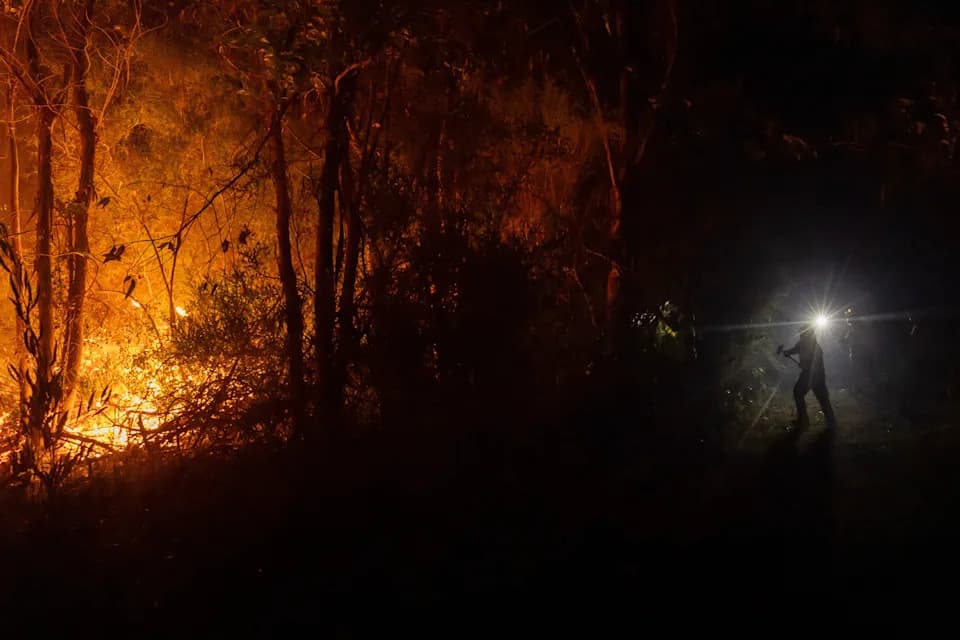
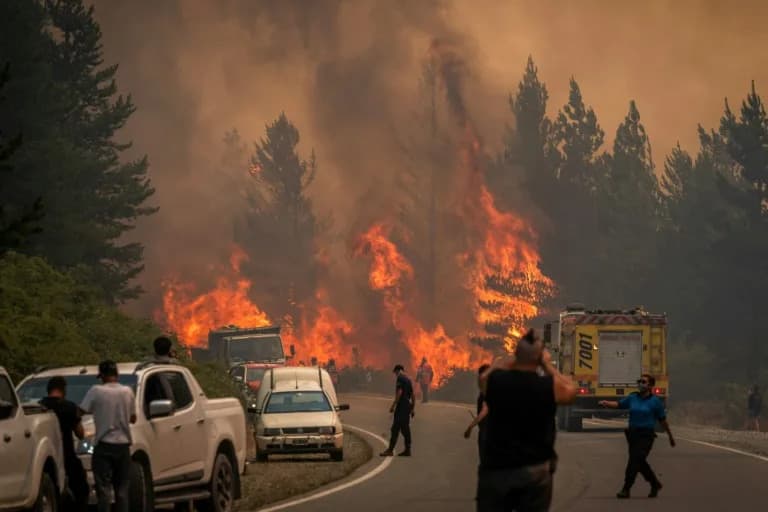
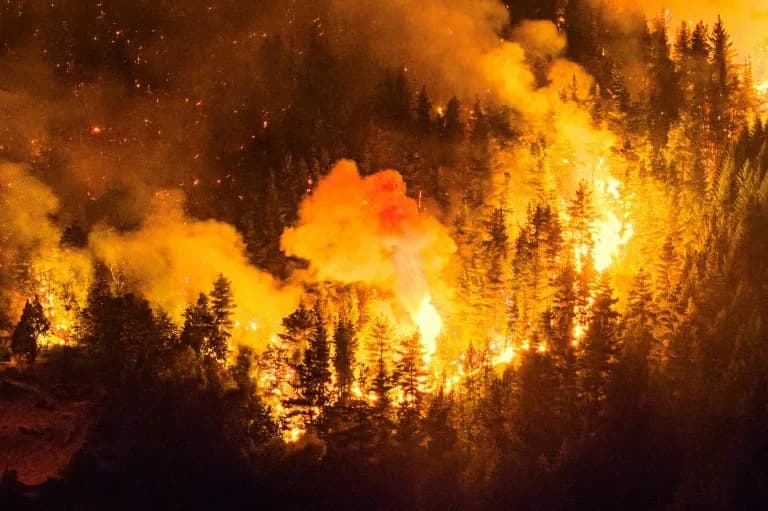
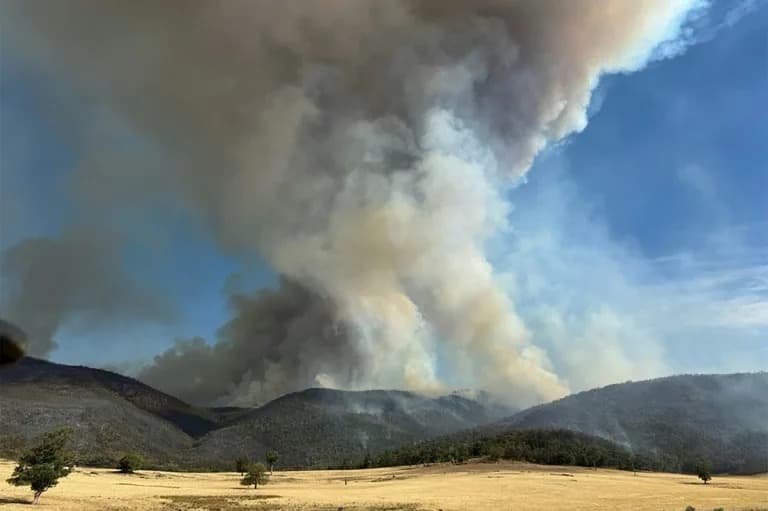
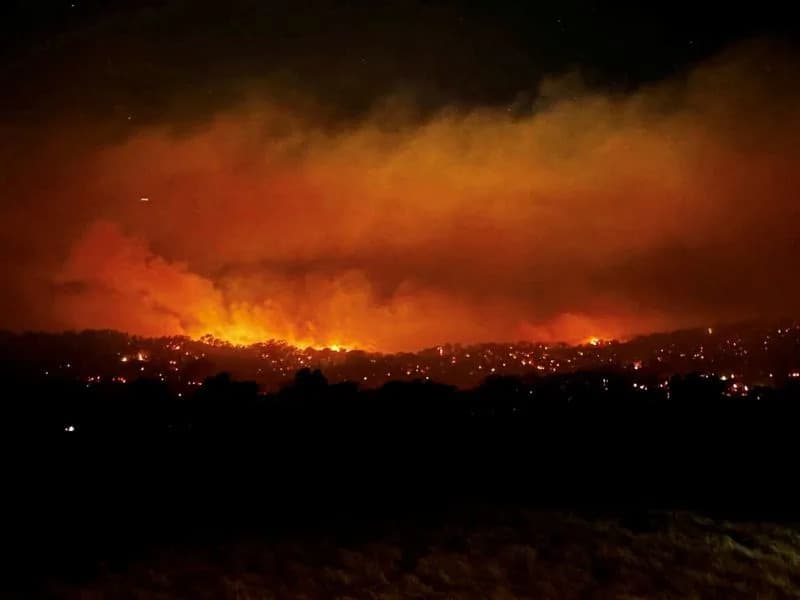
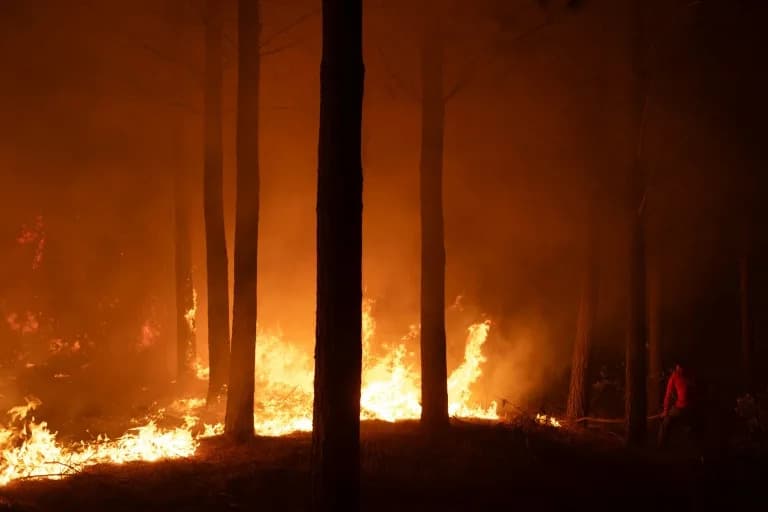
Wildfires driven by extreme heat and strong winds have killed at least 19 people in Chile, mainly around Penco, and prompted large-scale evacuations. Officials reported 34 active fires nationwide and more than 35,000 hectares burned, with the largest blaze exceeding 14,000 hectares. Authorities declared a state of catastrophe in Ñuble and Biobío as temperatures up to 37°C and shifting winds raise the risk of new outbreaks. Experts say prolonged heat and abundant dry fuel have made the fires harder to control.
Chile Wildfires Kill 19 As Extreme Heat and High Winds Fuel Dozens of Blazes
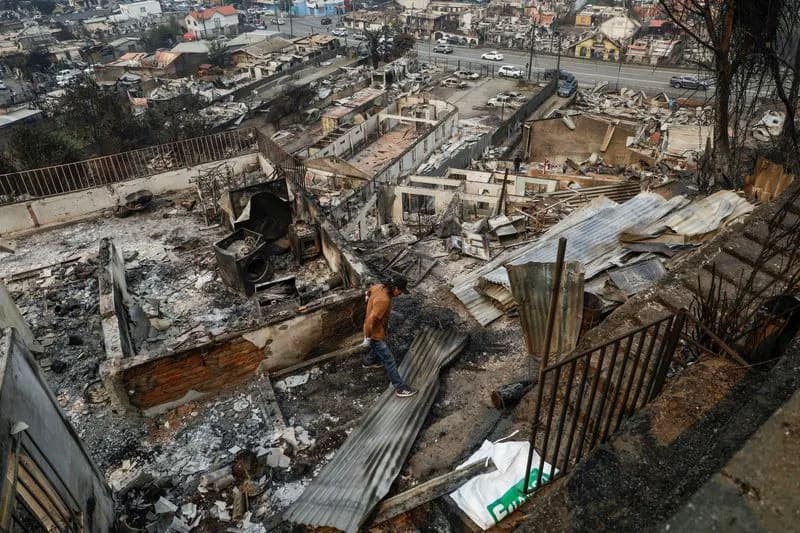
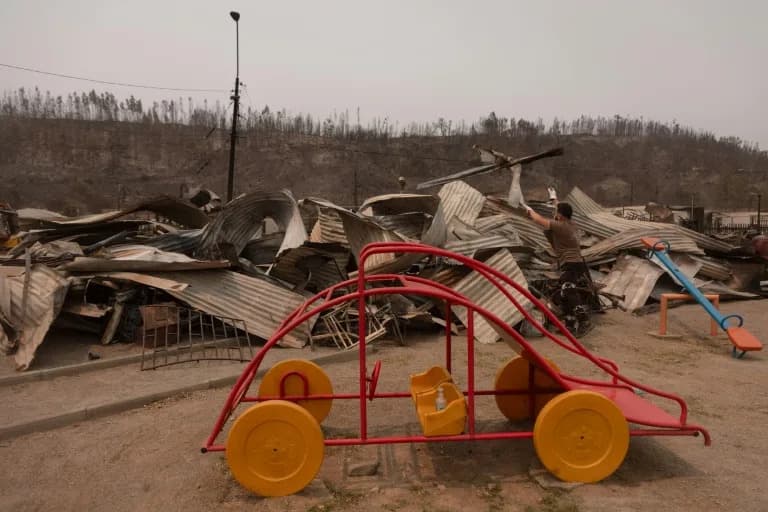
A person inspects a destroyed building, in the aftermath of a forest fire in the Biobio region, where multiple wildfires prompted emergency evacuations, in Concepcion, Chile January 19, 2026. REUTERS/Juan Gonzalez
Wildfires across central and southern Chile have killed at least 19 people, forced large-scale evacuations and destroyed hundreds of homes as authorities battled more than 30 active blazes intensified by extreme heat and shifting winds.
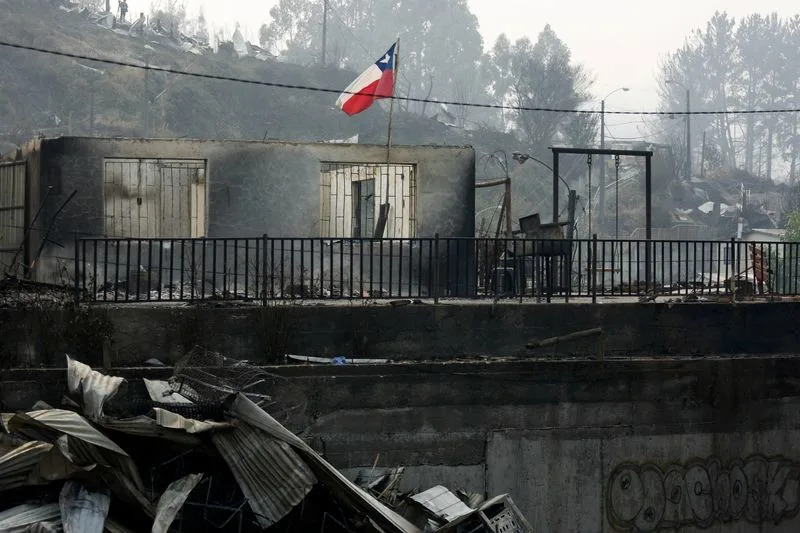
Chile's flag flutters, in the aftermath of a forest fire in the Biobio region, where multiple wildfires prompted emergency evacuations, in Concepcion, Chile, January 19, 2026. REUTERS/Juan Gonzalez
Fast-Moving Fires Devastate Penco and Surrounding Areas
Most of the fatalities occurred in Penco, a coastal city just north of Concepción, where thousands of residents sifted through the charred remains of their homes while firefighters worked to contain nearby flames. Authorities say 325 homes have been destroyed and another 1,100 properties are being evaluated for damage.
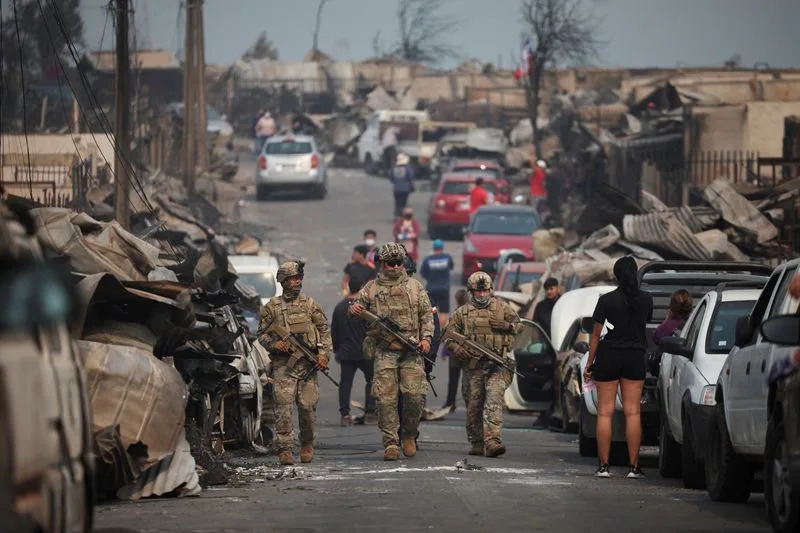
Military personnel walk past destroyed buildings, in the aftermath of a forest fire in the Biobio region, where multiple wildfires prompted emergency evacuations, in Concepcion, Chile January 19, 2026. REUTERS/Adriano Machado
Ana Caamano, 51, described combing through the ashes of the childhood home she inherited in Lirquén, finding personal items and the remains of one of her dogs amid the rubble. Her son, Franco, said the fire reached his neighborhood incredibly fast after a sudden gust carried a wall of smoke and flame toward their house.
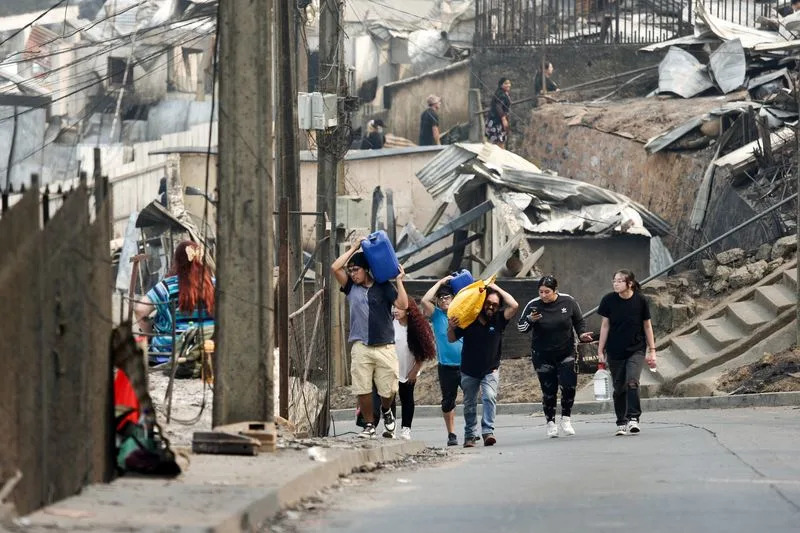
People carry containers, in the aftermath of a forest fire in the Biobio region, where multiple wildfires prompted emergency evacuations, in Concepcion, Chile, January 19, 2026. REUTERS/Juan Gonzalez
State Of Catastrophe Declared
Chile's National Forestry Corporation (CONAF) reported firefighters were battling 34 fires nationwide as of late Monday afternoon, with the largest blazes centered in the Ñuble and Biobío regions. President Gabriel Boric declared a state of catastrophe in those regions to speed emergency response and resource deployment.
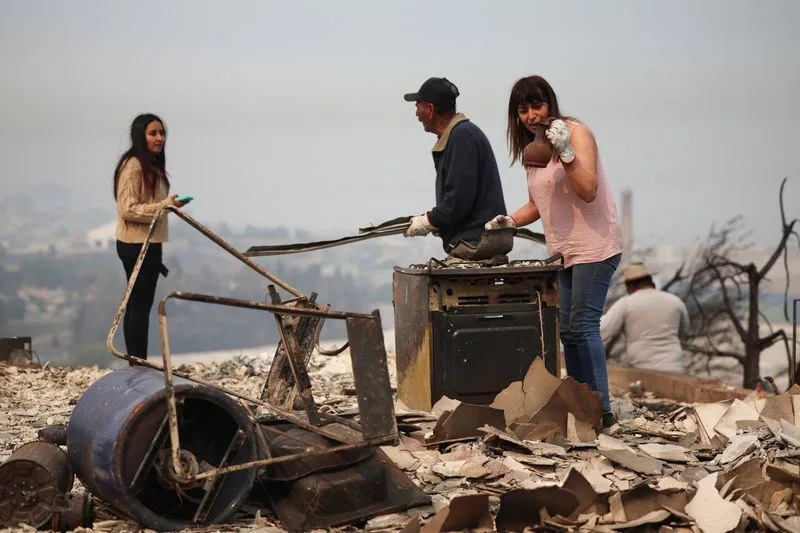
Ana Caamano collects debris from her destroyed home in the aftermath of a forest fire in the Biobio region, where multiple wildfires prompted emergency evacuations, in Concepcion, Chile January 19, 2026. REUTERS/Adriano Machado
So far more than 35,000 hectares (about 135 square miles) have burned—an area roughly the size of Philadelphia—with the single largest fire surpassing 14,000 hectares on the outskirts of Concepción.
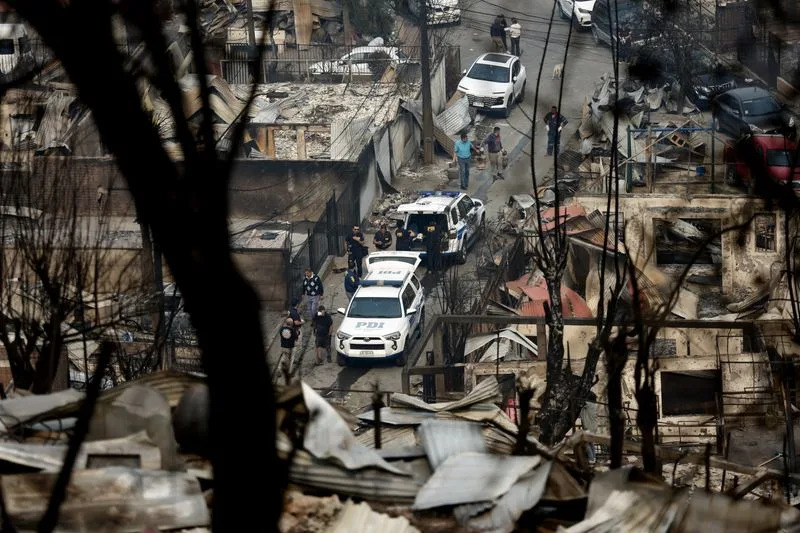
Investigations Police of Chile work, in the aftermath of a forest fire in the Biobio region, where multiple wildfires prompted emergency evacuations, in Concepcion, Chile, January 19, 2026. REUTERS/Juan Gonzalez
Weather And Conditions
The projection we have today is of high temperatures,
Security Minister Luis Cordero said, warning that the principal concern was new fires igniting across the region as high temperatures and strong winds persist. Parts of central and southern Chile were under extreme heat alerts, with forecasts of temperatures up to 37°C (99°F).
Why The Fires Have Been So Severe
Miguel Castillo, a professor at the University of Chile's Forest Fire Laboratory, said the combination of several consecutive days of temperatures above 30°C, abundant dry fuel and gusting, shifting winds made suppression far more difficult. "With those extreme conditions, it practically becomes an uncontrollable monster," he said, warning that multiple active fires can merge before crews can contain them.
Officials noted that while cooler overnight conditions helped bring some blazes under partial control, the largest fires remained active and adverse conditions were expected to persist through the day.
Regional Context
Both Chile and neighboring Argentina began the year with heat waves that have continued into January. Earlier this month, wildfires in Argentina's Patagonia burned roughly 15,000 hectares, underscoring the wider regional drought and heat trends that have heightened wildfire risk.
Authorities continue rescue, evacuation and firefighting operations, and emergency services urged residents in threatened areas to follow official instructions and evacuation orders.
Reporting by Alexander Villegas; Editing by Bernadette Baum, Andrea Ricci and Alistair Bell.
Help us improve.