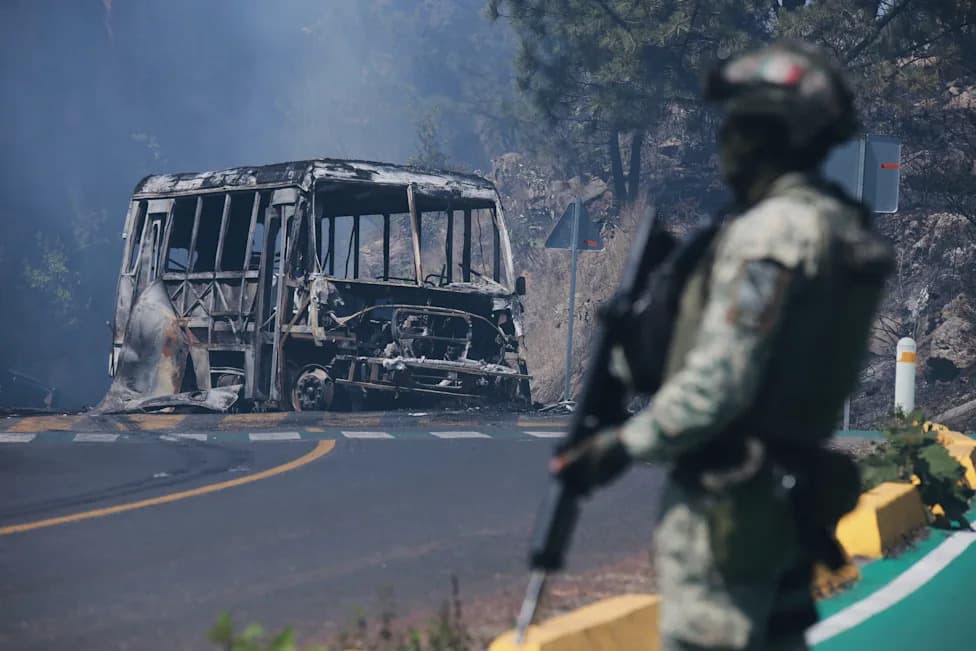
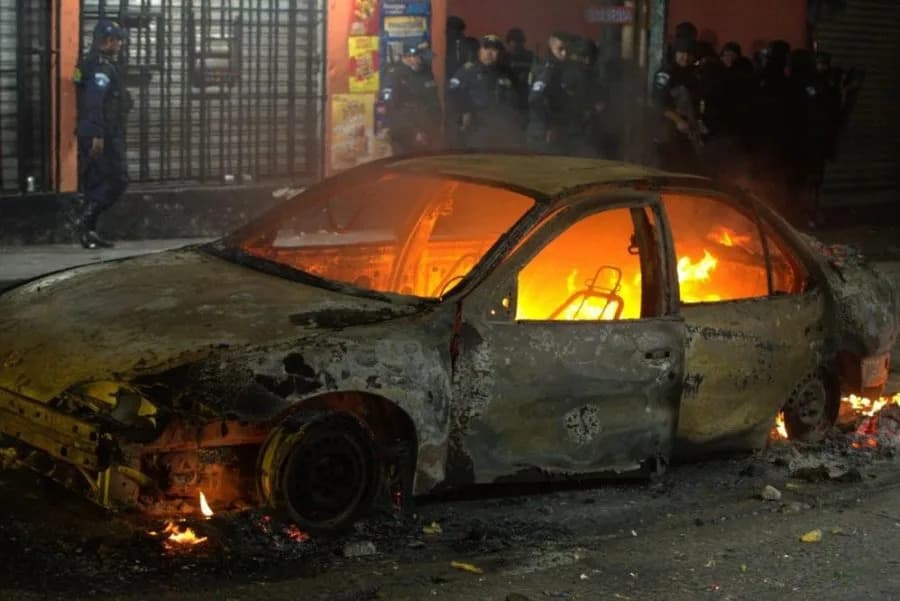
Guatemala declared a state of emergency after Saturday riots in which gangs seized control of three prisons, becoming the third Latin American government to take such action against gang violence. The move reflects a regional turn toward tougher measures: Colombia has threatened strikes against guerrillas tied to cocaine trafficking, Mexico extradited 37 alleged cartel members to the U.S., and Guatemala, Honduras and Costa Rica plan mega-prisons modeled on El Salvador’s CECOT. Analysts say both U.S. pressure and domestic political incentives are driving even left-leaning governments to adopt harder-line security policies.
Guatemala Declares State of Emergency as Central America Turns Tougher on Gangs
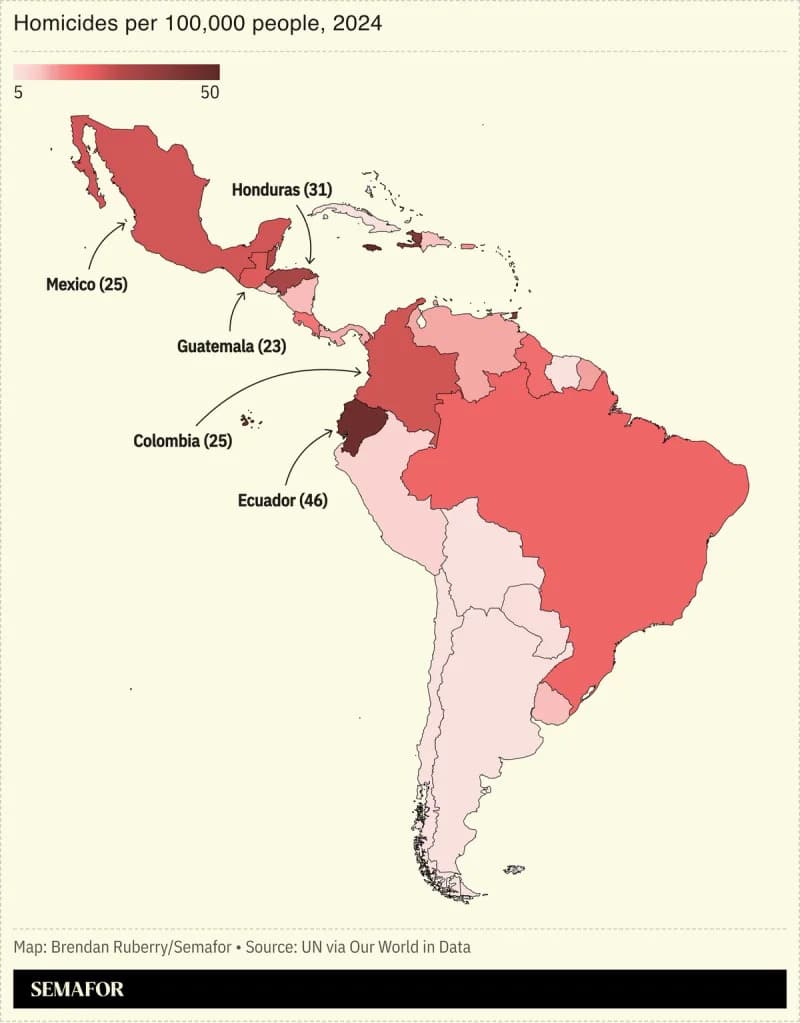
Map showing homicides per 100k people in Latin
Guatemala has declared a state of emergency to combat escalating gang violence after riots on Saturday during which gangs briefly seized control of three prisons. The government’s move makes Guatemala the third Latin American country recently to adopt emergency security measures in response to rising organized-crime threats.
Regional Shift Toward Harder-Line Security
The decision comes amid a broader regional trend toward tougher enforcement. Colombia’s president, under pressure from the United States, has threatened strikes against guerrilla groups accused of involvement in cocaine trafficking. Mexico recently extradited 37 alleged cartel members to the U.S., and Central American governments — including Guatemala, Honduras and Costa Rica — are planning large “mega-prisons” modeled on El Salvador’s CECOT facility.
“Fighting the gangs meets the vibe of the moment,” the Latin America Risk Report observed, noting that even left-leaning governments are responding to pressure from Washington and domestic voters. An expert quoted by The Associated Press added, “Projecting toughness is a political winner.”
Authorities say the emergency measures aim to restore control of detention facilities, curb gang coordination, and reassure a public alarmed by recent violence. Critics caution that emergency powers can risk abuses and stress the need for transparency and respect for human rights as security operations expand.
As Central American states tighten enforcement and pursue measures such as extraditions and prison construction, the region is signaling a political and security shift that could reshape how governments confront organized crime in the coming months.
Help us improve.