Colombia is experiencing a worrying rise in targeted violence against religious leaders, highlighted by a New Year’s Eve pastor killing and a mass grave in Calamar containing eight disappeared civilians, seven of them Protestant leaders or members. In 2023 the Petro administration removed “religious leaders” as an explicit protected category in a national decree, narrowing a legal route to urgent protection from the National Protection Unit. The change has increased risks in areas controlled by guerrillas and criminal groups and has implications for U.S. regional stability and migration. U.S. policymakers should press Bogotá to reinstate explicit protections for faith leaders.
Colombia Is Failing to Protect Religious Leaders — Why the U.S. Must Act
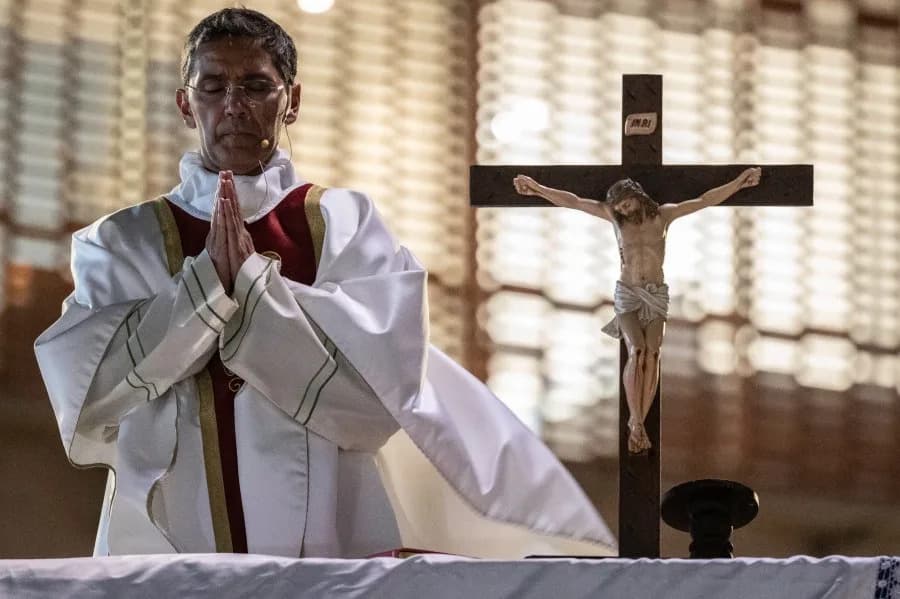
Colombia, a strategic partner for the United States in Latin America, is facing a growing crisis: targeted violence against religious leaders that the state has struggled to prevent. Recent killings — including a New Year’s Eve assassination of a Protestant pastor in northern Colombia and the discovery of a mass grave in Calamar, Guaviare — have underscored how vulnerable faith leaders are in conflict-affected areas.
What Happened
In late December, armed assailants killed a Protestant pastor in northern Colombia. That killing was the second in that same region in a year and the tenth reported killing of a religious leader nationwide since December 2024. Two days before Colombia’s 2023 National Day of Religious Freedom, authorities discovered a mass grave in Calamar containing eight forcibly disappeared civilians from April — seven of whom were Protestant pastors or active church members, and one a family member. Reports indicate the victims had been summoned for a “meeting” and were murdered in an area where armed groups retain effective control.
Policy Change and Its Consequences
Almost a month after President Gustavo Petro pledged in 2023 that “nobody would be persecuted for their religious convictions,” his administration amended a national decree that had explicitly listed “religious leaders” as a distinct protected category eligible for urgent security measures from the National Protection Unit. The change was presented as a way to broaden access, but in practice it removed a clear legal pathway that clergy and other faith leaders had relied on to request protection.
By reclassifying religious leaders into broader categories — such as social leaders or human rights defenders — the amendment can delay access to timely safeguards, obscure the specific risks faith leaders face, and reduce political visibility for victims who require rapid, tailored protection.
Why This Matters To The U.S.
The erosion of explicit protections for religious leaders has ramifications beyond Colombia’s borders. It increases instability in rural municipalities where guerrilla groups and criminal networks operate with relative impunity, contributes to displacement and migration pressures, and complicates counternarcotics and regional security efforts that are of interest to Washington. U.S. policymakers who consider the Western Hemisphere a strategic priority should be concerned about a policy change that weakens a legal mechanism protecting vulnerable civic actors.
What Should Be Done
Congress, the State Department, and incoming U.S. officials responsible for international religious freedom should press Bogotá to restore explicit protections for religious leaders in high-risk areas. Oversight during confirmation processes, targeted diplomacy, and conditional assistance tied to demonstrable improvements in protection measures can help push for reforms that restore clear, timely access to the National Protection Unit for faith leaders at extreme risk.
Conclusion
Religious leaders in Colombia frequently play multiple civic roles — providing community leadership, humanitarian assistance, and conflict mediation. Weakening their access to protection jeopardizes local stability and broader U.S. strategic interests. Restoring explicit legal protections for faith leaders would help reduce violence, support stabilization efforts in rural Colombia, and should be a priority for U.S. policy in 2026.
About the Author
Emily A. Cole is an attorney and international religious freedom advocate. A former Fulbright scholar to Ecuador, she directs the Latin America Working Group at the IRF Roundtable on Capitol Hill.
Help us improve.