James Bute Park, a 12.5‑acre recreational area on downtown Houston’s northeastern edge, sits atop the long‑vanished working‑class neighborhood known as Frost Town, founded in 1836 along Buffalo Bayou. Over more than a century the area was shaped by German, Black and Mexican American residents before highway and infrastructure projects — including work tied to the Elysian Viaduct — dismantled the community. A state‑mandated archaeological dig recovered over a quarter of a million artifacts that document everyday life from the city’s founding into the 20th century. Local advocates aim to preserve and interpret those finds through landmark protections and a future museum.
Beneath the Park: Rediscovering Frost Town, Houston’s Lost 19th‑Century Neighborhood
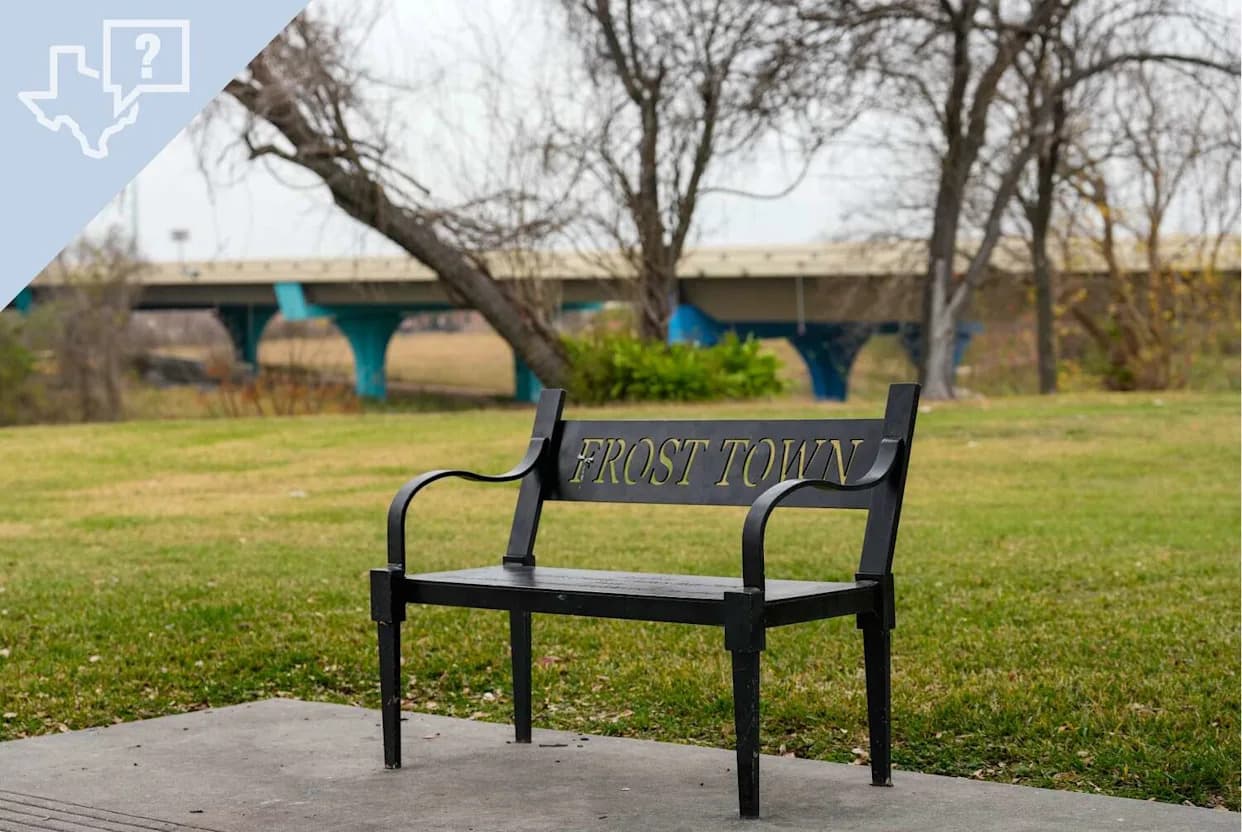
A park bench reading "Frost Town" marks the historic neighborhood along Buffalo Bayou in Houston, Thursday, Jan. 8, 2026. (Raquel Natalicchio/Houston Chronicle)
James Bute Park, a 12.5‑acre green space on the northeastern edge of downtown Houston, looks today like an open expanse of grass, a few benches and a sweeping view of freeway interchanges. Beneath that surface, however, lies the footprint of Frost Town, a working‑class neighborhood founded in 1836 along Buffalo Bayou and one of Houston's earliest communities.
Layers of Community
The land was first developed by the Frost family, led by Jonathan Benson Frost, a veteran of the Texas Revolution. Over the next century the neighborhood evolved through waves of settlement: German immigrants in the mid‑19th century, free Black Americans after the Civil War, and Mexican American families who arrived in the early 20th century. Each group was drawn by nearby industry, rail lines and jobs — creating a layered, multicultural working‑class community.
Displacement and Decline
Frost Town did not simply disappear; it was systematically dismantled as Houston prioritized infrastructure and industrial expansion. Its proximity to rail yards and Buffalo Bayou made the area vulnerable to road and freeway projects. The widening and related work around the Elysian Viaduct, among other highway projects, cut deeply into the neighborhood and led to the displacement of residents and demolition of homes.

“The roadways, freeways and other projects killed Frost Town,”
— Kirk Farris, historian and longtime preservation advocate
What Excavation Revealed
When the Elysian Viaduct widening triggered a state‑required archaeological investigation about a decade ago (under the Antiquities Code of Texas), excavators recovered more than a quarter of a million artifacts. The finds — from household items and children's toys to tools and personal effects — form a rare material record of everyday life in Houston from its founding well into the 20th century.
Those artifacts are currently curated by archaeologists with the Texas Department of Transportation, the Texas Historical Commission and the Houston Archeological Society. Advocates, led by Kirk Farris and his nonprofit Art & Environmental Architecture, Inc., hope to establish a dedicated museum or interpretive space to tell Frost Town's story and have pushed for landmark protections at the city, state and federal levels.
Why It Matters
Frost Town's buried remains are significant because they preserve the everyday histories that urban redevelopment often erases. The neighborhood’s story — of work, migration, displacement and resilience — offers a focused lens on how decisions about infrastructure, power and wealth shaped Houston's landscape and communities.
Today, visitors to James Bute Park will find a historical marker and a black bench etched with the words "Frost Town"; the visible traces are scant, but beneath the soil the neighborhood's history remains unusually intact, waiting to be interpreted and remembered.
Help us improve.