The United Nations warns Yemen's humanitarian crisis may worsen in 2026 as international aid dries up and food insecurity rises. An estimated 21 million people now need assistance, while last year the UN plan was only 28% funded ($688M). The UN cautions that weakened health services, economic collapse and damaged ports increase the risk of epidemics and higher mortality unless donor support and access improve.
UN Warns Yemen Crisis Could Deepen in 2026 as Aid Dries Up — 21 Million Now Need Help
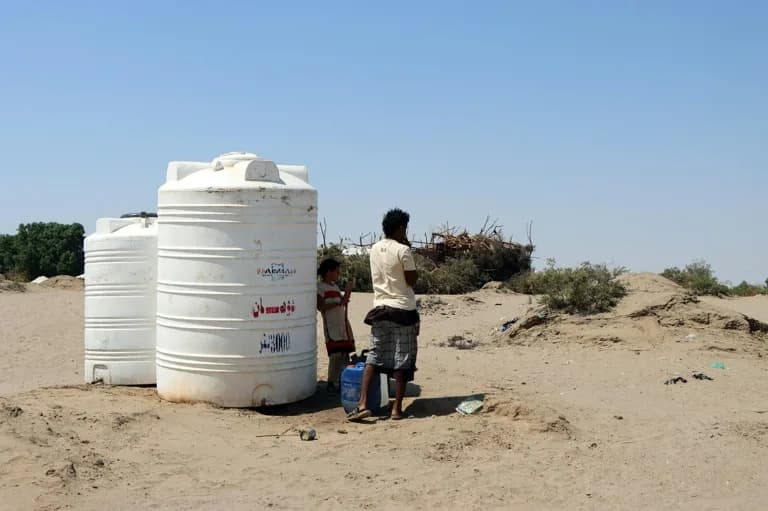
People standing next to water tanks at Al Salam camp for the internally displaced in Aden (Saleh Al-OBEIDI)(Saleh Al-OBEIDI/AFP/AFP)
The United Nations warned on Monday that Yemen's humanitarian emergency is likely to worsen significantly in 2026 as food insecurity intensifies and international aid dwindles.
Key figures: The number of people needing assistance has risen to an estimated 21 million, up from 19.5 million last year. The UN's response plan for Yemen was only 28% funded last year, receiving $688 million.
"We are expecting things to be much worse in 2026,"said Julien Harneis, the UN resident and humanitarian coordinator for Yemen, speaking to reporters in Geneva. He described the situation as "very, very concerning" and warned the crisis may go under the radar until mortality and morbidity rise sharply.
Harneis said food insecurity is increasing, particularly along the Red Sea coast, and that Yemen's health system — supported by the United Nations and the World Bank for the past decade — is likely to receive far less support than before. As a result, he warned Yemenis will be more vulnerable to epidemics this year, citing the cross-border risks of cholera, measles and polio.
He attributed much of the funding shortfall to cuts and tightening budgets among major donors. The UN coordinator noted that the United States, historically Yemen's largest donor, has reduced aid levels since the Trump administration and has not returned to previous funding patterns. Harneis urged the U.S. and Gulf countries to step up support and said the UN is working with NGOs to try to plug emerging gaps.
Beyond funding constraints, Harneis highlighted root causes that are driving humanitarian needs: an economic collapse, damage to ports and airports, and the disruption of essential services. "It's not active fighting, it's not massive displacement," he said. "It is the collapse of the economy and the damage to infrastructure that are creating these needs."
Operational challenges also compound the crisis. Seventy-three UN staff members are reportedly detained in Yemen, some since 2021, and the seizure of UN offices has left the organisation with limited ability to operate. "To see our humanitarian response so hobbled is terrifying," Harneis said.
Humanitarian organisations have reduced mortality and sickness in Yemen over the last decade, he noted, but with converging pressures in 2026 that progress is at risk of reversing unless donor funding and access are restored.
Outlook: Without a renewed and coordinated international response — including funding from major donors and increased support from regional partners — humanitarian indicators in Yemen could deteriorate quickly next year, with heightened risks of outbreaks, malnutrition and rising deaths among children and vulnerable populations.
Help us improve.