
International aid cuts and overlapping shocks — droughts, earthquakes, a weak economy and mass refugee returns — have pushed Afghanistan toward a humanitarian catastrophe. More than 17 million people face crisis-level hunger this winter, and only around 1 million received food assistance during the 2025 lean season versus 5.6 million the prior year. With donor funding down, the U.N. will focus lifesaving aid on 3.9 million people in 2026, leaving millions at risk of severe hunger, cold and homelessness.
Aid Cuts Deepen Afghanistan’s Hunger Crisis — Millions Face Winter Without Food or Heat

FILE - Afghan refugee families heading back to their homeland, gather next to trucks loaded with their belongings as they wait for documentation at the UNHCR Voluntary Repatriation Centre in Azakhel, Nowshera a district of Pakistan's Khyber Pakhtunkhwa, Monday, Aug. 25, 2025. (AP Photo/Muhammad Sajjad, File)(ASSOCIATED PRESS)
For roughly 10 hours each day, 29-year-old Rahimullah sells socks from a street cart in eastern Kabul, earning about $4.50–$6 a day to support his family of five. That meager income is now his only source of survival after much international and domestic assistance was reduced or suspended.
Humanitarian Need Outpaces Funding
Humanitarian organizations say Afghanistan is facing a catastrophic shortfall. The International Committee of the Red Cross estimated that about 22.9 million people — nearly half the population — required aid in 2025. The World Food Programme warned that more than 17 million people now face crisis-level hunger this winter, roughly 3 million more than a year earlier.
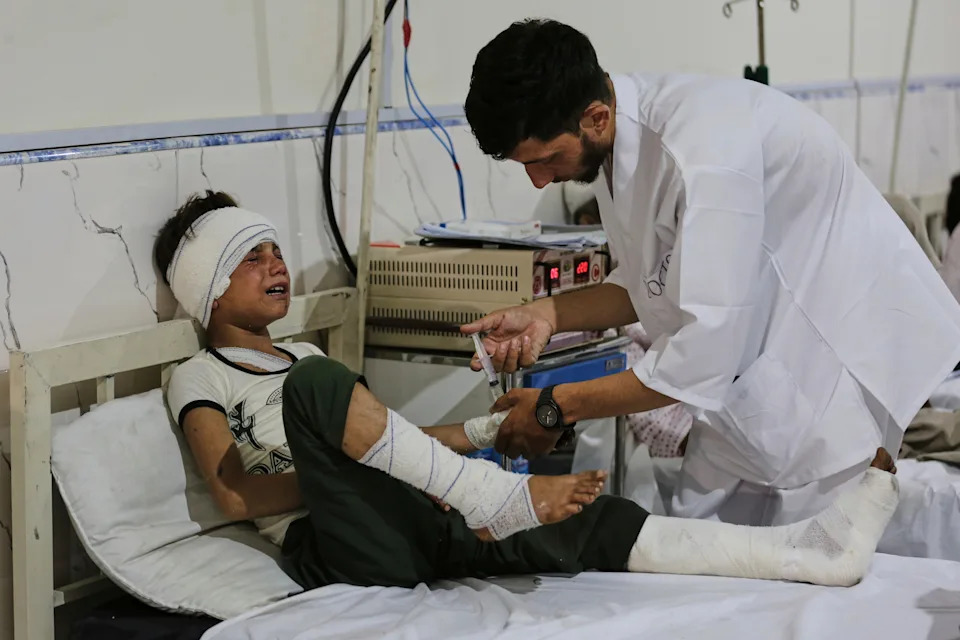
FILE - An Afghan boy injured in a powerful earthquake that struck eastern Afghanistan on Sunday receives treatment at Nangarhar Regional Hospital in Jalalabad, Afghanistan, Wednesday, Sept. 3, 2025. (AP Photo/Siddiqullah Alizai, File)(ASSOCIATED PRESS)
Steep cuts in international support, including paused U.S. funding to some World Food Programme distributions, have cut a vital lifeline. U.N. humanitarian chief Tom Fletcher told the Security Council that overlapping shocks — drought, two deadly earthquakes, a faltering economy, and rising restrictions on humanitarian access — have compounded the crisis. With donor support falling, the U.N. plans to prioritize lifesaving assistance for about 3.9 million of the most vulnerable people in 2026.
Lives On The Edge: Personal Stories
Rahimullah is a returned refugee who fled to Pakistan after the 2021 Taliban takeover and was later deported back to Afghanistan. He initially received cash and food assistance that helped his family survive, but that support has largely vanished.
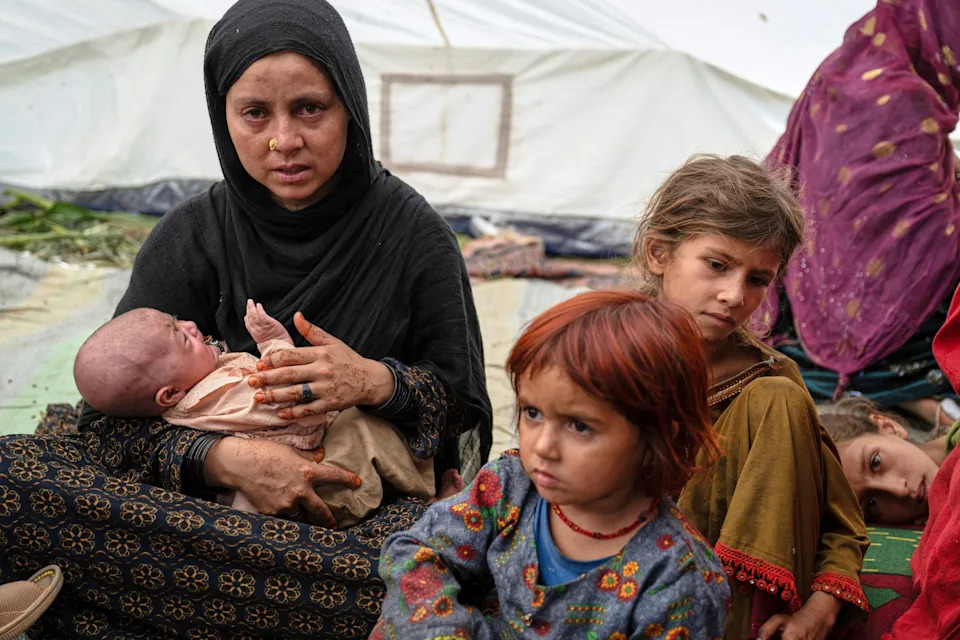
FILE - A woman and her children, survivors of Sunday night's 6.0-magnitude earthquake, wait for assistance in the village of Wadir, Kunar province, eastern Afghanistan, Tuesday, Sept. 2, 2025. (AP Photo/Nava Jamshidi, File)(ASSOCIATED PRESS)
“The assistance was helping me a lot. Now I don’t have enough money to live on. God forbid, if I were to face a serious illness or any other problem, it would be very difficult,” Rahimullah said.
The return of millions of Afghans — the government says about 7.1 million refugees have returned over the last four years — has driven up rents and strained services. Rahimullah says his landlord nearly doubled his rent from 4,500 afghanis (about $67) to 8,000 afghanis (about $120), forcing his family to plan a move to an unknown, likely worse, location.
In Badakhshan province, Sherin Gul and her household of 12 face a similar struggle. After receiving a lifesaving food package in 2023 that lasted six months, the family now has almost nothing. With an elderly husband who cannot work and only one son occasionally finding day labor, the household sometimes goes to bed with nothing to eat.
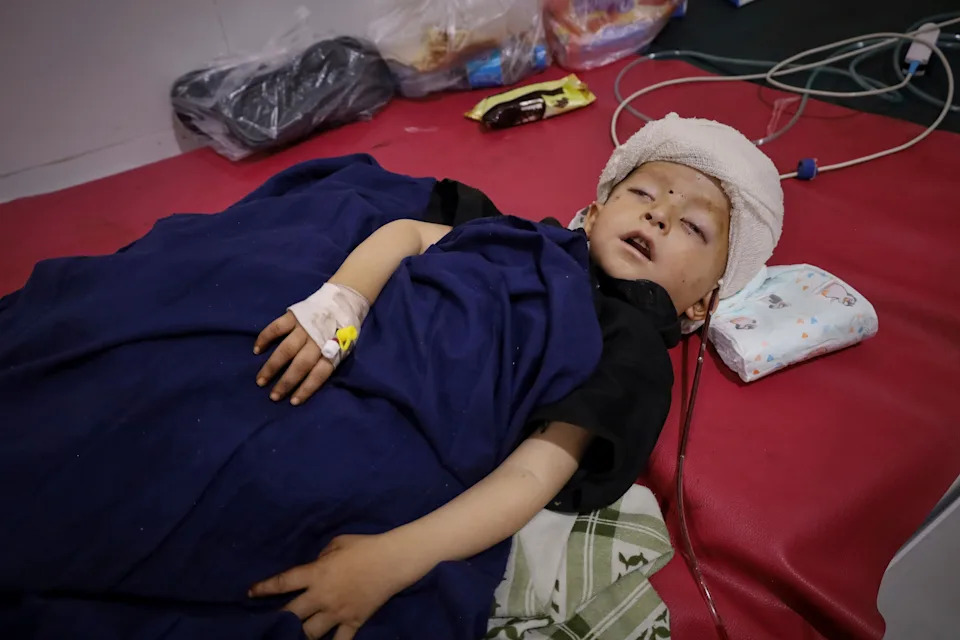
FILE - A boy injured during Sunday's powerful 6.0-magnitude earthquake that struck eastern Afghanistan lies in a hospital bed in Jalalabad, Afghanistan, Tuesday, Sept. 2, 2025. (AP Photo, File)(ASSOCIATED PRESS)
“There have been times when we have nothing to eat at night, and my little children have fallen asleep without food,” Gul said. “I have only given them green tea and they have fallen asleep crying.”
Women, Displacement and Winter Hardships
Restrictions on women’s employment since the 2021 change in government have removed wages for many households; both Rahimullah’s wife, formerly a teacher, and Gul, previously a cleaner, lost their income. The harsh winter further reduces work opportunities — snow halts construction — and increases expenses for heating, firewood and charcoal.
Humanitarian agencies have been forced to cut thousands of jobs and scale back programs amid funding shortfalls. Fletcher warned that this winter is "the first in years with almost no international food distribution," with only about 1 million of the most vulnerable receiving food assistance during the 2025 lean season compared with 5.6 million the previous year.
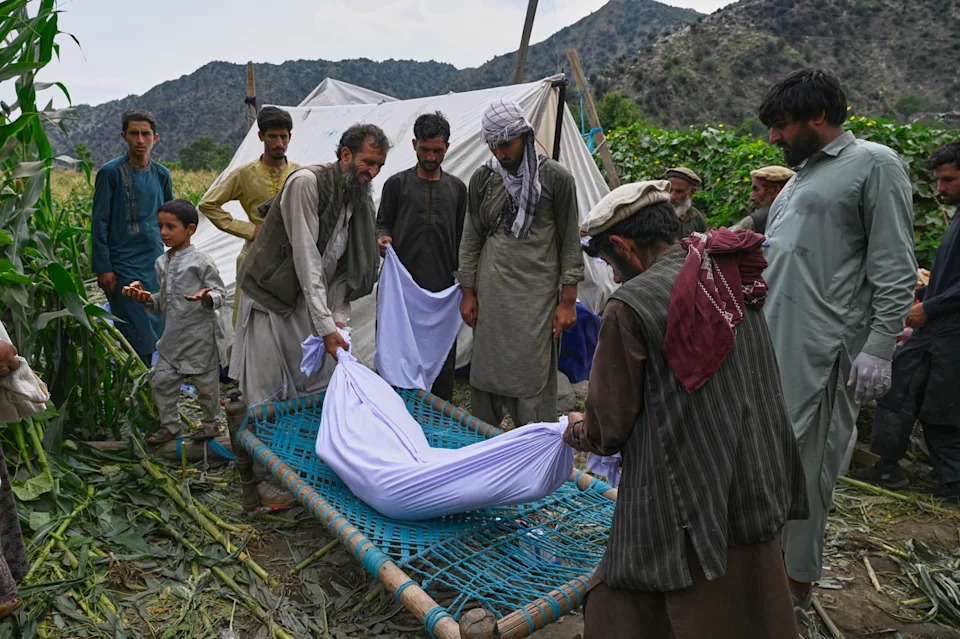
FILE - The body of a girl is placed on a bed frame after being pulled from the rubble following Sunday night's powerful 6.0-magnitude earthquake, in a remote area of Kunar province, Afghanistan, Tuesday, Sept. 2, 2025, (AP Photo/Nava Jamshidi, File)(ASSOCIATED PRESS)
Appeal and Outlook
U.N. officials and aid groups are appealing for more funding and access to reach people at risk of starvation and exposure. Without a rapid increase in support and eased restrictions on aid delivery, millions could face worsening hunger, loss of shelter and preventable illness this winter.
Associated Press writers Farnoush Amiri (United Nations), Jamey Keaten (Geneva) and Elena Becatoros (Athens) contributed to this report.


