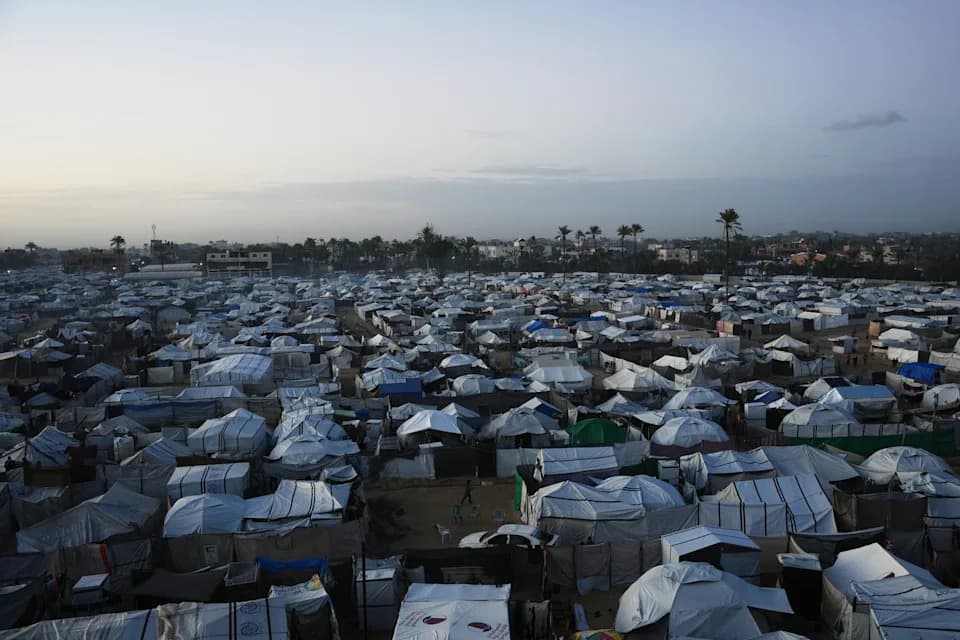
The U.N. warns that Sudan's worsening humanitarian crisis is hitting women hardest: female‑headed households are three times more likely to be food insecure and three‑quarters report not having enough to eat. The conflict — now in its 1,000th day — has intensified gendered protection risks, including sexual violence. U.N. agencies call for urgent aid to besieged cities such as al‑Fashir and Kadugli, while over 21 million people face acute food insecurity nationwide.
Women Hit Hardest as Sudan's Hunger Crisis Deepens, U.N. Warns
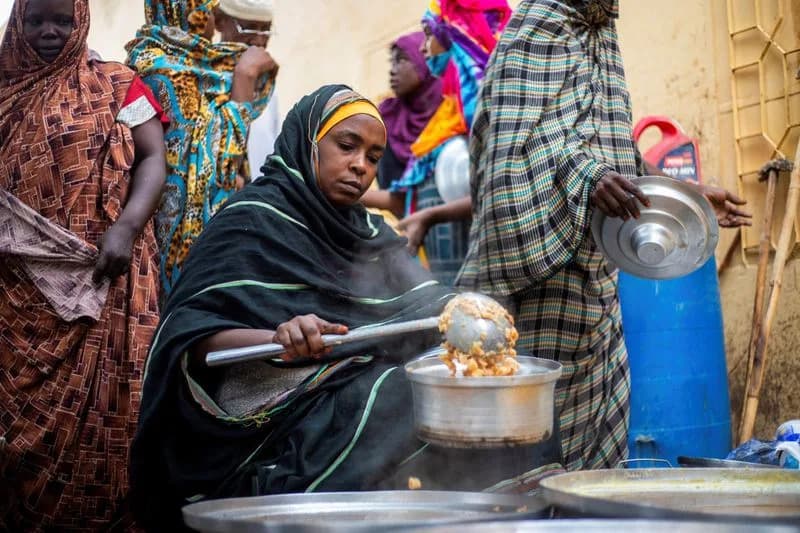
FILE PHOTO: A Sudanese woman from a community kitchen run by local volunteers distributes meals for people who are affected by conflict and extreme hunger and are out of reach of international aid efforts, in Omdurman, Sudan, August 22, 2024. REUTERS/Mazin Alrasheed/File Photo
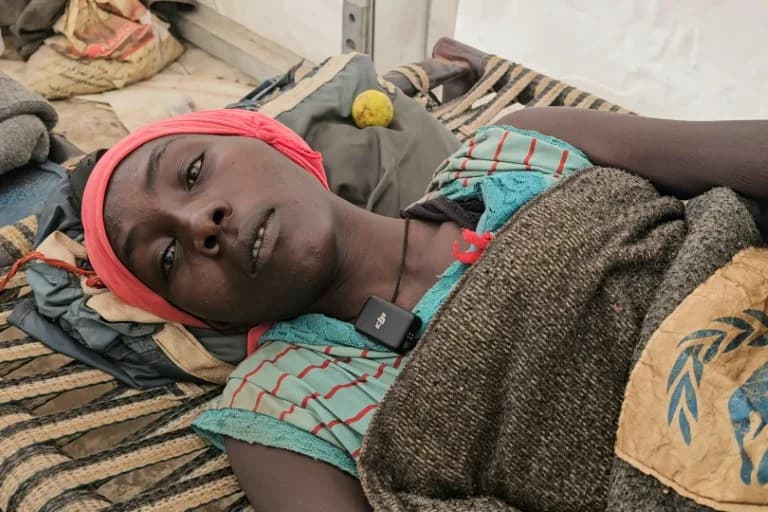
Women in Sudan are bearing a disproportionate share of the country's escalating humanitarian emergency, with most female‑headed households lacking sufficient food, the United Nations said on Friday.
"Female-headed households are now three times more likely to be food insecure. Three quarters of these households report not having enough to eat,"
Jens Laerke, spokesperson for the U.N. Office for the Coordination of Humanitarian Affairs (OCHA), told reporters in Geneva that pre-existing gender inequalities are being intensified by the ongoing conflict, which marked its 1,000th day on Friday.
U.N. Women has warned that women searching for food face heightened risks of sexual violence and other protection threats. Humanitarian agencies say these protection concerns compound the immediate crisis of hunger and displacement.
U.N. agencies have urged immediate international action to deliver aid to besieged cities including al‑Fashir in Darfur — seized by the paramilitary Rapid Support Forces (RSF) in late October — and Kadugli in Sudan's south. Both locations are now facing famine risks. More than 100,000 people are estimated to have fled al‑Fashir since the RSF took control following an 18‑month siege.
Across Sudan, more than 21 million people are assessed as acutely food insecure and roughly 34 million require humanitarian assistance, about half of them children, the U.N. said.
OCHA said it is pursuing an agreement with the United States that could make Sudan the first country to receive part of the $2 billion in assistance the U.S. pledged at the end of December. International aid workers were able to access al‑Fashir for the first time in December since the RSF takeover, but OCHA said it had no update on further plans to return.
Humanitarian organizations emphasize that urgent, sustained international support is needed both to deliver lifesaving food and medical supplies and to protect vulnerable populations — particularly women and children — as the conflict continues to disrupt markets, health services and safe movement.
Reporting by Olivia Le Poidevin; editing by Aidan Lewis.
Help us improve.