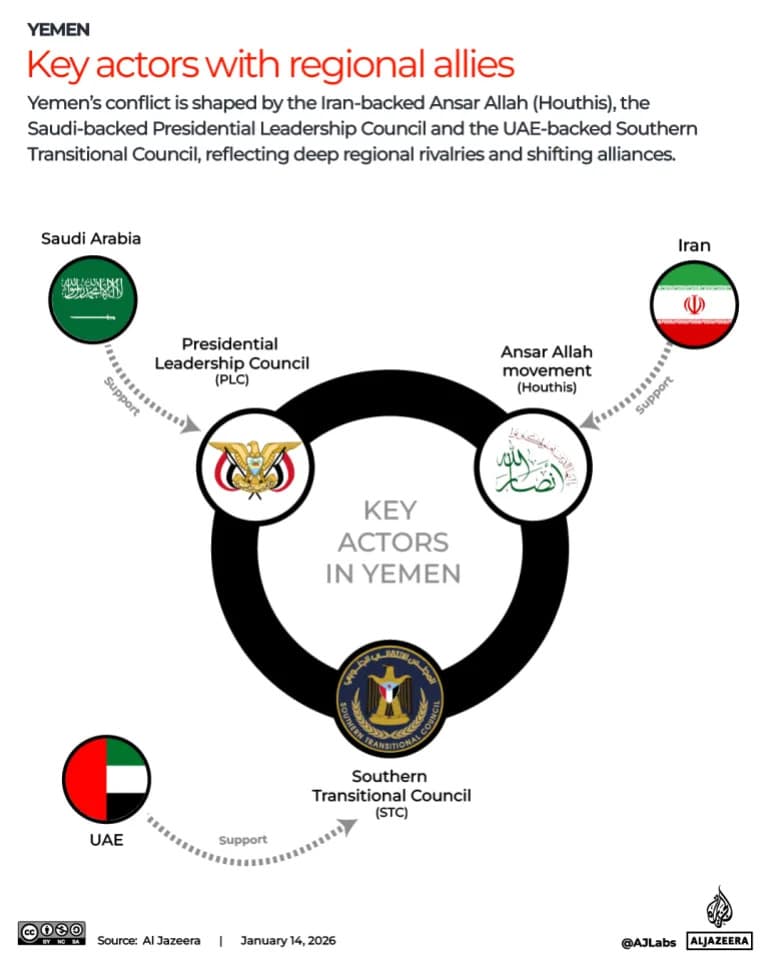
PLC Says It Retook Hadramout And al-Mahra: Yemen’s Saudi-backed Presidential Leadership Council reports recapturing two eastern, oil-rich provinces from the UAE-backed Southern Transitional Council after a month-long takeover. STC Turmoil: The STC’s December 2025 seizure fractured its alliance with the PLC and prompted Saudi air strikes; STC leader Aidarous al-Zubaidi was accused of treason and reportedly fled. Houthis And Humanitarian Crisis: Iran-aligned Houthis still control much of the north including Sanaa and Red Sea ports, while roughly 17 million people face acute food shortages and nearly 5 million were in crisis-level food insecurity as of May 2025.
Who Controls Yemen in 2026? PLC Says It Retook Hadramout and al-Mahra — A Field Guide
(Al Jazeera)
The internationally recognised Presidential Leadership Council (PLC) says its forces have recaptured the eastern provinces of Hadramout and al-Mahra, reversing a month-long takeover by the UAE-backed Southern Transitional Council (STC). The clashes have intensified rivalries among regional backers and deepened an already catastrophic humanitarian crisis across Yemen.
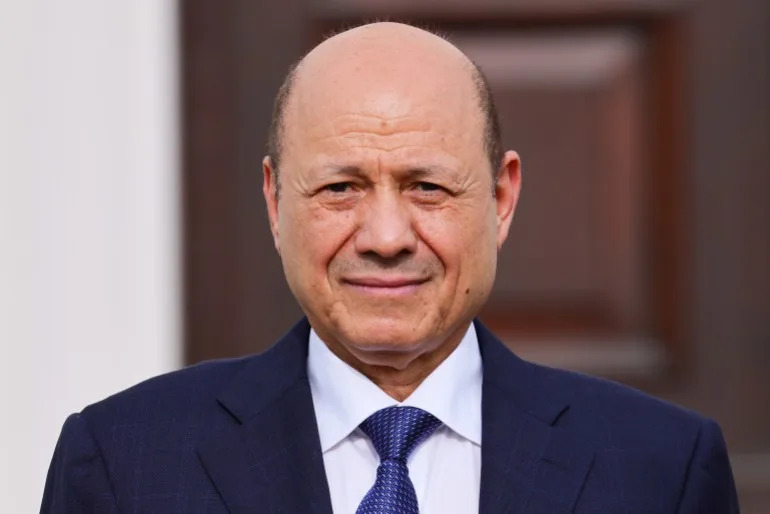
Rashad al-Alimi, chairman of the Presidential Leadership Council of Yemen, on September 14, 2022 [File: Omer Messinger/Getty Images]
What Happened
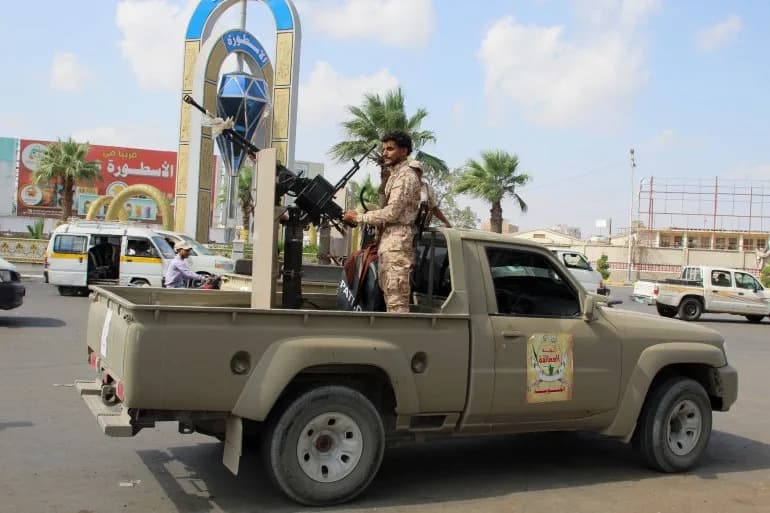
In early December 2025 the STC seized the oil-rich provinces of Hadramout and al-Mahra, which lie along Yemen’s eastern flank bordering Saudi Arabia. Riyadh described that seizure as a national security red line and launched a series of air strikes on STC positions, including an attack on the port of Mukalla that Saudi authorities said was being used to receive weapons shipments.
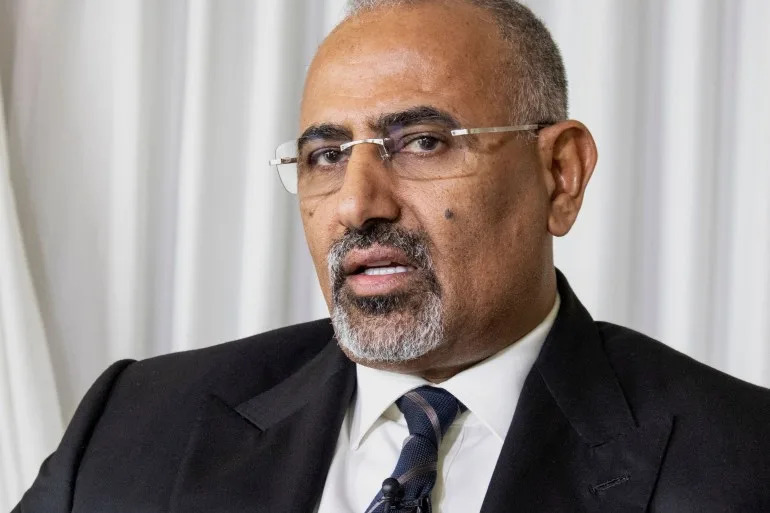
The president of Yemen’s Southern Transitional Council, Aidarous al-Zubaidi, on September 22, 2023 [File: Ted Shaffrey/AP Photo]
Who Controls What
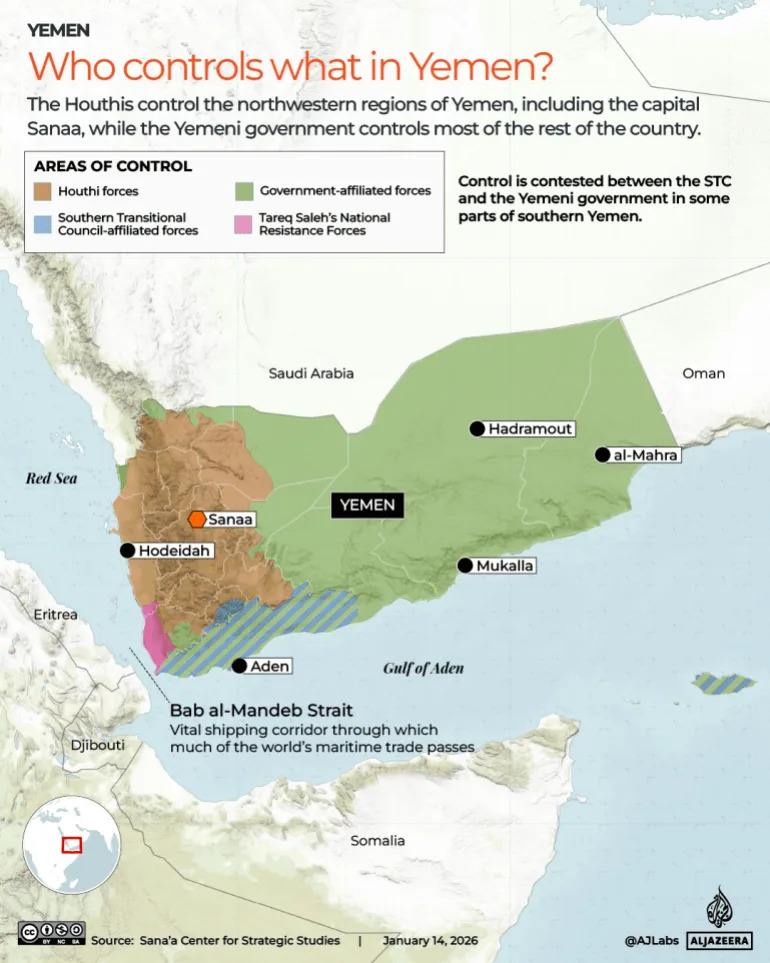
Fighting and shifting alliances have produced a fragmented map of control. According to Sana’a Center data and reporting on recent events:
(Al Jazeera)
- The PLC (Saudi-backed) claims to have regained Hadramout and al-Mahra and holds parts of southern Yemen, including government installations in Aden.
- The STC (Emirati-backed) retains forces in some southern localities despite recent setbacks and political upheaval.
- The Houthis (Ansar Allah, Iran-aligned) continue to control large areas in the north and west, including the capital Sanaa and strategic Red Sea ports such as Hodeidah.
Key Players
Presidential Leadership Council (PLC): Yemen’s internationally recognised governing body, headquartered in Aden and backed by Saudi Arabia. Led by Rashad al-Alimi since 2022, the PLC was created to unify anti-Houthi factions and steer a political transition.
(Al Jazeera)
Southern Transitional Council (STC): A southern secessionist movement backed by the UAE that seeks greater autonomy or independence for southern Yemen. The STC’s December 2025 seizure of eastern oil provinces fractured its alliance with the PLC. On 7–9 January 2026 political turmoil followed: the PLC accused STC leader Aidarous al-Zubaidi of treason and he reportedly left the country; a Riyadh-based STC delegation announced a disbandment that was later contested by STC officials inside Yemen.
Ansar Allah (Houthis): An Iran-aligned armed movement that controls much of northwestern Yemen, including Sanaa. The Houthis hold strategic positions along the Red Sea and have conducted strikes on vessels they allege have ties to Israel, alongside missile and drone attacks directed at Israel since November 2023.
Humanitarian Impact
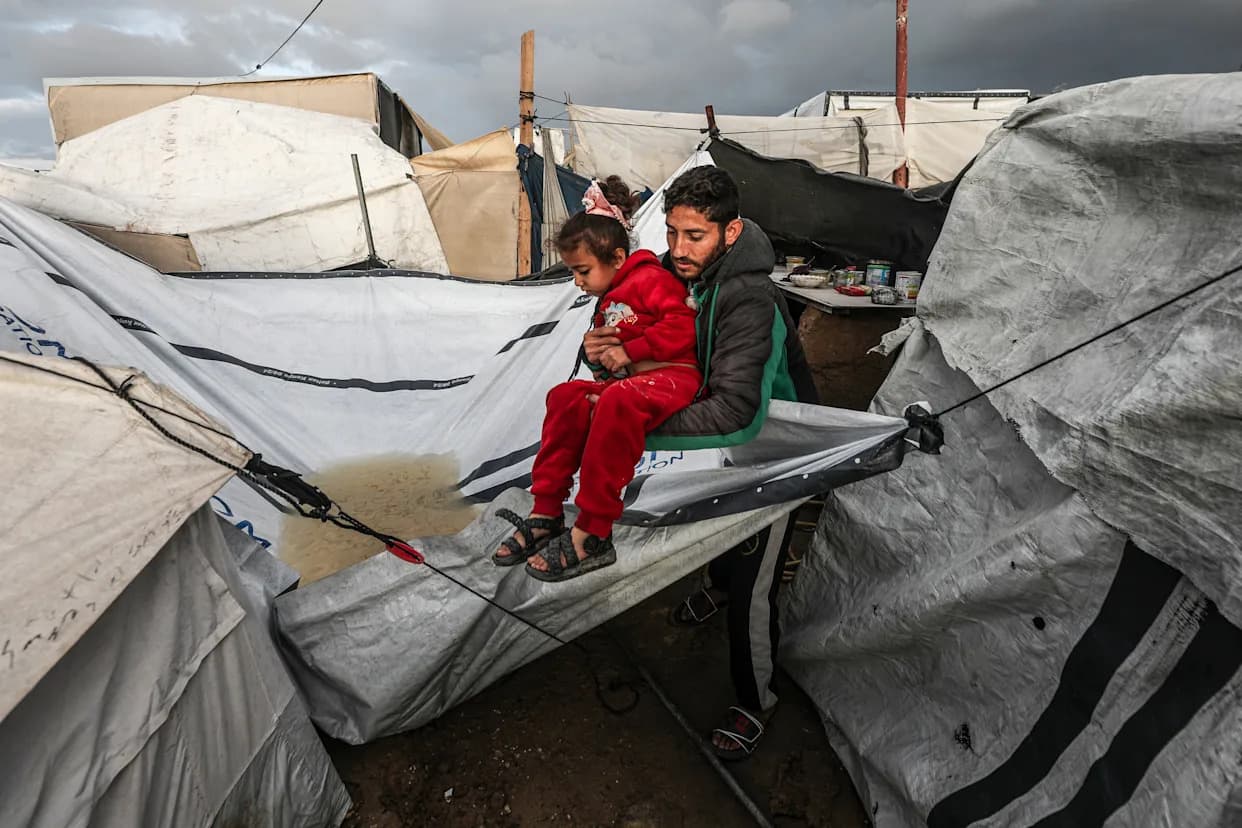
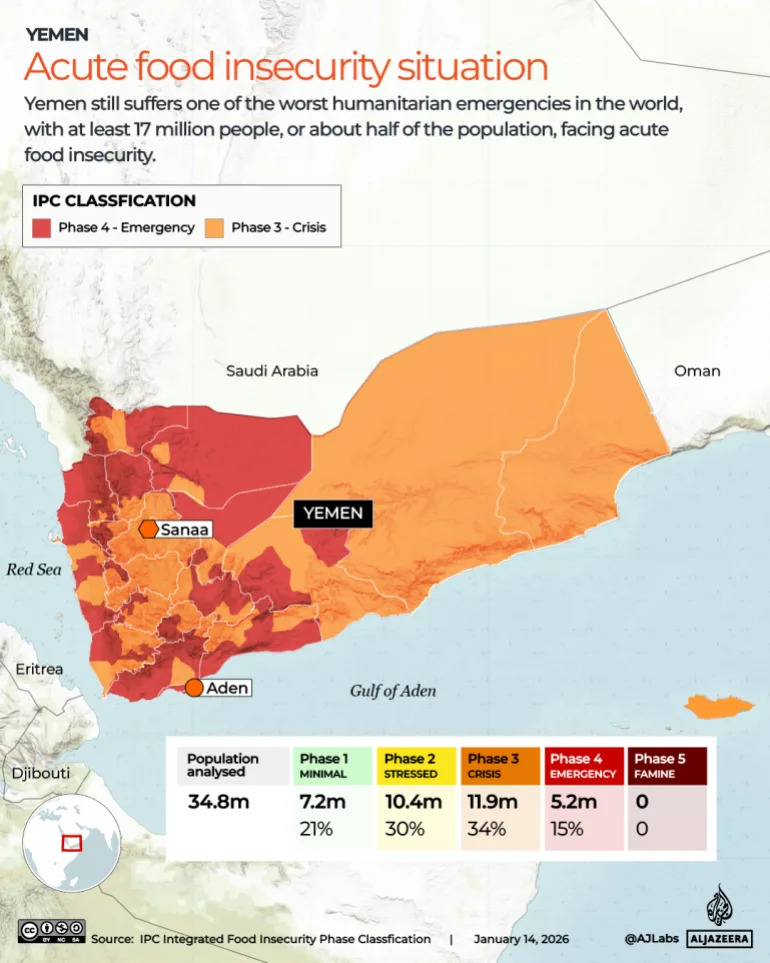
Yemen remains in the throes of one of the world’s worst humanitarian emergencies. A decade of conflict, economic collapse and damaged infrastructure has left millions vulnerable:
- At least 17 million people face acute food shortages (roughly half the population of ~42 million).
- As of May 2025, about 4.95 million people were in Phase 3 (crisis) food insecurity, including 1.5 million in Phase 4 (emergency).
- Approximately 11 million children require humanitarian assistance and nearly 4.8 million people have been internally displaced since 2015.
Why It Matters
Control of oil-producing provinces and Red Sea ports affects regional security, international shipping routes and humanitarian access. The recent PLC–STC rupture risks renewed fighting in the south and heightens tensions between Saudi Arabia and the UAE, complicating diplomatic efforts to revive a durable ceasefire and expand aid delivery.
Data note: Territorial descriptions are based on Sana’a Center for Strategic Studies data and reporting available through January 2026.
Help us improve.