The federal government briefly rescinded and then reinstated grants for mental health and substance-use services, affecting about 2,800 organizations partnered with SAMHSA. Agencies awoke to termination notices, rushed to protect staff and clients, and then received a reversal instructing them to continue operations. Leaders described the episode as "whiplash," warning that such instability endangers vulnerable people and undermines long-term recovery. Advocates call for robust funding safeguards to prevent future care interruptions, particularly in communities hit hardest by overdose and behavioral-health disparities.
‘It’s Whiplash’: Reversed Federal Cuts Disrupt 2,800 Mental Health And Substance-Use Programs
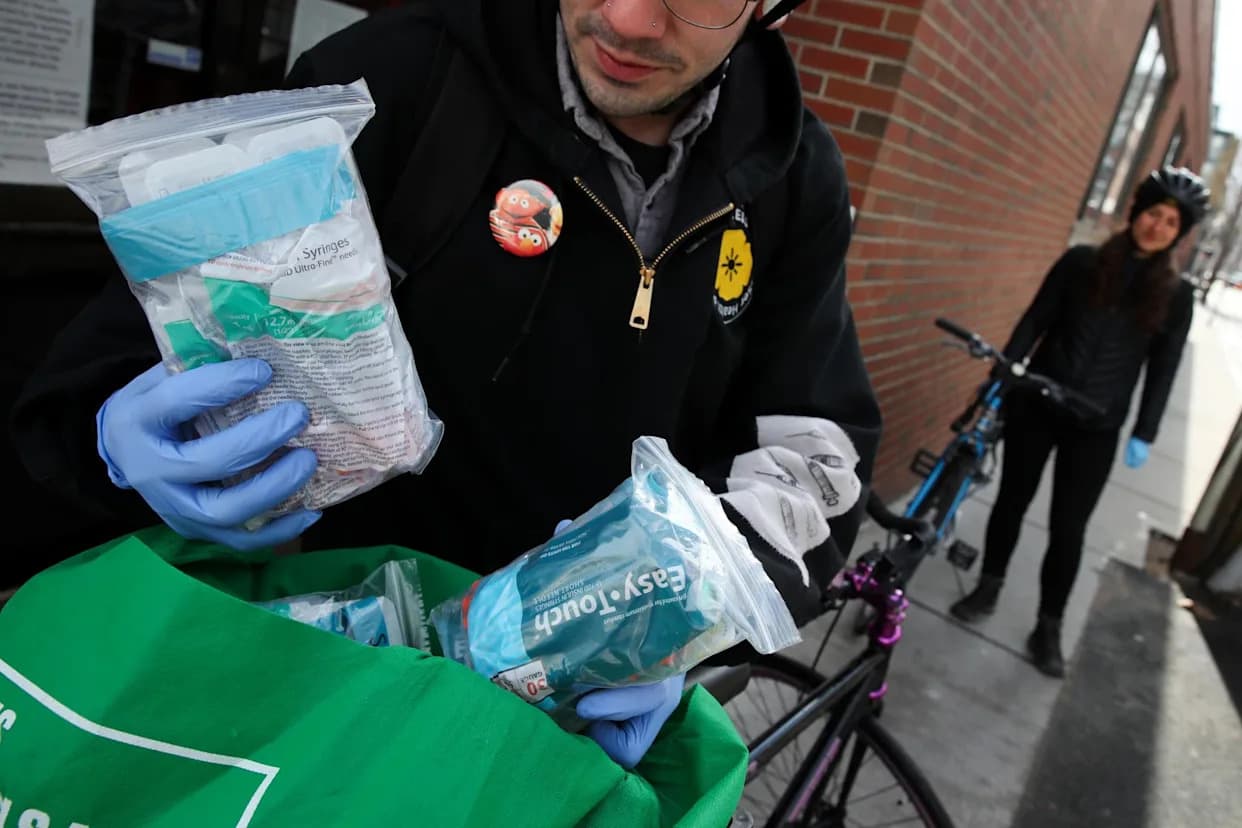
An outreach worker displays safe injection supplies outside a drop-in center in Cambridge, Massachusetts, on 31 March 2020.Photograph: Craig F Walker/The Boston Glove via Getty Images(Photograph: Craig F Walker/The Boston Glove via Getty Images)
Across the United States, community organizations provide essential mental health and substance-use supports: an HIV counseling program in Alabama helping clients secure treatment and housing; crisis-response training for first responders in New Hampshire; trauma counseling for children in Tennessee. On Wednesday, those programs — and roughly 2,800 others partnered with the Substance Abuse and Mental Health Services Administration (SAMHSA) — received an abrupt email: their federal grants had been terminated, effective immediately.
Immediate Impact
Program directors woke to termination notices and scrambled to hold emergency meetings, review payroll, and weigh layoffs while searching for ways to keep services running. For many small providers, the threat of losing funding meant the immediate possibility that clients already in care could lose critical supports overnight.
Reversal And Continuing Uncertainty
Less than 24 hours later, agencies received a second notice: the federal award cancellations had been rescinded and the grants were reinstated. A letter obtained by the Guardian instructed grantees to "disregard the prior termination notice and continue program activities." Still, providers said the abrupt reversal created chaos and left them deeply unsettled about the stability of future funding.
Voices From The Field
"It's whiplash," said Reuben Rotman, president and CEO of the Network of Jewish Human Service Agencies. The sudden withdrawal and quick restoration of funds is "incredibly disruptive" for organizations and the communities they serve.
Devin Lyall, founder of Wilkes Recovery Revolution in rural North Carolina, said the biggest concern was the threat to people already in treatment: "The threat to people that are already a vulnerable population... that that care might disappear overnight, I think is the biggest concern."
Wilkes Recovery Revolution is in the third year of a five-year SAMHSA grant that provides $300,000 a year — roughly one-fifth of the group's funding. Those dollars fund transitional housing, peer supports, transportation to treatment and appointments, employment assistance, and other services that help people rebuild lives.
Broader Implications
Leaders warned that decisions like a sudden funding pull threaten fragile recovery ecosystems. "If you’re doing the work and you’re reporting to the government and you’re in full compliance... you’re not expecting your contract… to be abruptly terminated in an email at 3am," Rotman said. Saeeda Dunston, CEO of Elmcor Youth & Adult Activities Inc., emphasized that "life-saving care cannot operate on instability," calling for investments in systems that can withstand political shifts and protect communities most affected by overdose and behavioral-health disparities.
What Providers Need
Providers say the episode exposed a deeper problem: the safety net for vulnerable people is fragile and can be undermined by sudden administrative decisions. Beyond reinstating funds, advocates want clearer procedures, greater transparency, and protections that prevent abrupt interruptions to care — especially for communities of color and others disproportionately harmed by addiction and mental-health crises.
Bottom line: Although grants were quickly reinstated, the upheaval left agencies scrambling, clients at risk, and providers demanding stronger safeguards to ensure continuity of care regardless of political shifts.
Help us improve.