Summary: The Trump administration has activated a "Defend the Spend" mechanism and frozen child-care payments to Minnesota while proposing tighter documentation requirements — potentially including receipts, photos and attendance records — for CCDF and related funds in five states. Advocates say existing audits and reporting already limit improper payments, and they warn new demands could delay reimbursements, force provider layoffs or closures, and reduce access to care for low-income families. The affected states sued and a federal court issued a temporary restraining order halting the freeze pending further legal review.
Trump Administration Tightens Child-Care Funding Rules, Threatening Providers and Families
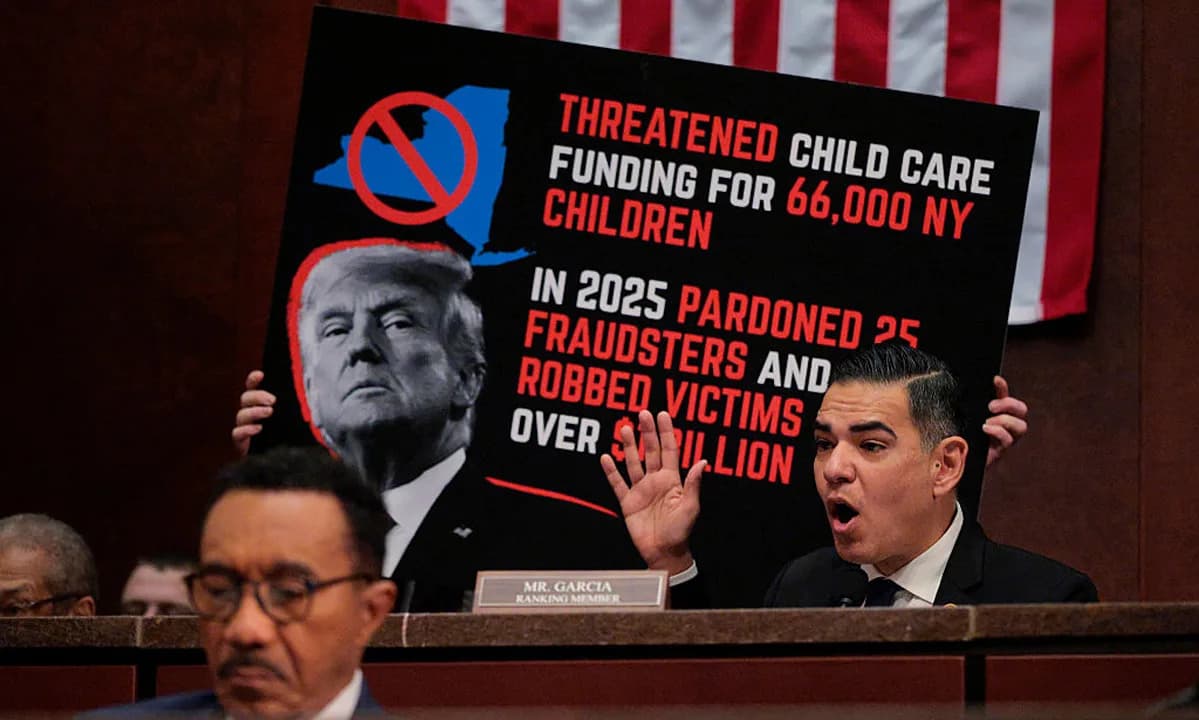
The Trump administration has invoked long-running fraud probes in Minnesota and a viral, unverified video to impose tighter controls on federal child-care funding nationwide — a move that advocates warn could delay payments, destabilize providers and reduce child-care access for low-income families.
What Happened
On Dec. 30, 2025, Department of Health and Human Services (HHS) Deputy Secretary Jim O’Neill announced on the social platform X that the agency had "frozen all child care payments to the state of Minnesota" and had "activated our Defend the Spend system for all ACF [Administration for Children and Families] child care payments across America," saying it would "require a justification, receipt or photo evidence before we make a payment."
Days later, the administration sought to restrict access to key funding streams — including the Child Care Development Fund (CCDF), Temporary Assistance for Needy Families (TANF) and Social Services Block Grant money — in five states (California, Colorado, Illinois, Minnesota and New York). On Jan. 8 the five states sued, and on Jan. 9 the U.S. District Court for the Southern District of New York granted a temporary restraining order blocking the proposed freeze.
HHS Explanation And Uncertainty
HHS spokesperson Emily Hillard told The 74 that "the onus is on the state to provide additional verification, and until they do so, HHS will not allow the state to draw down their matching funds for the CCDF program." However, communications shared with state agencies about the new requirements do not clearly limit the extra verification to matching funds, nor do they explicitly confine the documentation to matching funds only or rule out receipts and photographs.
Ruth Friedman, senior fellow at The Century Foundation and former director of the Office of Child Care at ACF: "Requiring receipts and photographs is super concerning. States may not currently keep that documentation, and new burdens could lead to significant delays in payments."
Background: Defend the Spend And Earlier Delays
An initiative called "Defend the Spend" was applied to both CCDF and Head Start in early 2025. In April 2025 state agencies were required to submit a "justification" describing the award and planned uses when requesting grant dollars already appropriated by Congress; those steps caused funding delays and in at least one state led to layoffs or late payroll.
For Head Start, the Defend the Spend mechanism remains in place: administrators drawing down awarded funds see an extra justification box in the payment management system, and some programs have reported requests taking up to two weeks to process instead of the typical 24 hours.
Existing Oversight And Advocates' Concerns
Advocates say CCDF already has multiple safeguards: annual audits of providers, quarterly financial reports, periodic improper-payment reports, multi-year state compliance plans reviewed by HHS, and fraud-detection systems that trigger corrective action for high error rates. The national improper-payment rate for CCDF was under 4% in 2023.
Critics argue the new requirements may be redundant and could create paperwork and technical hurdles states do not presently track — such as verified, non-identifiable attendance records or photographic evidence — resulting in delayed reimbursements for providers who have already delivered care.
Potential Consequences
If states cannot meet new documentation demands and are blocked from drawing down CCDF funds, providers who accept subsidies could go unpaid for services already provided. That could force closures, staff reductions, or a decision by providers to stop accepting subsidies and enroll only families who pay out of pocket. Advocates warn this would disproportionately harm low-income families who rely on subsidized child care to work.
The administration has also proposed rescinding Biden-era rules that encouraged paying providers based on enrollment and providing funds upfront (rather than paying after the month ends). Those rules were designed to stabilize provider cash flow; rescinding them would revert many programs to reimbursement practices that can leave providers covering costs in the short term.
Legal And Political Fallout
The five states affected filed suit against the federal pause, arguing the administration failed to justify its actions. The temporary restraining order issued by the U.S. District Court (SDNY) halted the freeze for now, but the legal dispute — and the public rhetoric about fraud — may influence state decisions about whether to continue provider-friendly payment practices even if the rules remain technically available.
Bottom line: While preventing fraud is a valid government goal, advocates and former federal officials warn that broad, unclear documentation demands and pauses in funding risk destabilizing an already fragile child-care sector and leaving families without reliable care.
Help us improve.