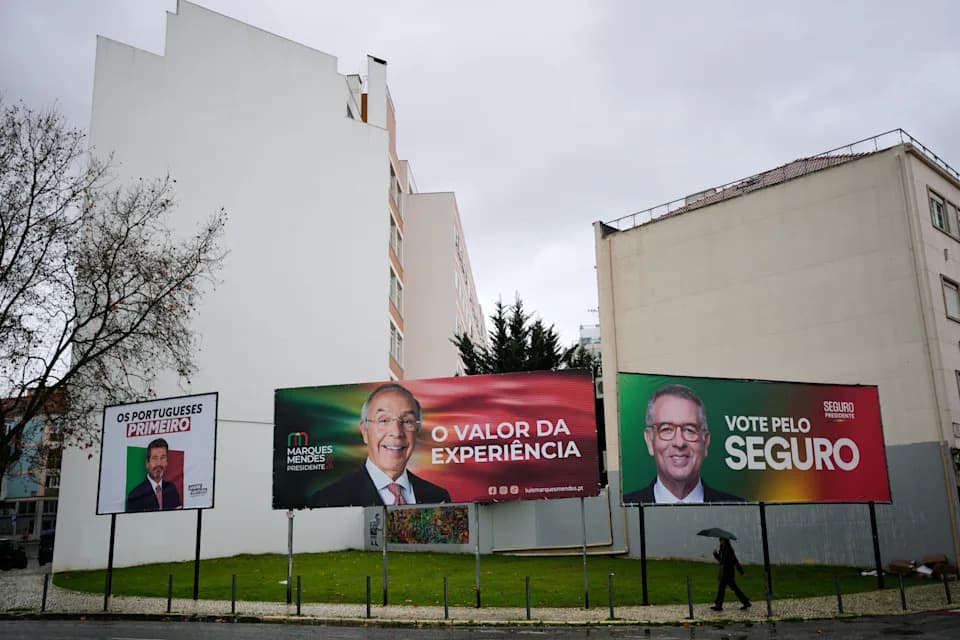
Portugal's first-round presidential vote is uncertain: polls show far-right leader André Ventura could top the initial ballot but would likely lose any second-round matchup. A run-off on February 8 would be the first in 40 years if no candidate clears the 50% threshold. Of 11 candidates, five are seen as credible contenders; a strong Chega result could reshape parliamentary dynamics despite the presidency's largely ceremonial role.
Portugal Presidential Vote Wide Open as Far-Right Surge Could Force Rare Run-Off
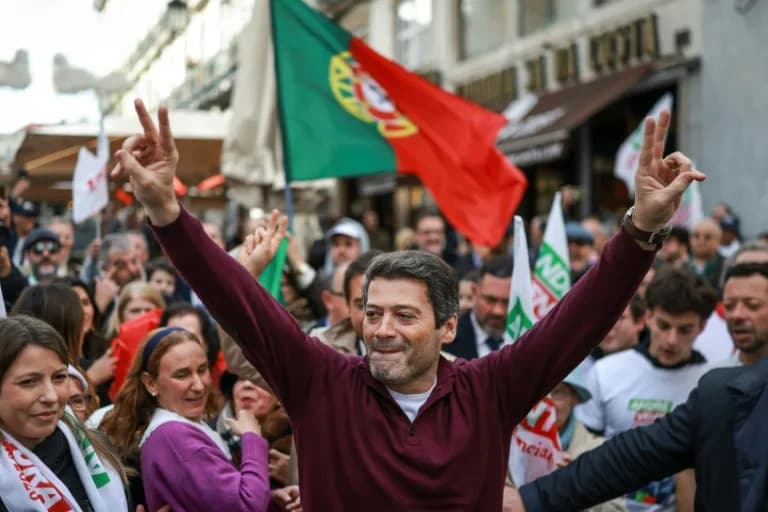
Far-right candidate Andre Ventura is tipped to make it to the second round run-off (PATRICIA DE MELO MOREIRA)(PATRICIA DE MELO MOREIRA/AFP/AFP)
Portugal goes to the polls on Sunday for the first round of a presidential election in which a far-right contender could, for the first time, reach a run-off — yet the final outcome remains hard to predict.
Opinion polls suggest André Ventura, leader of the far-right Chega ("Enough") party, could finish first in the initial ballot but would likely be defeated in a head-to-head second round by any of several mainstream rivals.
If no candidate secures more than 50 percent of the vote, a run-off will be held on February 8 — the first time in four decades the presidency would not be decided outright in the first round.
There is a record field of 11 candidates, but pollsters identify five with a realistic chance to advance to the decisive second round to succeed conservative incumbent Marcelo Rebelo de Sousa. Alongside Ventura (43) these contenders include Socialist António José Seguro (63); liberal MEP João Cotrim de Figueiredo (64); right-leaning former PSD leader Luís Marques Mendes (68); and Henrique Gouveia e Melo, a retired admiral who led Portugal's COVID-19 vaccination campaign.
Analysts say any of Ventura's likely rivals would beat him in a one-on-one runoff, but a strong showing by Chega would nonetheless reshape domestic politics: the party won 22.8 percent of the vote and 60 seats in last May's general election, becoming the largest opposition force.
Polling stations open at 8:00 a.m. (0800 GMT) on Sunday and exit polls are expected at 8:00 p.m. (2000 GMT).
What the Presidency Means
The Portuguese presidency is largely ceremonial: the officeholder does not exercise day-to-day executive power but retains important constitutional tools. In times of crisis the president can dissolve parliament, call elections or dismiss a prime minister, giving the post strategic significance beyond its ceremonial role.
Popularity Test
Experts say Ventura views this election primarily as a measure of his standing and a stepping stone toward broader ambitions, including an eventual bid to lead a government.
"André Ventura is running to keep and expand his voter base," said António Costa Pinto, a political scientist at the University of Lisbon.
A stronger far right would increase pressure on the minority government led by right-winger Luís Montenegro, which relies on support from parties such as Chega to pass some measures. Consulting firm Teneo warned that another solid result for the far right would "confirm its domination over the political landscape."
Ventura, who has pledged to "put Portugal in order," urged other right-leaning parties not to create "obstacles" should he face the Socialist candidate in a runoff. Seguro insists he is the candidate best placed to beat Ventura and defend democratic norms against what he calls "extremism."
Portugal has nearly 11 million inhabitants and is a member of the European Union and the eurozone, accounting for about 1.6 percent of the EU's gross domestic product (GDP).
Reporting contributions: tsc/gil-jh/rmb/abs
Help us improve.