In a two-hour New York Times interview, President Trump said that "my own morality" would be the only thing to stop him — a remark the transcript confirms, not a slip for "mortality." The columnist argues this is alarming given Trump’s record: extensive fact-checking tallies and multiple legal findings against him. The piece concludes that institutional checks, not personal assurances, are the reliable limits on power.
He Said 'My Own Morality' — Should We Be Worried? Trump’s Remark, The Record, And Why It Matters
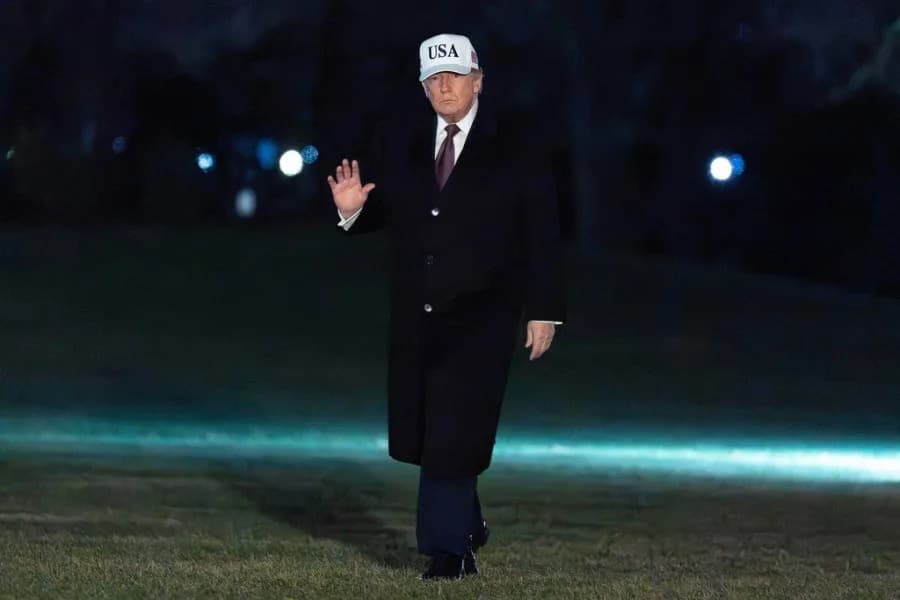
President Trump’s recent two-hour interview with The New York Times produced a striking line that grabbed headlines: when asked whether anything would limit his use of global power, he replied, "Yeah, there is one thing. My own morality. My own mind. It’s the only thing that could stop me. I don’t need international law."
"My own morality. My own mind. It’s the only thing that could stop me."
That wording surprised many observers — some assumed he had misspoken and meant "mortality," a natural thought for someone approaching 80. But the interview transcript confirms he said "morality," and the exchange quickly became a focal point for debate about what limits, if any, constrain presidential power.
Morality commonly refers to principles that distinguish right from wrong. Many people point to values such as honesty, integrity, respect, responsibility and kindness as hallmarks of moral character. The columnist’s central argument is that Trump’s public record in these areas gives little reassurance that "his own morality" would act as an effective check on his authority.
Honesty: The Washington Post’s fact-checking team documented tens of thousands of false or misleading claims attributed to Trump during his time in office; their published tally for his first four years was 30,573. He has continued to repeat disputed and demonstrably false statements about the 2020 election and other topics.
Integrity and Legal Findings: Courts and juries have issued several determinations against Trump and his businesses. In 2023, a New York court held Trump and his company liable in a civil case that found years of financial misstatements. In a separate criminal trial, a jury convicted him on 34 counts of falsifying business records related to payments made during the 2016 campaign (often described in coverage as the Stormy Daniels matter). In 2024, a civil finding held him liable for sexual abuse and defamation in the case brought by E. Jean Carroll. These are legal outcomes with specific findings and penalties, and they factor into assessments of conduct and accountability.
Respect, Responsibility and Public Conduct: Critics point to numerous episodes in which Trump publicly attacked political opponents, criticized officials who disagreed with him, and shifted blame for crises to others. During the pandemic, for example, he said, "I don't take responsibility at all," a line many cited as illustrative of his approach to accountability. Other incidents — from mocking opponents to aggressive rhetoric — have shaped perceptions about his temperament and regard for others.
None of these details prove what his future behavior would be under any hypothetical scenario, but they help explain why many readers and commentators greeted his claim about "my own morality" with skepticism. If the only barrier to unchecked action is the president's personal restraint, then voters and institutions will understandably ask whether that restraint has been demonstrated in practice.
Conclusion: The Times interview produced a memorable sentence. Whether it was a deliberate choice of words or a slip of tongue, the public reaction underscores a broader point: institutional checks, norms, laws and democratic accountability are designed to limit power regardless of any individual leader's private assurances. Given the legal rulings and extensive fact-checking referenced above, many conclude that relying solely on one person's stated morality is not a comforting safeguard.
Bill Press is the host of "The Bill Press Pod" and author of From the Left: A Life in the Crossfire.
Help us improve.