Pakistan is nearing a reported $1.5bn arms deal with Sudan, part of a broader push to market the China‑co‑produced JF‑17 fighter across the Arab world. The JF‑17 Block 3 combines modern avionics and an AESA radar with a lower price point, attracting buyers seeking cost‑effective combat capability. Analysts warn the expansion could create diplomatic risks because rival Gulf patrons back different sides in conflicts such as Sudan and Libya. Economically, defence sales could help Pakistan’s foreign reserves, but experts urge caution about optimistic revenue forecasts.
Pakistan’s Rising Defence Role: Can the JF-17 Expand Its Reach Across the Arab World?
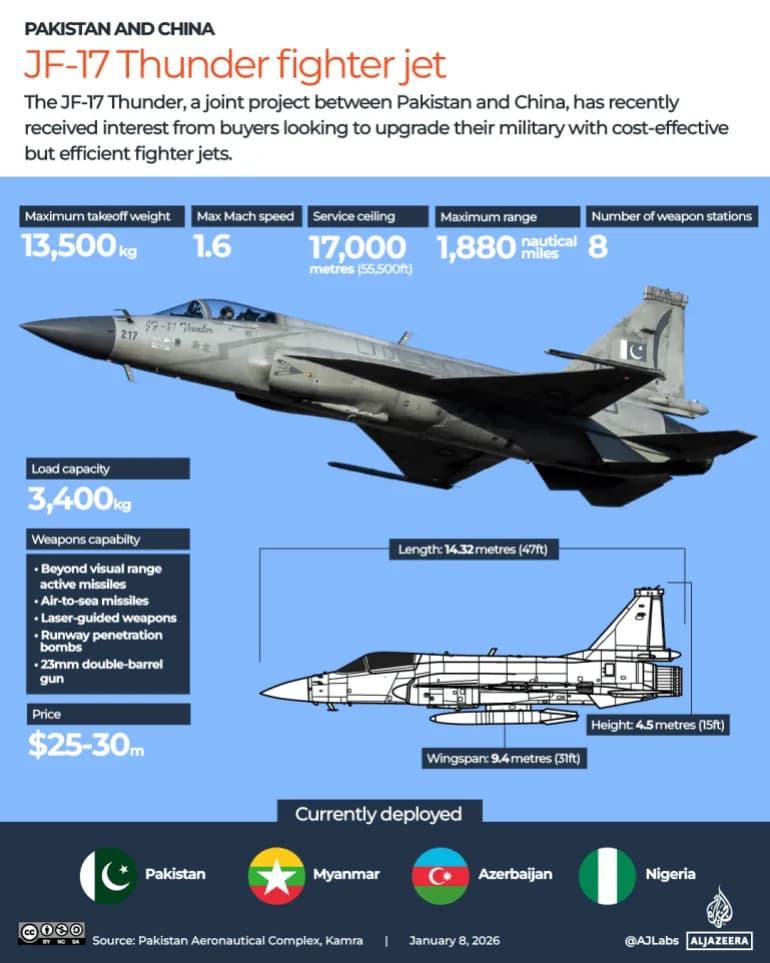
(Al Jazeera)
Pakistan is reportedly close to a $1.5bn deal to supply combat jets and weapons to Sudan — a development that highlights Islamabad’s widening defence footprint across parts of the Arab world. While the financial scale of the reported sale is modest by global arms‑trade standards, the political and operational implications could be significant for conflicts in Sudan, Libya and beyond.
Background: From Trainers To Suppliers
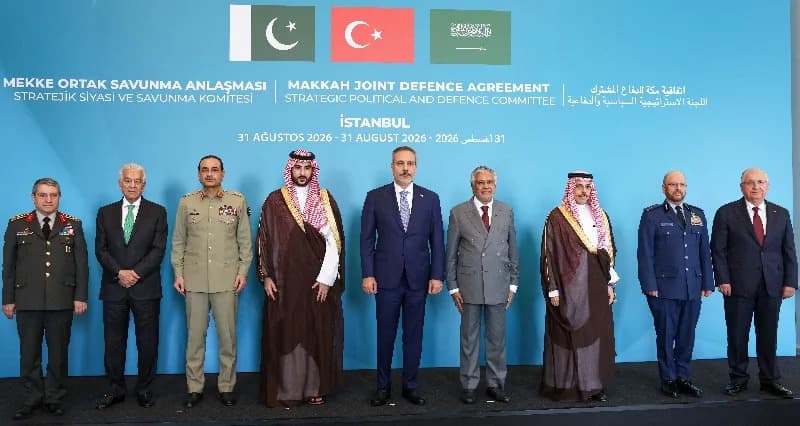
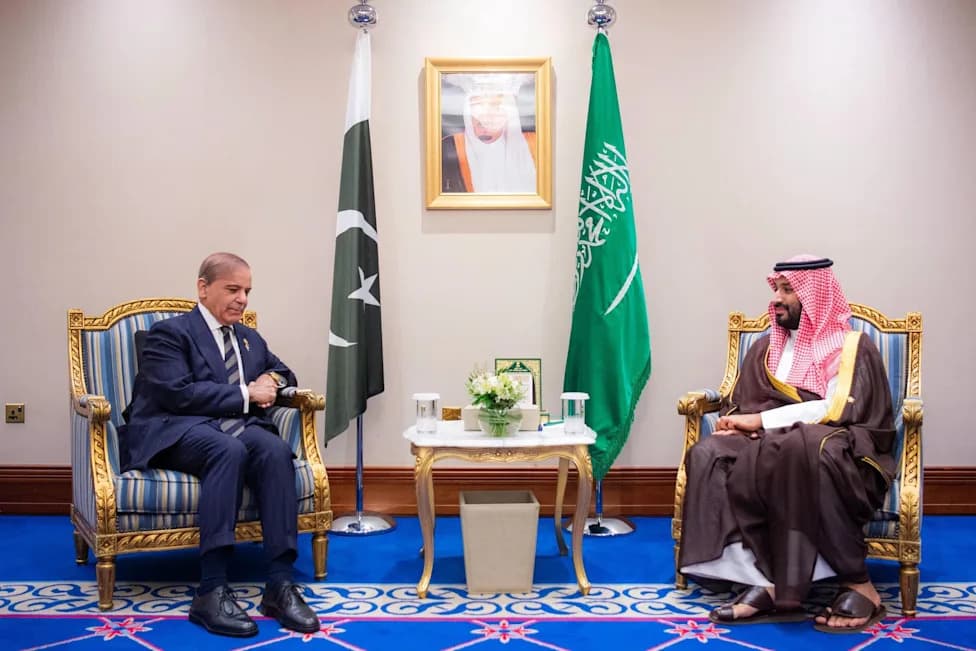
Historically, Pakistan’s military engagement in the Middle East focused on training and advisory roles for allied Arab forces. That posture is shifting. A Strategic Mutual Defence Agreement (SMDA) signed with Saudi Arabia last September, and subsequent reports of interest in Pakistan’s JF‑17 Thunder fighter from Saudi Arabia, Iraq and others, suggest Islamabad is positioning itself as a more active regional supplier.
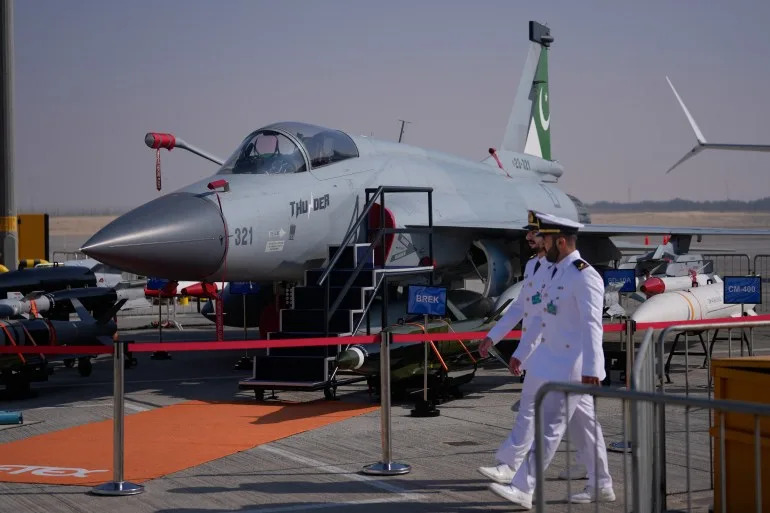
A Pakistani Air Force JF-17 Thunder is on display at the Dubai Air Show, United Arab Emirates, on November 19, 2025 [Altaf Qadri/AP Photo]
JF‑17 Block 3 — What It Offers
The JF‑17, co‑produced by the Pakistan Aeronautical Complex and China’s Chengdu Aircraft Corporation, is a lightweight, multirole fighter. The Block 3 variant is widely described as a 4.5‑generation platform equipped with an AESA radar, modern avionics, electronic warfare systems and the ability to fire beyond‑visual‑range missiles. It emphasizes cost efficiency, operational robustness and ease of maintenance rather than stealth.
Production And International Interest
PAF sources say final assembly and the bulk of production occur in Pakistan, with the Kamra facility capable of producing roughly 20–25 aircraft annually. Current operators include Azerbaijan, Nigeria and Myanmar, and reported prospective buyers range from Saudi Arabia and Iraq to Sudan, Libya, Bangladesh and Indonesia. The jet’s relatively low unit cost (widely cited at about $25–30m) and recent combat exposure have bolstered its appeal to nations seeking capable but affordable fighters.
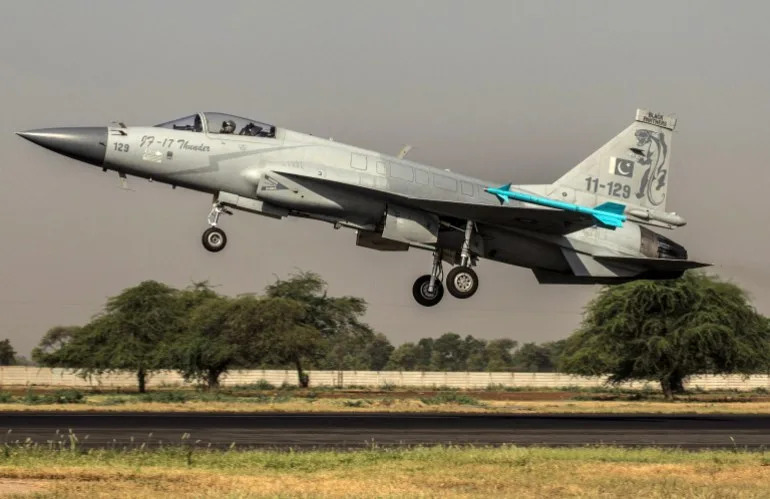
The JF-17 Thunder is currently in use by the air forces of Azerbaijan, Nigeria and Myanmar [File: Zohra Bensemra/Reuters]
Geopolitical And Diplomatic Risks
Analysts caution that expanding arms sales in the Arab world carries diplomatic hazards. Several regional conflicts pit rival patrons against one another: Sudan’s regular army is backed by Saudi Arabia while the UAE has been accused of supporting the RSF (a charge it denies), and Libya features competing power centers linked to different external supporters. Selling similar platforms to parties on opposite sides of a conflict could strain Pakistan’s relationships with key partners.
"These discussions reflect a pragmatic shift toward multipolar defence procurement, where performance, cost and operational sovereignty matter more than legacy supplier ties," a retired PAF official involved with the JF‑17 programme told reporters.
Economic Stakes
Pakistan is pursuing greater defence exports partly to shore up foreign exchange. Official data show arms and ammunition exports rose sharply — from about $13m in 2022 to more than $400m in 2023 — figures many observers link to unconfirmed reports of ammunition shipments to Ukraine. Brokers and analysts have estimated that a combination of JF‑17 deals (some speculative) could generate large inflows, though experts caution such projections are uncertain and contingent on finalized contracts.
Outlook
Pakistan’s growing role as a defence supplier in the Arab world is strategically meaningful: it deepens ties with Gulf states, strengthens Pakistan‑China industrial links and presents new revenue opportunities. But the country must balance commercial ambitions with complex regional politics. If Islamabad can manage those diplomatic trade‑offs, Pakistan could become a durable, niche supplier of affordable combat aircraft and related systems. If not, it risks alienating partners and complicating its own strategic posture.
Help us improve.