North Korea released photos of what state media calls its first nuclear-powered guided-missile submarine, reporting a displacement of 8,700 tons and showing leader Kim Jong Un inspecting the unfinished vessel inside a construction hall. Analysts say the boat could already contain a reactor and might enable missile tests within about two years of launch, though independent verification is limited. Experts warn the program may heighten regional tensions even as they note Pyongyang's broader military buildup is a primary driver of the arms competition.
North Korea Publishes Photos of Claimed Nuclear-Powdered Submarine; Analysts Warn of Escalation

North Korea's leader Kim Jong Un inspected the country's nuclear-powered submarine, claimed to be 8,700 ton, as he called Seoul's nuclear-powered submarine development plan "an offensive act" - KCNA
North Korea on Thursday published new photos it says show its first nuclear-powered guided-missile submarine — a large vessel state media reported as displacing 8,700 tons, roughly comparable in size to many U.S. Virginia-class attack submarines. The images show leader Kim Jong Un inspecting the unfinished boat inside an indoor construction hall, indicating it has not yet been launched.
What the Images Show
State-run outlets released multiple shots of the vessel under construction and reported the project had reached significant stages since Pyongyang first announced it in March. Kim is shown touring the hull and associated infrastructure, accompanied in some frames by a young woman widely believed to be his daughter, Kim Ju Ae, reigniting speculation about succession planning.
Technical Context
North Korea says the submarine displaces 8,700 tons. Nuclear propulsion would give the platform substantial advantages over conventional diesel-electric submarines: greatly extended submerged endurance, higher sustained speeds, and potentially lower acoustic signatures. Currently only six other countries — the United States, Russia, China, France, the United Kingdom and India — operate nuclear-powered submarines.
Analysts' Assessments and Timeline
Independent analysts and Korean security experts caution that the images alone cannot confirm all claims, but some observers, including Hong Min of the Korea Institute for National Unification, told CNN the boat may already house a reactor and could be capable of conducting missile tests within roughly two years of launch. Verification will depend on additional technical details and observable activity at sea.
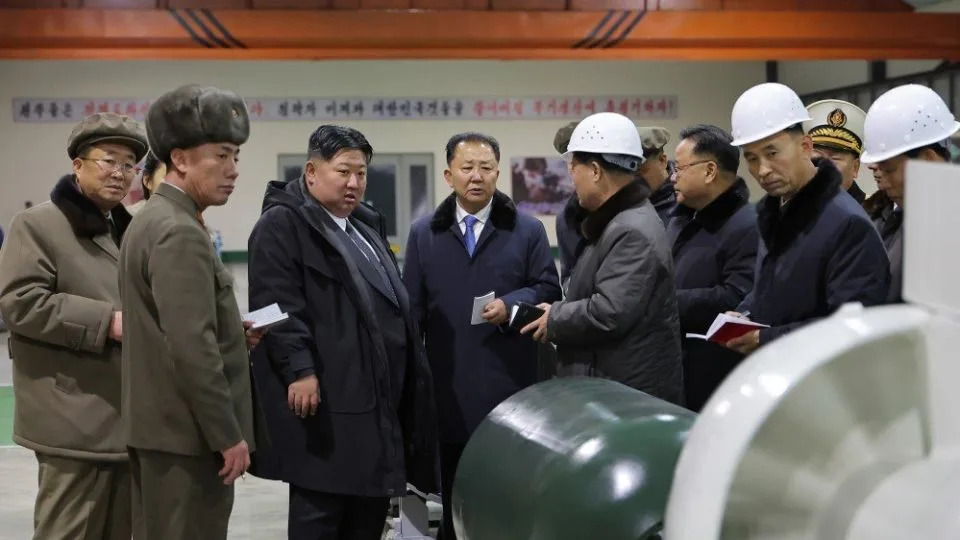
North Korea's leader Kim Jong Un is briefed on the construction of the country's first nuclear-powered submarine. - KCNA
'We regard the super-powerful offensive capability as the best shield for national security,' KCNA quoted Kim as saying while inspecting the vessel.
Regional Implications
Pyongyang framed the program as a necessary response to Seoul's move last year to obtain permission from the United States to pursue nuclear-propelled submarines. Experts note the development risks intensifying an arms competition around the Korean Peninsula, but also point out that North Korea's own weapons programs and refusal of diplomacy have been major drivers of regional tension.
Leif-Eric Easley, professor of international studies at Ewha Womans University, said that while a buildup of nuclear-powered submarines would increase instability, Pyongyang's broader militarization and provocative posture are central causes of the current arms race. North Korea is simultaneously advancing a wide five-year military plan unveiled in 2021 that includes missiles capable of striking distant targets, hypersonic glide vehicles, and new surface warships — one of which famously capsized on launch earlier this year and was later refloated and repaired.
Outlook
Even if North Korea fields a nuclear-powered submarine sooner than its neighbors, experts warn its navy still lags behind South Korea's in many areas, including sensors and shipbuilding expertise. Designing, building and safely operating nuclear-propelled submarines is technically demanding; for South Korea, which received U.S. approval to pursue such vessels in 2023, deployment would likely take many years.
Further monitoring of shipyard activity, launches, sea trials and emissions will be required to validate Pyongyang's claims and to assess the submarine's operational capabilities.
Help us improve.