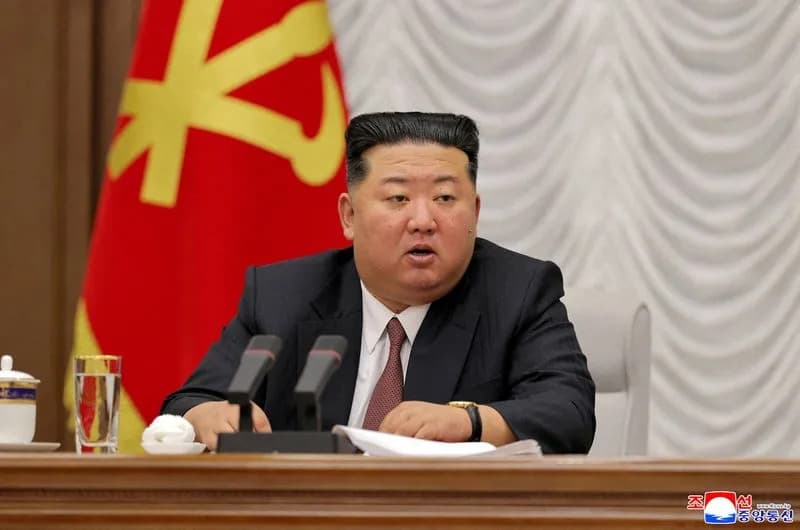
North Korean leader Kim Jong Un has ordered an increase in missile and artillery shell production and directed the construction of new munitions factories to meet rising military demand, KCNA reported. The directive follows Kim’s inspection of an 8,700-tonne vessel North Korea says is a nuclear-powered submarine and a reported test of a long-range anti-air missile. Analysts say the measures aim to sharpen precision-strike capabilities, pressure the US and South Korea, and could support deeper military cooperation or arms exchanges with Russia.
Kim Jong Un Orders Major Ramp-Up in Missile Production and New Munitions Plants as 'War Deterrent'

North Korean leader Kim Jong Un visits the construction site of a purported nuclear-powered submarine [KCNA via Reuters]
North Korean leader Kim Jong Un has ordered a substantial increase in the production of missiles and artillery shells and directed the construction of additional munitions factories to meet what state media described as the armed forces’ growing needs, the Korean Central News Agency (KCNA) reported.
Factory Inspections and New Directives
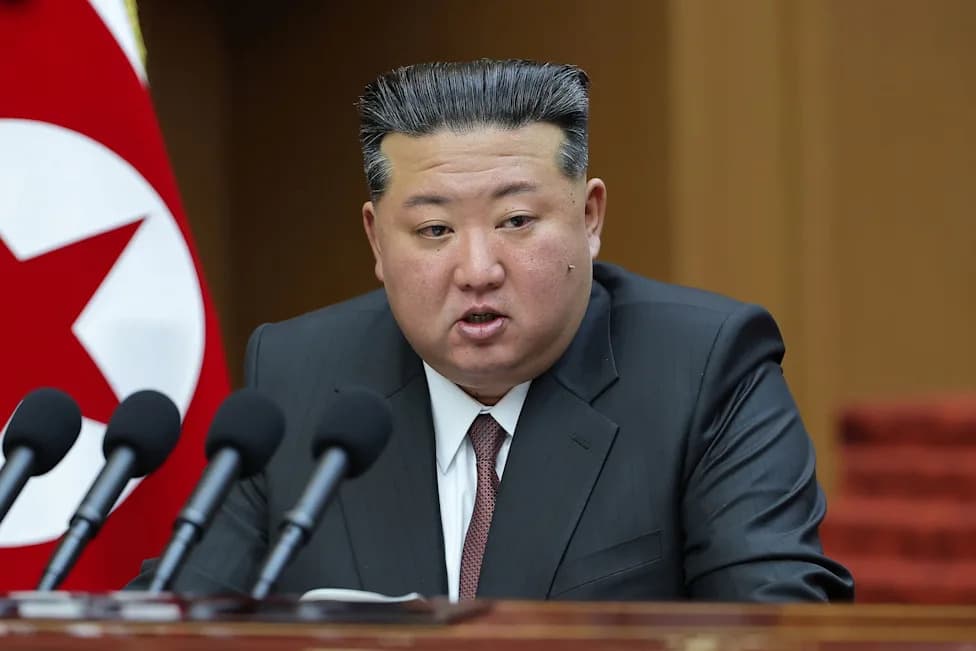
During visits to several munitions plants accompanied by senior officials, Kim instructed factory managers to prepare for a busy year ahead and to expand manufacturing capacity. KCNA quoted him saying the missile and shell production sector is “of paramount importance in bolstering [the nation’s] war deterrent.”
“To further expand the overall production capacity,” Kim ordered, calling for new munitions plants to keep pace with military demand, KCNA said.
Submarine Visit and Missile Tests
The announcement followed state media images of Kim inspecting an 8,700-tonne vessel at a shipyard that North Korea describes as a nuclear-powered submarine capable of launching surface-to-air missiles. Photos showed Kim and senior officials examining a large, burgundy-painted hull inside an assembly hall — the first set of images of the vessel released since March, when coverage focused mainly on lower sections of the hull.
Hong Min, a senior research fellow at the Korea Institute for National Unification in Seoul, wrote that the submarine’s hull design suggests it has been fitted with a nuclear reactor and that the vessel appears close to completion.

This picture taken on December 24, 2025, shows North Korean leader Kim Jong Un observing a test-fire of new-type anti-air missiles at an undisclosed location in North Korea [KCNA via KNS/AFP]
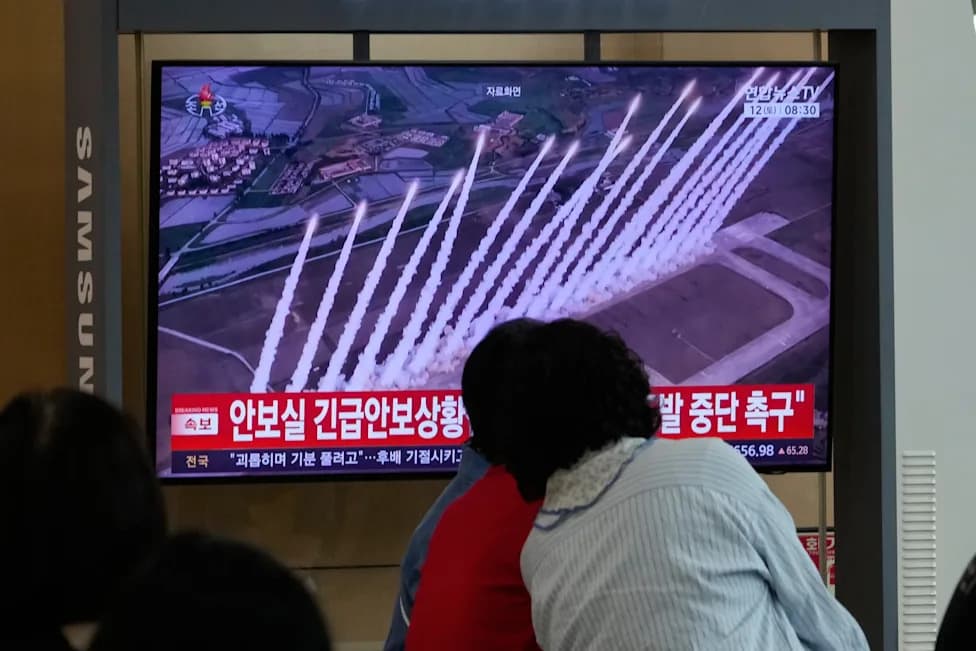
KCNA also reported Kim supervised a test launch of a new high-altitude, long-range anti-air missile over the Sea of Japan. The leader said “new modernisation and production plans” would be unveiled at the ruling Workers’ Party congress expected early next year.
Regional Implications and Ties With Russia
Kim warned that South Korea’s plans to acquire nuclear-powered submarines would “worsen the instability” in the region and described them as a threat to North Korean security. South Korean leaders have sought stronger US cooperation in developing submarine capabilities, and US officials have signalled openness to sharing some technology to support allied needs.
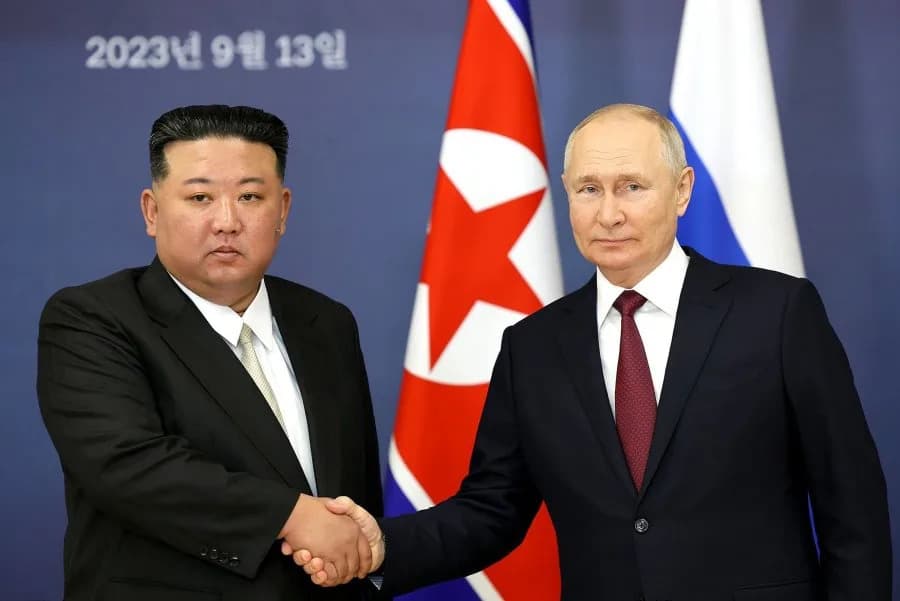
Analysts say the stepped-up testing and production push seeks to improve precision-strike capabilities, to pressure the United States and South Korea, and to validate weapons systems before possible exports. Relations between Pyongyang and Moscow have reportedly deepened since Russia’s invasion of Ukraine, with analysts saying North Korea has supplied Russia with troops and weapons, while Moscow has provided financial aid, military technology and supplies.
US officials have also asserted there is evidence that Moscow’s assistance to Pyongyang includes advanced space and satellite-related technologies. Ahn Chan-il, a researcher originally from North Korea, said Pyongyang is likely to pursue advanced military technologies from Russia, potentially including systems relevant to nuclear-powered submarines and combat aircraft.
Source: KCNA and analyst statements cited in state and international reporting.
Help us improve.