The study published in Science used swarms of tiny (about magnitude 0) earthquakes to map hidden fault geometry beneath the Mendocino Triple Junction. Researchers model the junction as five segments, with a detached piece of the North American plate being pulled down by the Gorda plate and a buried Pioneer fragment translating north under western North America. Authors warn this complex, three-dimensional structure could add an unaccounted seismic hazard and increase the potential for interaction between the Cascadia subduction zone and the San Andreas system.
Tiny Quake Swarms Reveal Hidden Fault Behavior Beneath Mendocino Triple Junction
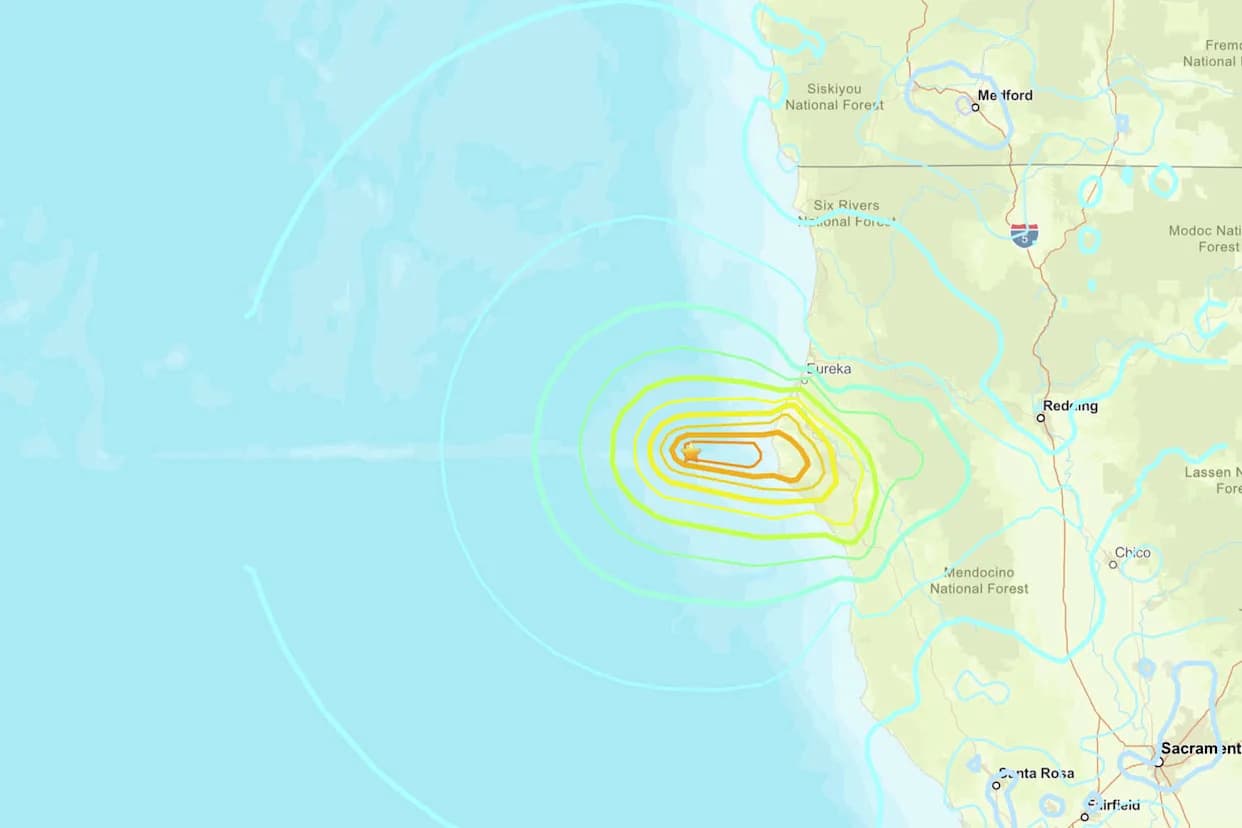
On Dec. 5, 2024, a magnitude 7.0 struck near the Mendocino Triple Junction, triggering a widespread tsunami warning. (USGS)
By tracking swarms of extremely small earthquakes, researchers have uncovered previously unseen structure and motion along faults near California’s Mendocino Triple Junction — a key intersection of the Pacific, North American and Gorda tectonic plates off the Humboldt County coast.
New Study and Method
A new study published in Science used clusters of near-microscopic quakes to map fault geometry in three dimensions. The lead author, David Shelly, a research geophysicist at the U.S. Geological Survey’s Geologic Hazards Science Center, said the approach complements traditional studies that focus on larger, infrequent earthquakes.
"A lot of times we're analyzing big earthquakes to understand how these big faults move, but in this case we're actually looking at the tiniest earthquakes happening all the time," Shelly said. "The better that we understand how the plates are moving, the better job we can do to estimate seismic hazard."
What the Team Found
The analysis portrays the Mendocino Triple Junction as five distinct segments, two of which dip away from the surface and are not visible on maps. The team reports that a piece of the North American plate has been detached and is being pulled downward by the sinking Gorda plate. Farther south, the Pacific plate appears to be carrying a buried rock mass called the Pioneer fragment northward beneath westernmost North America along a horizontal, surface-invisible fault. The Pioneer fragment is interpreted as the remnant of an older tectonic plate.
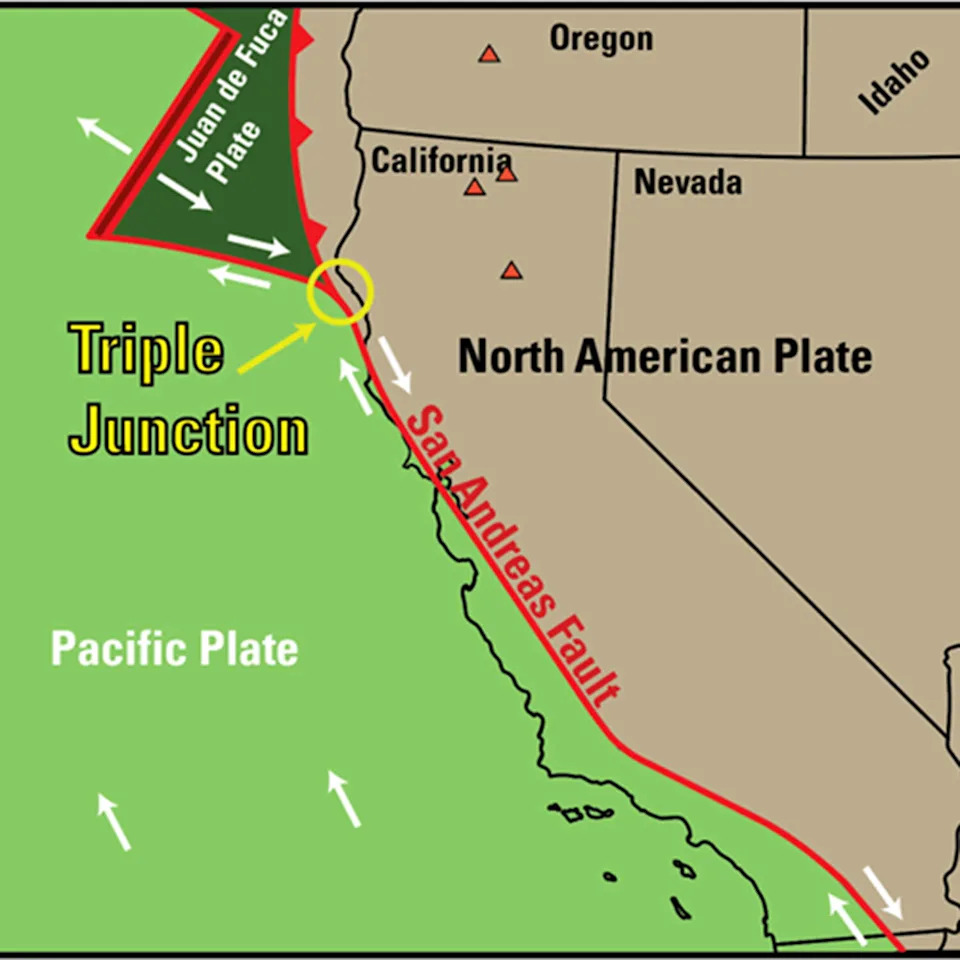
A depiction of the Mendocino triple junction, one of California's most seismically active regions off the Humboldt County coast. (USGS)
Authors warn that this complex, three-dimensional arrangement could represent an unaccounted earthquake hazard in the region and may alter how stress transfers between nearby plate boundaries.
Why These Tiny Quakes Matter
The earthquakes used in the study were around magnitude 0 — thousands of times smaller than the temblors Californians typically feel — but numerous and persistent enough to reveal ongoing fault motion. By measuring the rate and distribution of these microquakes, scientists can infer how fast faults are slipping and how strain accumulates at depth.
The Mendocino region has a history of major earthquakes. According to the U.S. Geological Survey, five of California's 11 earthquakes of magnitude 7.0 or larger since 1990 occurred near the junction. In December 2024, a magnitude-7.0 earthquake struck offshore southwest of Ferndale, near the Mendocino Triple Junction.
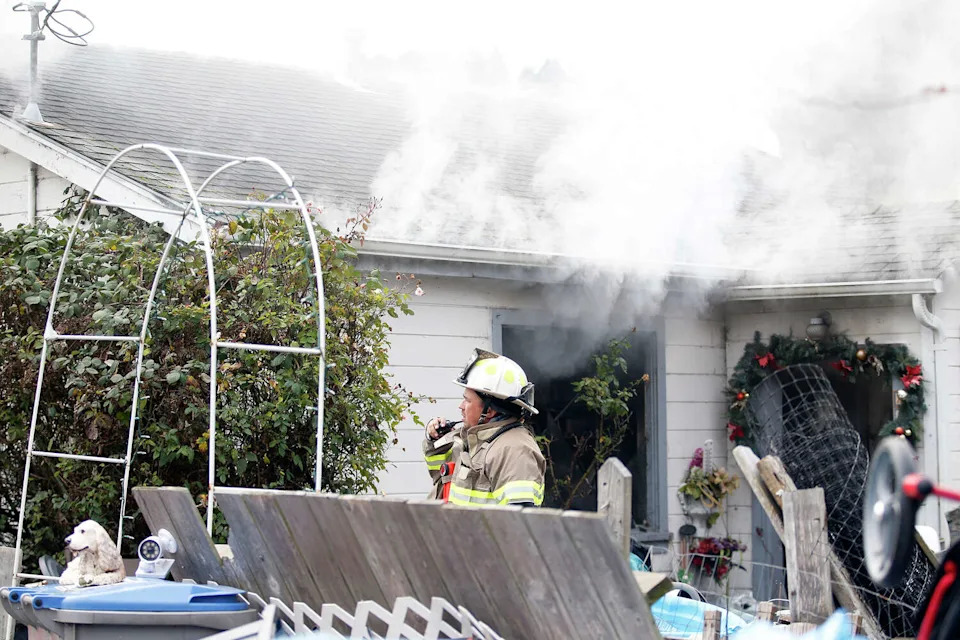
Firefighters respond after a home caught on fire in Rio Dell, Calif., on Wednesday, Dec. 21, 2022. A 6.4 magnitude earthquake struck the coastline near Eureka early the prior morning. ((Jane Tyska/Digital First Media/East Bay Times via Getty Images) )
"When you see the triple junction on a map, it all looks quite simple, with these three lines converging at a point, but in reality it's more complicated three-dimensionally," said Roland Burgmann, a UC Berkeley seismologist not involved in the study. "This paper helps illuminate what that geometry is likely to really look like."
The researchers contrasted the microquake swarms they studied with other, more conspicuous swarms — for example, the recent activity in San Ramon. Shelly noted that the San Ramon swarms are likely influenced by fluids moving through the crust, whereas the Mendocino microquakes appear driven by long-term plate and fault motion. "We could actually use the rate of earthquakes to understand variations and how fast that fault is moving," he said.
Broader Implications
Experts say the findings complement recent work suggesting a very large Cascadia subduction-zone earthquake (magnitude 9 or higher) could influence seismicity on other nearby fault systems, including the San Andreas system. The newly revealed buried structures and translating fragments could make such interactions more likely, increasing the possibility of cascading effects between plate boundaries.
Ongoing microseismic monitoring and refined fault models will improve seismic-hazard assessments and emergency preparedness. As a reminder of California's persistent seismic risk, a series of smaller quakes — including magnitudes 3.4 and 4.1 near Holtville on Thursday — were recorded around the state.
Help us improve.