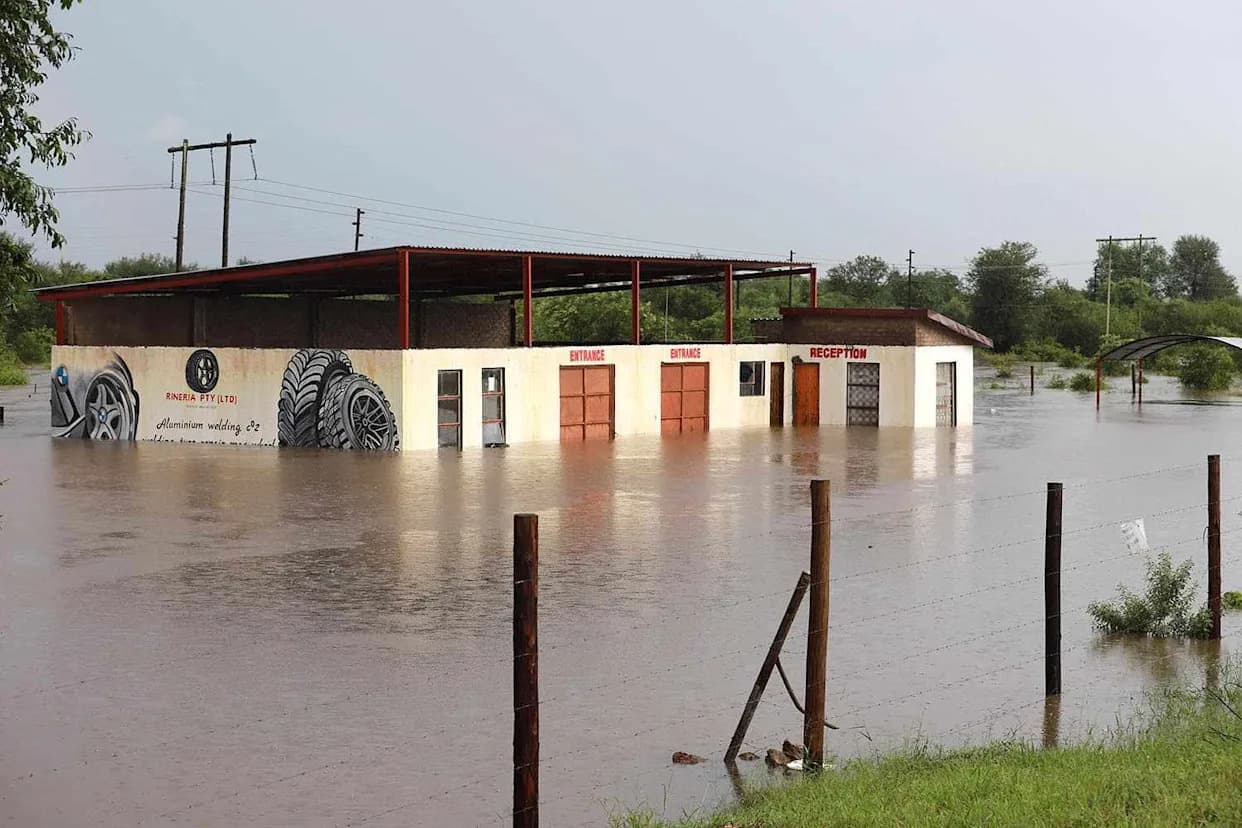
South African authorities closed Kruger National Park to day visitors on Jan 15 after several rivers in the reserve burst their banks following days of heavy rain. Lodges inside the park were permitted to host guests, though areas around the Letaba River were evacuated and the Phalaborwa gate was shut while teams monitor conditions. Reuters footage showed vast sections of the park under fast-moving floodwaters, with hippos visible among submerged treetops. Officials said wildlife typically moves to higher ground and staff are prioritising visitor safety.
Kruger National Park Closed to Day Visitors After Severe Flooding — Hippos Seen Among Submerged Trees
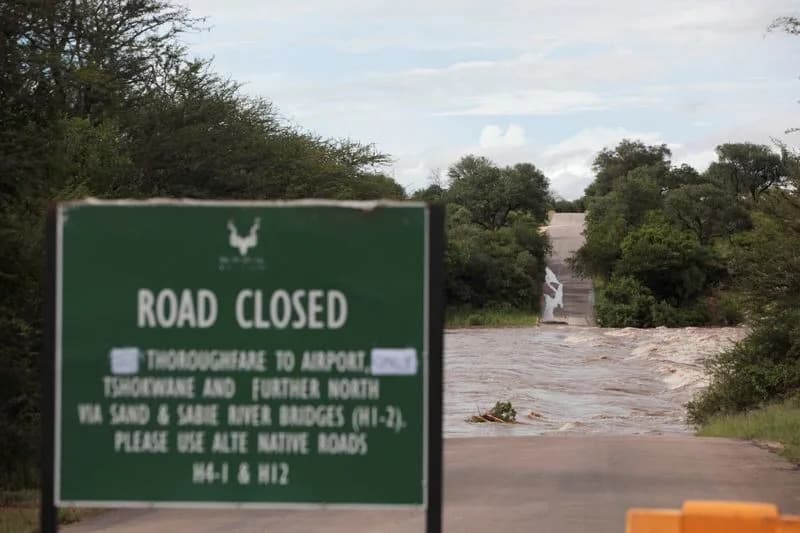
A sign reading 'road closed' after heavy rain at Kruger National Park in Mpumalanga, South Africa, January 15, 2026. REUTERS/Oupa Nkosi
By Thando Hlophe
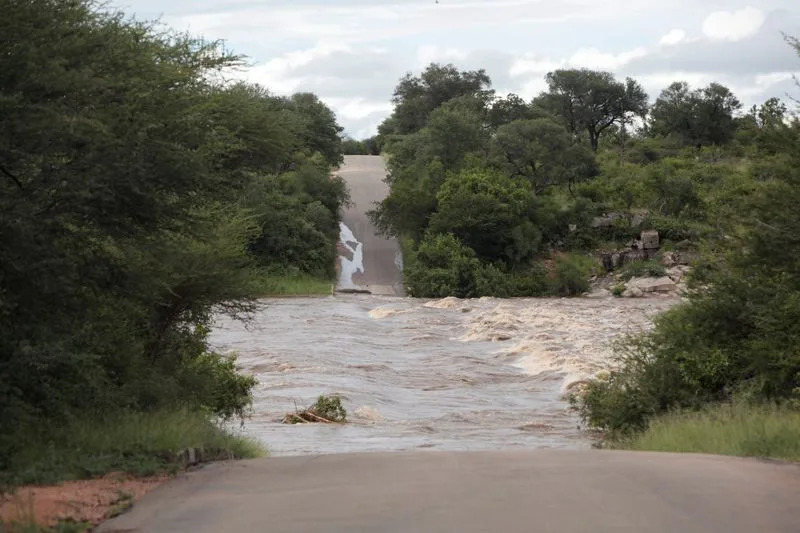
A damaged road following heavy rain at the Kruger National Park in Mpumalanga, South Africa, January 15, 2026. REUTERS/Oupa Nkosi
KRUGER NATIONAL PARK, South Africa, Jan 15 (Reuters) - South African authorities closed Kruger National Park to day visitors on Thursday after several rivers running through the reserve burst their banks following days of heavy rain.
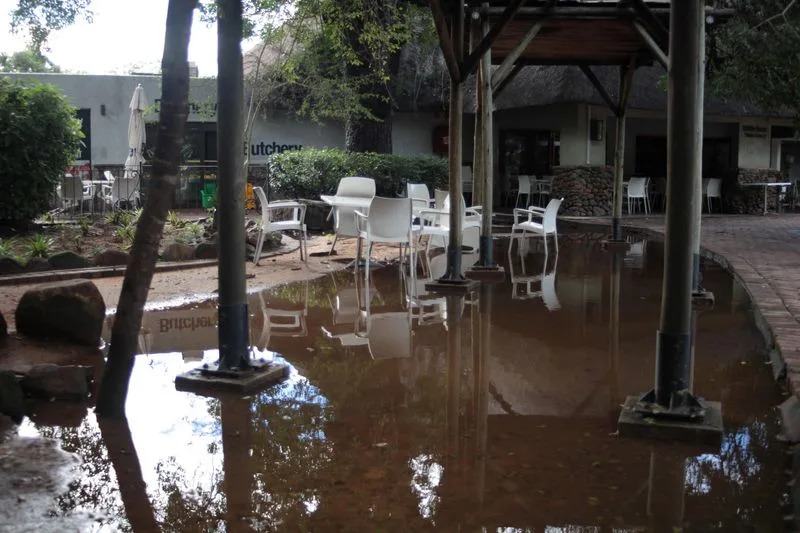
Flooding outside a restaurant after heavy rain at Kruger National Park in Mpumalanga, South Africa, January 15, 2026. REUTERS/Oupa Nkosi
Guests already staying at lodges inside the park were allowed to remain, except for zones around the Letaba River that were evacuated, South African National Parks said. Park staff closed the Phalaborwa gate, near Kruger airport, as floodwaters made some roads impassable.
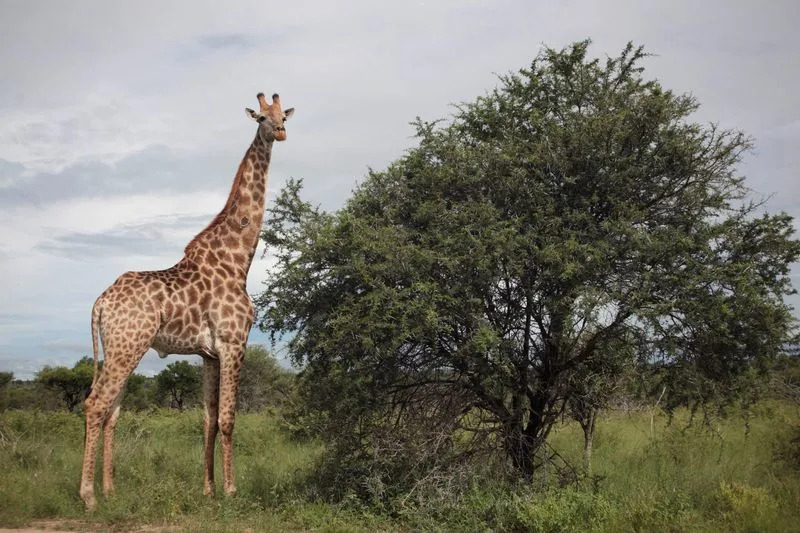
A giraffe at the Kruger National Park after heavy rain in the area, in Mpumalanga, South Africa, January 15, 2026. REUTERS/Oupa Nkosi
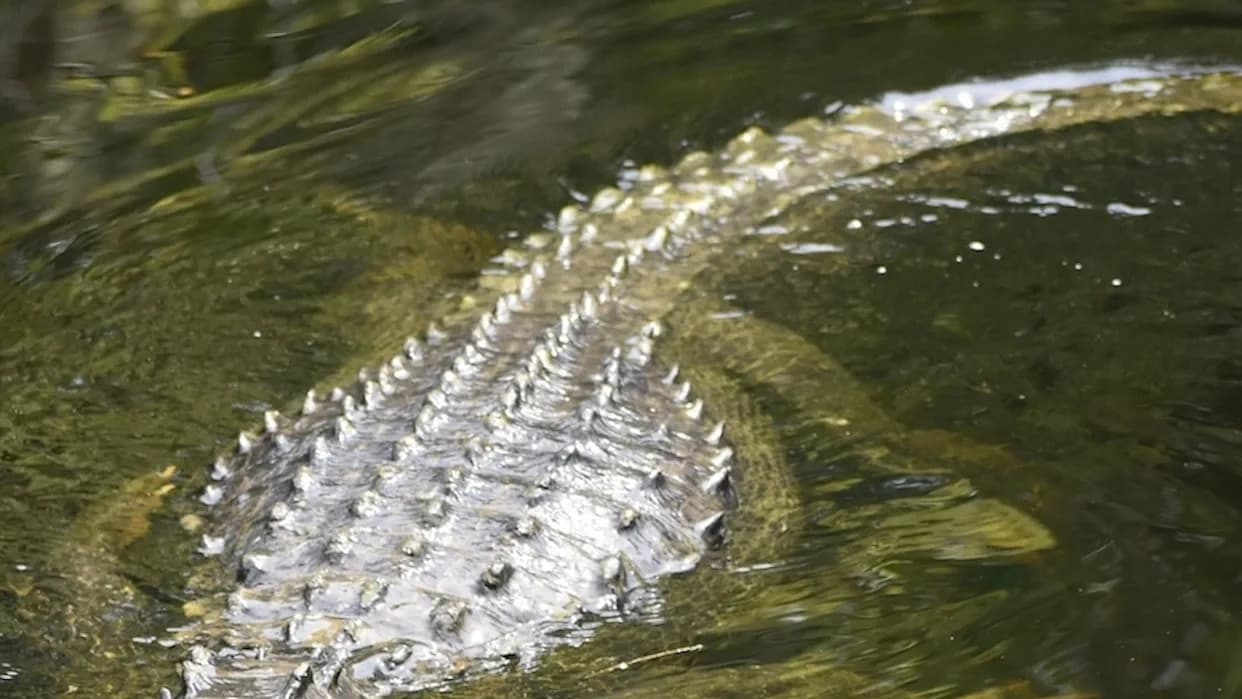
Reuters TV footage showed wide areas of the reserve submerged by fast-moving water, with only treetops visible above the floods and hippos swimming between them; signs at affected entrances announced road closures.
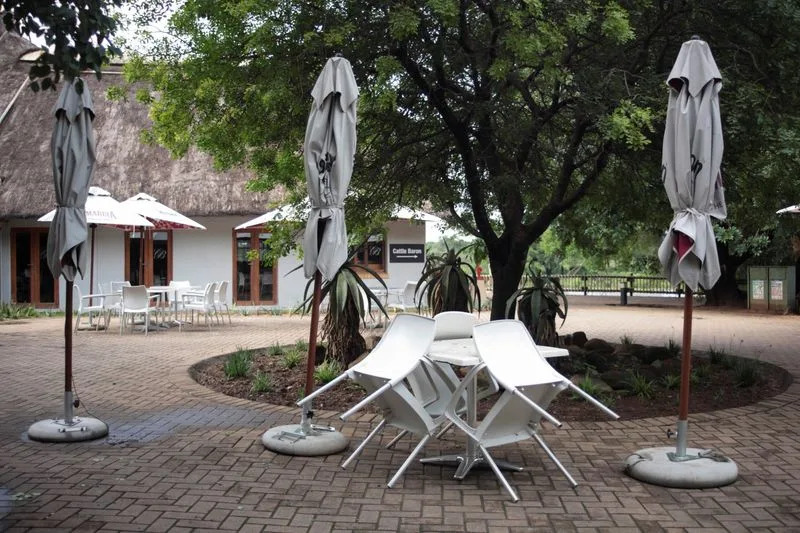
Chairs are packed up outside a restaurant after heavy rains at Kruger National Park in Mpumalanga, South Africa, January 15, 2026. REUTERS/Oupa Nkosi
Park Response and Safety Measures
Kruger spokesperson Reynold Thakhuli, speaking at the scene beside a road half-submerged by running water, said the Phalaborwa gate would be closed for at least 24 hours while authorities continued to monitor conditions. He added that park teams were prioritising visitor safety and assessing access routes.
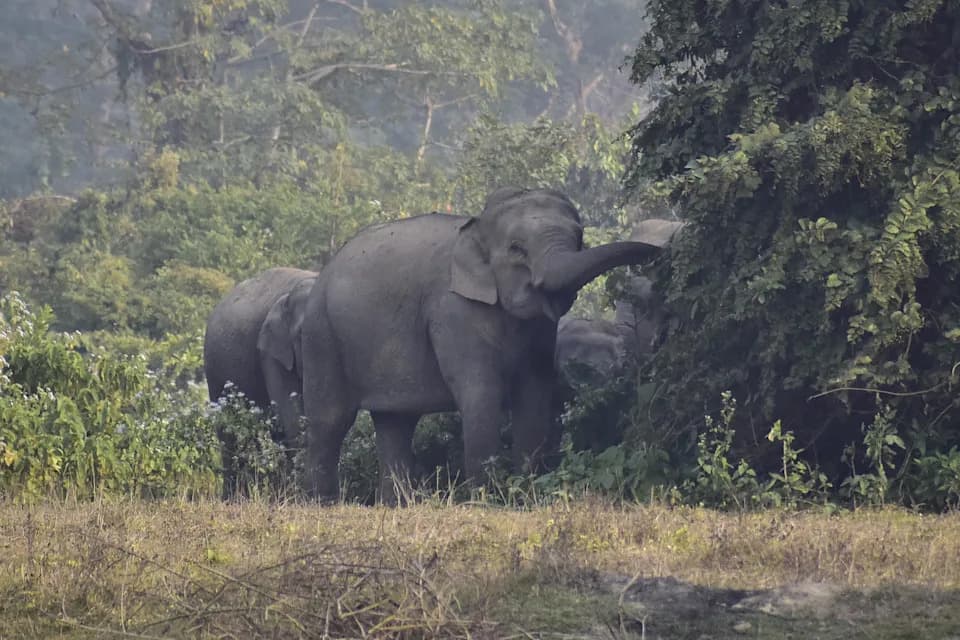
"This water's moving very fast," Thakhuli told Reuters. "We're not really worried about the animals," he said, noting that wildlife typically moves to higher ground during floods.
Some guests described the scene from lodges. South African tourist Gerhard Ackerman said he was watching the floodwaters from his veranda. "It's God's way of putting water back into the earth," he said. "We're enjoying it."
Wider Context
Flooding in southeastern Africa has become more frequent and severe as climate change increases the intensity of storms in the adjacent Indian Ocean. Authorities continue to monitor river levels and access to the park, and have urged caution for visitors and staff in affected areas.
(Reporting by Tim Cocks; Writing by Thando Hlophe; Editing by David Gregorio)
Help us improve.