Keith Bass, a retired Navy commander and former director of the White House Medical Unit, was sworn in as the Defense Department’s assistant secretary for health affairs and will serve as the Pentagon’s chief medical adviser. He will oversee policy and budgets for the Military Health System, which serves about 9.5 million beneficiaries. Bass has prioritized improving medical readiness, addressing persistent staffing shortages and stabilizing the system financially, while placing particular emphasis on mental health and suicide prevention.
Keith Bass Takes Helm Of Military Health: New DOD Health Affairs Chief Vows To Boost Readiness And Mental Health Care
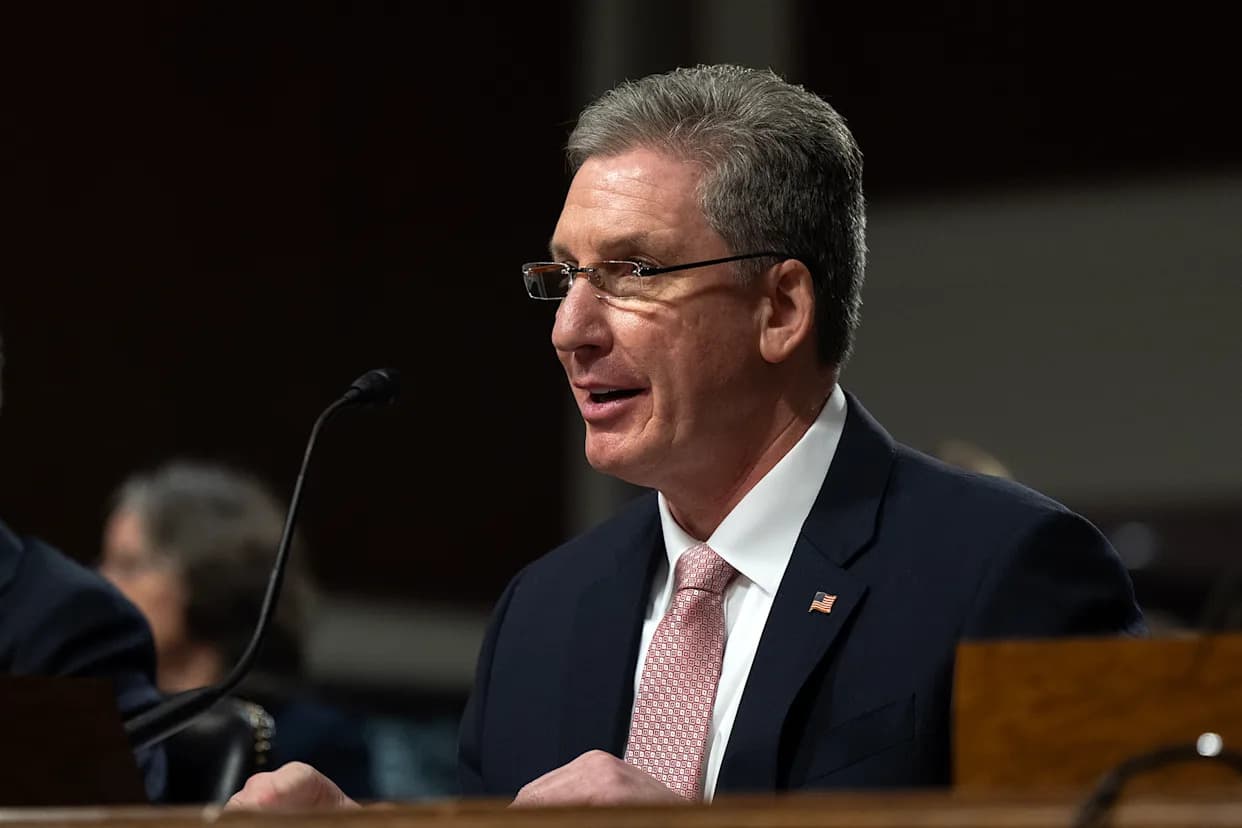
Keith M. Bass appears before the Senate Armed Services Committee for his nomination to become assistant secretary of defense for health affairs, March 27. (EJ Hersom/DOD)
Keith Bass, a retired Navy commander and former director of the White House Medical Unit, was sworn in Monday as the Department of Defense’s assistant secretary of defense for health affairs, making him the Pentagon’s top civilian medical leader.
Role And Responsibilities
In this role, Bass will oversee health policy and budgeting for the Military Health System (MHS), which provides care for roughly 9.5 million beneficiaries, including active-duty members, retirees, dependents and other eligible recipients. He will direct the work of the Defense Health Agency and serve as the principal medical adviser to the secretary of defense.
“I am deeply committed to forging a seamless, world-class health care experience that supports our uniformed personnel and their families from their first day of service to their last, and continues to care for them as veterans,” Bass said in announcing his appointment.
Background
Bass served 20 years in the Navy, beginning as an enlisted sailor and rising to the rank of commander. His assignments included shipboard duty, humanitarian missions, service in military treatment facilities, and senior roles at the White House, the Central Intelligence Agency and the Navy Bureau of Medicine and Surgery. From 2013 to 2019 he led the White House Medical Unit and oversaw medical care for the president, the vice president and their families.
He was the CIA’s first nonphysician director of the Office of Medical Services and is the second nonphysician to serve as assistant secretary of defense for health affairs. Most recently, Bass was medical center director for the West Texas VA Health Care System, managing care for more than 24,000 veterans.
Top Priorities
Bass has identified improving medical readiness and stabilizing the MHS as top priorities. He has emphasized the need to address persistent medical personnel shortages, monitor access to care, and resolve problems stemming from recent Tricare contract changes that left some patients struggling to obtain specialty referrals and find providers.
He also highlighted mental health and suicide prevention as a central focus. Bass plans to expand telehealth options for mental health both on deployment and at home stations and to implement comprehensive policies to improve access quickly.
Policy And Challenges
In written responses to Senate advance policy questions, Bass cited constrained resources and rising health-care costs as key pressures on the MHS and called fiscal instability the greatest long-term threat to the system’s viability. He supports the Defense Department’s 2023 directive to reattract at least 7% of Tricare beneficiaries from the private sector back to military treatment facilities (MTFs) for direct care and plans to evaluate staffing and capacity across MTFs to make access more patient-centered.
Bass acknowledged the difficult trade-offs ahead: without addressing workforce shortages, the MHS will face hard choices about where to allocate limited resources. He said he is not aware of specific plans to downsize medical services but emphasized the need to balance reattracting patients with optimizing available services at MTFs.
Senate Confirmation: Bass was confirmed by the Senate on Jan. 5.
Outlook
Bass arrives with a blend of operational, executive and White House medical experience and has signaled a pragmatic, readiness-focused agenda: shore up staffing and access, stabilize finances where possible, and accelerate improvements in mental health care and telehealth to meet the needs of service members, families and veterans.
Help us improve.