The Trump administration initially described the U.S. military action in Venezuela as "a law enforcement operation" intended to enforce an indictment against Nicolás Maduro. Critics said that explanation was implausible given the scale and deadly nature of the assault. In the days after the strike, President Trump made statements about running Venezuela, exploiting its oil, and portraying himself as its "acting president," which contradicted the administration's original framing and weakened its defense.
From 'Law Enforcement Operation' to 'Acting President': How Trump's Venezuela Claims Undermined His Defense
Immediately after news broke that U.S. forces had bombed Venezuela and seized Nicolás Maduro, senior Trump administration officials leaned on a single explanation: the operation was "a law enforcement operation." Secretary of State Marco Rubio repeatedly used that phrase while insisting, "We didn’t occupy a country." U.S. Ambassador to the United Nations Mike Waltz offered the same line to the Security Council.
The administration’s argument was straightforward: because Maduro faced federal criminal charges in the United States, U.S. authorities were entitled to enforce the indictment, arrest him and bring him to court—just as they would any other criminal defendant. The military, this account said, played only a supporting role to protect law enforcement officers carrying out the arrest.
At face value, that claim drew immediate skepticism. The United States rarely resorts to a deadly military assault to carry out domestic-style law enforcement, and the scale and political consequences of a cross-border military strike are far beyond ordinary arrest operations. Critics said the indictment-based justification risked turning any foreign conflict into an excuse for military intervention: as The New York Times columnist David French wrote, under that logic "a president could transform virtually any war into a law enforcement operation by indicting opposing leaders."
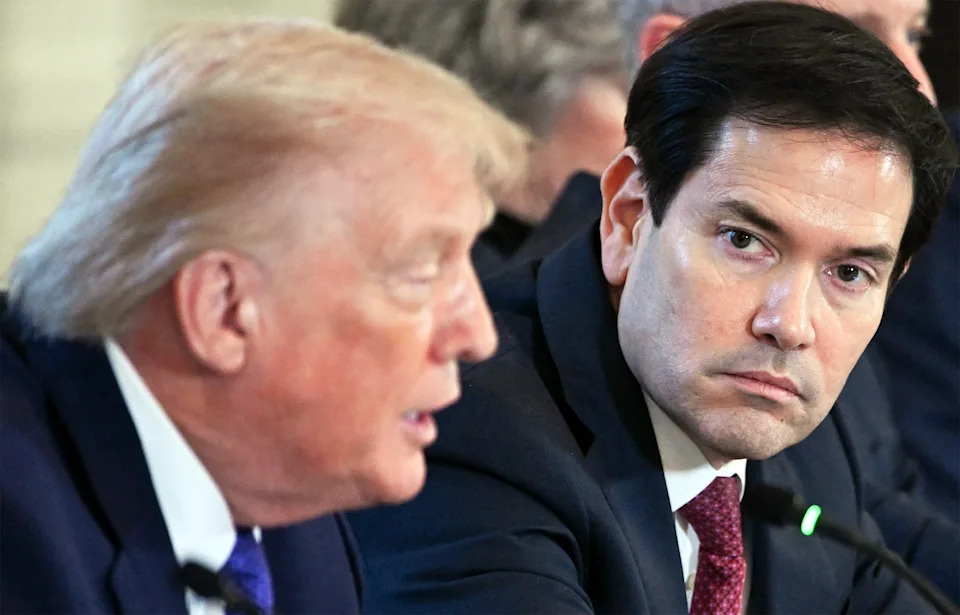
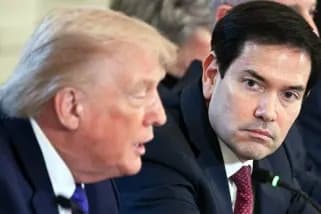
President Donald Trump and Secretary of State Marco Rubio during a meeting on Jan. 9, 2026 in the East Room of the White House.(Brendan Smialowski / AFP via Getty Images)
"This was a law enforcement operation." — Phrase repeatedly used by administration officials to describe the Venezuela mission.
In the days that followed, however, administration statements undercut that tidy framing. Four days after the assault, President Trump told The New York Times he expects the United States to be "running Venezuela" and exploiting its oil reserves "much longer" than a year—language inconsistent with a narrow law-enforcement rationale. He later told Fox News’ Sean Hannity, "That was a perfect attack. We’ve taken over a whole country," and acknowledged holding off a second round of strikes—admissions that suggest strategic, not purely judicial, objectives.
Those comments culminated in a social media post that circulated an image portraying Trump as the "acting president of Venezuela," following his claim that the U.S. administration was "in charge" of the South American nation. The sequence of events—from the initial law-enforcement talking point to the president's more expansive boasts—hardened critics' view that the administration's defense was a short-lived rhetorical cover rather than a sustained legal or diplomatic position.
Why It Matters
The episode illustrates how messaging and actions can diverge in high-stakes foreign policy decisions. Framing a cross-border military strike as ordinary law enforcement raises legal, political and ethical questions, and when officials later describe territorial control and resource exploitation, the original defense loses credibility. For domestic and international audiences, the controversy makes it harder to accept legalistic explanations for operations that bear the hallmarks of occupation or regime change.
Bottom line: The administration’s initial claim that the Venezuela assault was simply an effort to enforce an indictment was quickly undercut by subsequent presidential statements about ruling Venezuela and controlling its oil—shifting the story from a narrow law-enforcement narrative to one suggestive of broader geopolitical aims.
Help us improve.