
Summary: The Trump administration carried out ground strikes in Venezuela and detained President Nicolás Maduro despite earlier statements that such actions would require congressional approval. Officials offered mixed justifications—calling the operation a law-enforcement action and saying it was necessary to protect U.S. personnel—while former President Trump publicly spoke about running Venezuela and reclaiming its oil. The episode has revived comparisons to the 1989 Panama operation, raised international-law and separation-of-powers questions, and drawn criticism for its lack of a transparent legal rationale.
Venezuela Raid and Maduro's Arrest: Did Trump Have the Legal Authority?

(L/R) US President Donald Trump and US Secretary of Defense Pete Hegseth look on as Chairman of the Joint Chiefs of Staff General Dan Caine (out of frame) speaks to the press following US military actions in Venezuela, at Trump's Mar-a-Lago residence in Palm Beach, Florida, on January 3, 2026. President Trump said Saturday that US forces had captured Venezuelan leader Nicolas Maduro after launching a "large scale strike" on the South American country. - Jim Watson/AFP/Getty Images
On November 2, White House chief of staff Susie Wiles told Vanity Fair that any ground strikes in Venezuela would require congressional approval: "If [the president] were to authorize some activity on land, then it’s war, then (we’d need) Congress." Administration officials privately told members of Congress days later that they lacked a legal basis to support strikes against land targets inside Venezuela.
Yet two months later, the administration carried out what it had earlier suggested it could not: it launched what former President Trump described as a "large-scale strike against Venezuela," detained President Nicolás Maduro on criminal charges, and did so without an apparent prior authorization from Congress.
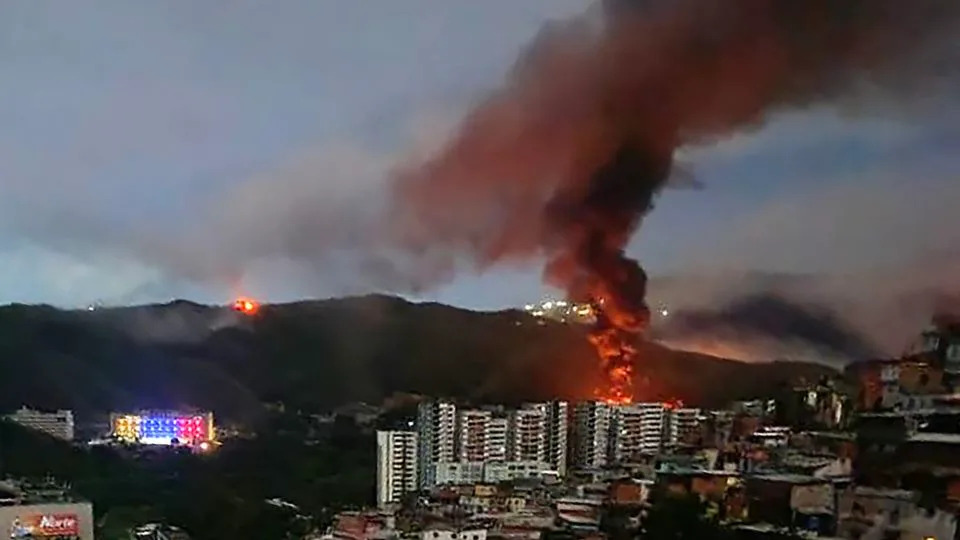
Fire at Fuerte Tiuna, Venezuela's largest military complex, is seen from a distance after a series of explosions in Caracas on January 3, 2026. The United States military was behind a series of strikes against the Venezuelan capital Caracas on Saturday. - AFP/Getty Images
Conflicting Justifications
The administration’s public explanations for the operation were inconsistent. Some allies framed the mission as a narrow law-enforcement operation to capture an indicted individual. Others characterized it as a defensive action to "protect and defend those executing the arrest warrant." Officials also suggested the Pentagon’s involvement was necessary because Venezuela possesses significant anti-aircraft capabilities that could endanger U.S. aircraft.
At the same time, former President Trump repeatedly described ambitions that went beyond a simple arrest: he spoke of temporarily participating in the governance of Venezuela and of reclaiming "the oil, land, and other assets that they previously stole from us," and said the United States would "rebuild the oil infrastructure." Those comments suggested the operation might have broader political or economic goals.
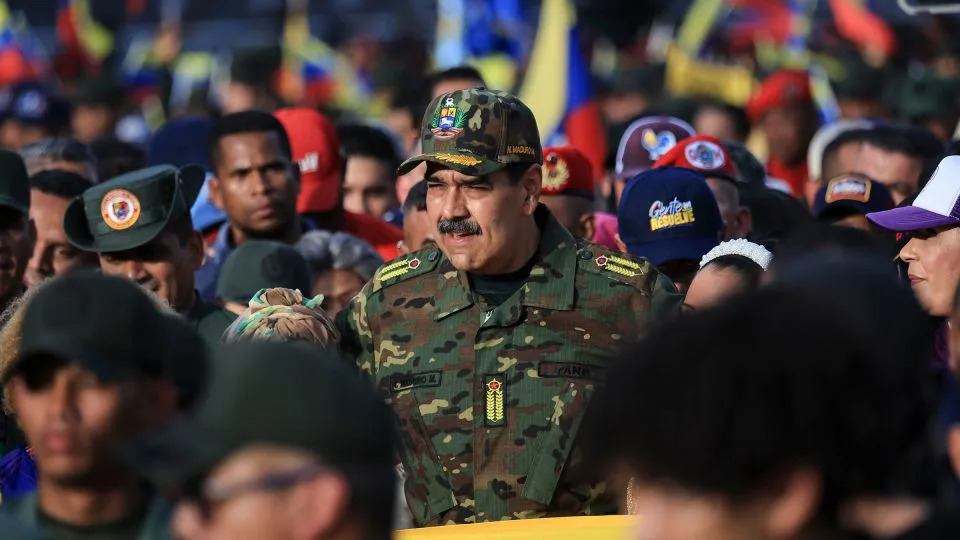
President of Venezuela Nicolás Maduro participates in a civic-military rally in Caracas, Venezuela, on November 25, 2025. - Jesus Vargas/Getty Images/File
Legal Questions and Missing Transparency
Key legal questions remain unresolved. Under the U.S. Constitution, the use of significant military force on foreign soil generally implicates Congress's power to declare war and to authorize the use of force. Absent a specific statutory authorization or an unambiguous self-defense justification, a cross-border ground operation to seize a foreign leader raises separation-of-powers and international-law issues.
Observers noted the administration did not publish a comprehensive legal memorandum explaining its authority, nor did it appear to provide the sort of advance congressional notification that is customary for major overseas operations. That lack of transparent legal rationale has intensified scrutiny from lawmakers, legal scholars, and foreign governments.
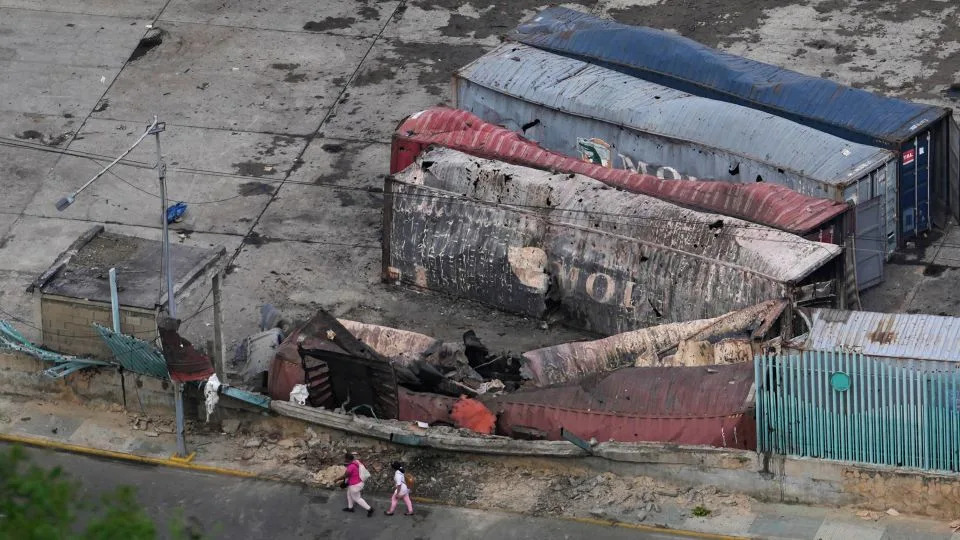
Pedestrians walk past destroyed containers lay at La Guaira port after explosions were heard in Venezuela, Saturday, Jan. 3, 2026. - Matias Delacroix/AP
Historical Comparisons
Analysts have compared the action to the 1989 U.S. operation in Panama that removed Manuel Noriega. Noriega had been indicted in the United States, and the operation to remove him was justified at the time in part by a controversial Office of Legal Counsel memorandum authored in 1989 that asserted a president might have "inherent constitutional authority" to direct actions abroad to seize indicted individuals. That memo—associated with William P. Barr—remains a point of contention because it interprets executive authority broadly.
There are important distinctions: Venezuela is larger and geopolitically more consequential than Panama, with substantial oil resources and stronger international ties. These differences could complicate stabilization, increase the risk of foreign responses, and raise the stakes for any long-term U.S. involvement.
International Reaction and Implications
The operation prompted protests abroad; for example, China denounced the action as a "blatant use of force against a sovereign state." Legal commentators have flagged potential violations of international law, while members of Congress from across the political spectrum have questioned whether the president overstretched executive authority.
Bottom line: The operation sharpens long-standing debates about when and how a U.S. president may use military force overseas without congressional authorization, and about the appropriate balance between law enforcement and military action in foreign jurisdictions.
The episode is likely to provoke legal challenges, congressional inquiries, and international fallout. For now, the administration’s shifting explanations and limited public legal justification have left unresolved questions about legality, precedent, and future U.S. policy toward Venezuela.
Help us improve.


