
The Trump administration’s recent operation to remove Nicolás Maduro appears to have shifted U.S. strategy from broad regime change to coercing remaining Venezuelan officials, with Vice President Delcy Rodríguez at the center of Washington’s plan. Trump publicly claimed the U.S. was "in charge," stoking fears of American overreach and a focus on securing Venezuelan oil. Experts warn the U.S. lacks the resources to govern Venezuela and that sidelining the democratic opposition could undermine long-term stability. The move has provoked bipartisan debate in Washington and risks political blowback at home and instability in Venezuela.
Trump’s Venezuela Gamble: Coercion, Oil and Political Risks at Home

President Donald Trump speaks with reporters while in flight on Air Force One on January 4, 2026. - Alex Brandon/AP
President Donald Trump’s dramatic decision to remove Nicolás Maduro from power has shifted U.S. policy away from classic nation-building toward a high-stakes strategy of coercing remaining Venezuelan officials into compliance. The White House appears to be pressing Vice President Delcy Rodríguez — now portrayed as the acting leader in Caracas — to bend to Washington’s demands while publicly signaling U.S. control over Venezuela’s future.
What Happened
U.S. special forces reportedly captured Maduro and transported him to New York, where he is scheduled to appear in court. In the wake of the raid, Trump publicly declared that the United States was "in charge" of Venezuela’s transition, and administration officials have threatened further military or economic pressure if Caracas does not cooperate.
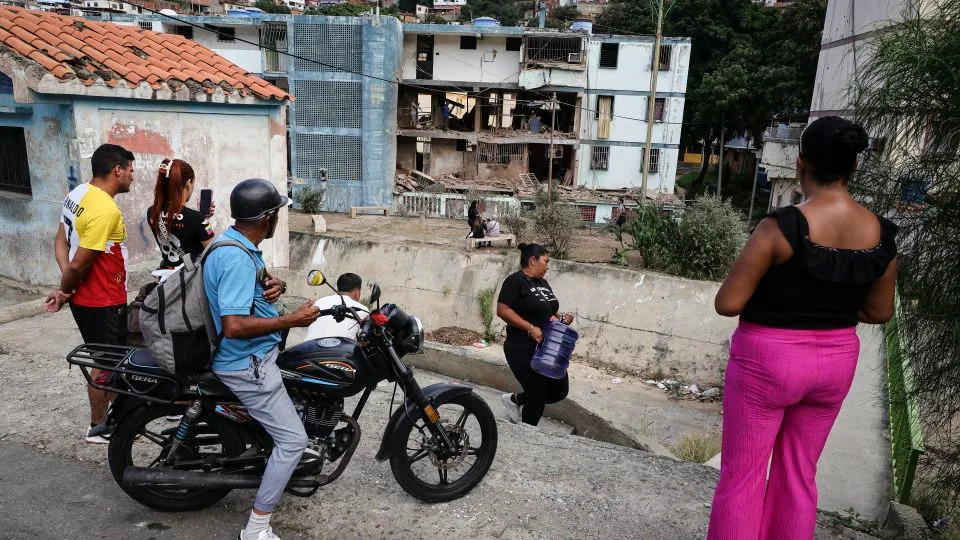
People view an apartment building on January 4, 2026, in La Guaira, Venezuela, that residents say was damaged during US military operations. - Jesus Vargas/Getty Images
White House Strategy
Rather than committing to large-scale nation-building, the administration is pursuing a targeted approach: destabilize or decapitate Maduro’s leadership, then coerce surviving officials — including Delcy Rodríguez — to act as Washington’s local partners. Officials have tied that pressure to continued sanctions on Venezuela’s oil and other economic levers intended to compel compliance.
“Don’t ask me who’s in charge, because I’ll give you an answer, and it’ll be very controversial,” Trump told reporters, adding, “It means we’re in charge. We’re in charge.”
Political Fallout in Washington
The operation has produced immediate partisan backlash: Democrats sharply criticized the raid for lacking congressional authorization, calling it an unauthorized use of force, while most Republicans so far have rallied behind the president. The episode raises the prospect that the administration’s gambit could create fractures in the MAGA coalition or become a liability in an election year.
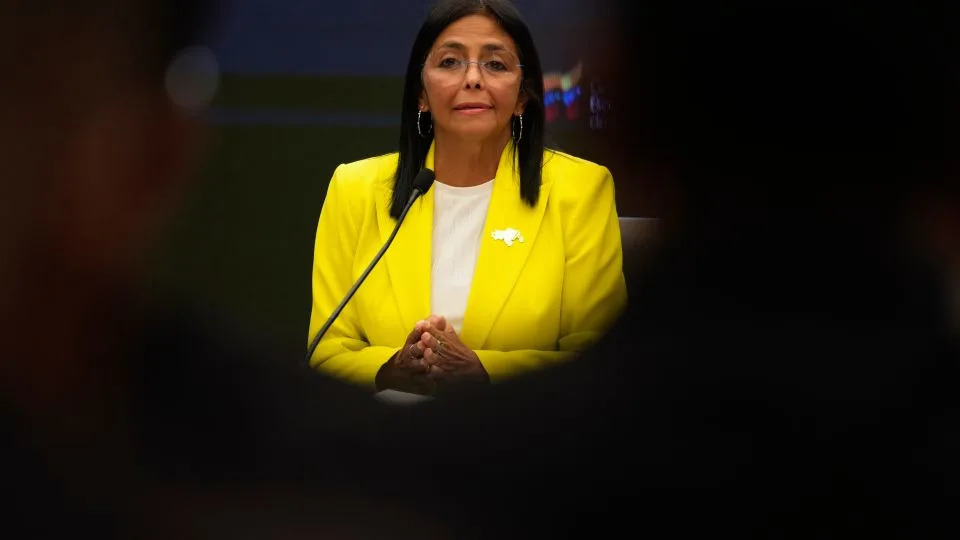
Venezuelan Vice President Delcy Rodríguez holds a news conference in Caracas on March 10, 2025. - Ariana Cubillos/AP
Challenges and Risks
Experts caution that coercing a foreign government from offshore without the resources to govern it is fraught. Former U.S. officials warn the administration lacks the manpower and diplomatic bandwidth to "run" Venezuela effectively, and that plans conceived in Washington often break down when confronted with local realities. Delcy Rodríguez, though a potential interlocutor, remains heavily associated with the Chávez–Maduro era and may lack the security or political support among Venezuela’s armed and political actors to implement U.S. demands.
There are additional risks: sidelining pro-democracy opposition figures — including María Corina Machado supporters — could alienate Venezuelans who hoped Maduro’s removal would produce a democratic transition; heavy-handed pressure could provoke violence or a broader regional response; and overt U.S. interest in Venezuelan oil reinforces accusations of imperial motives.
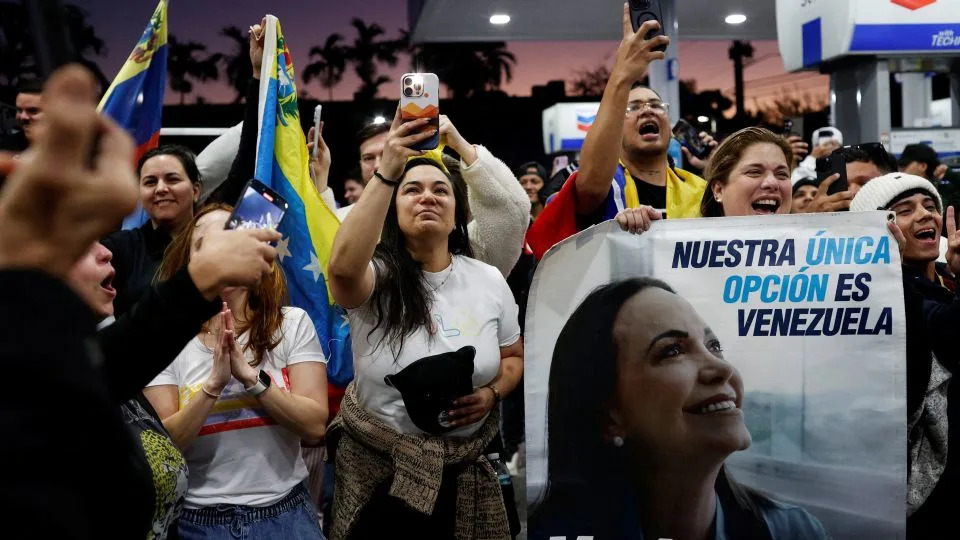
A woman holds a banner depicting Venezuelan opposition leader Maria Corina Machado in Doral, Florida, on January 3, 2026. - Marco Bello/Reuters
What Comes Next
The administration must decide whether to escalate pressure, negotiate quietly with Caracas insiders, or shift toward supporting a more explicit democratic transition. Each path carries unpredictable costs: military action risks regional destabilization, coercion risks creating a fragile, U.S.-aligned client state, and overt support for regime remnants risks abandoning the democratic opposition.
Bottom line: The White House’s novel mix of decapitation and coercion may avoid the immediate costs of nation-building, but it also carries substantial political and strategic hazards at home and abroad — and it may not deliver the stable, pro‑U.S. outcome Washington seeks.
Help us improve.


