The University of Illinois hosted a meeting of the state-supported African Descent-Citizens Reparations Commission where two professors and a doctoral student urged a mix of collective and individual reparative measures. Sundiata Keita Cha-Jua highlighted long-term labor exploitation and racialized harms; Naomi Simmons-Thorne emphasized "rectificatory justice" and presented a 61-respondent survey favoring compensation and non-repetition guarantees. LaKisha David described a pilot DNA-based genealogy program and proposed an Office of Genealogical Affairs to improve access to family history.
UIUC Hosts State Reparations Panel: Professors Advocate Community and Individual Remedies
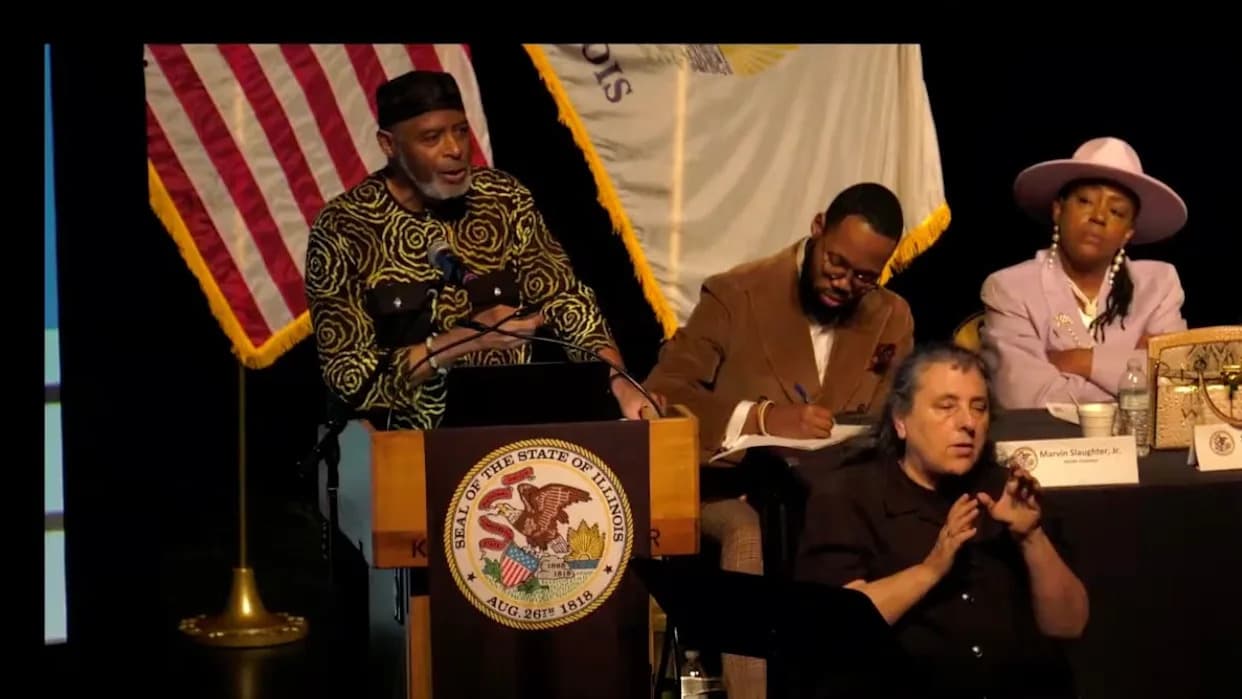
University of Illinois hosted state-funded committee meeting where professors advocated for reparations
In October, the University of Illinois Urbana-Champaign hosted a public session of the state-backed African Descent-Citizens Reparations Commission, where two university professors and a doctoral researcher presented arguments for reparations for African American descendants of slavery.
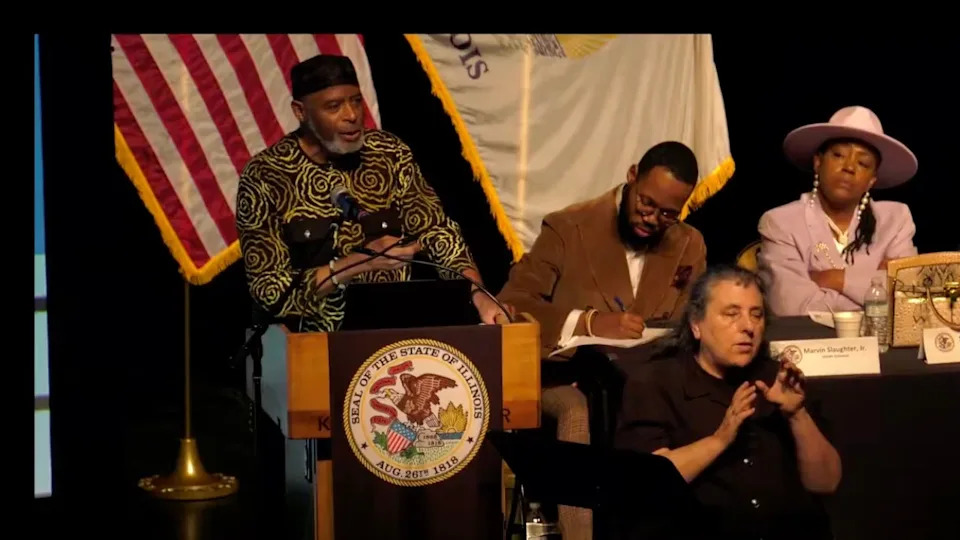
University of Illinois Urbana-Champaign professor Sundiata Keita Cha-Jua speaks at an Illinois African Descent-Citizens Reparations Commission meeting on campus on Oct. 4, 2025.
The commission, created by the Illinois General Assembly, is charged with studying reparations and reporting recommendations to the legislature on measures to ensure equity and parity for African American descendants of slavery.
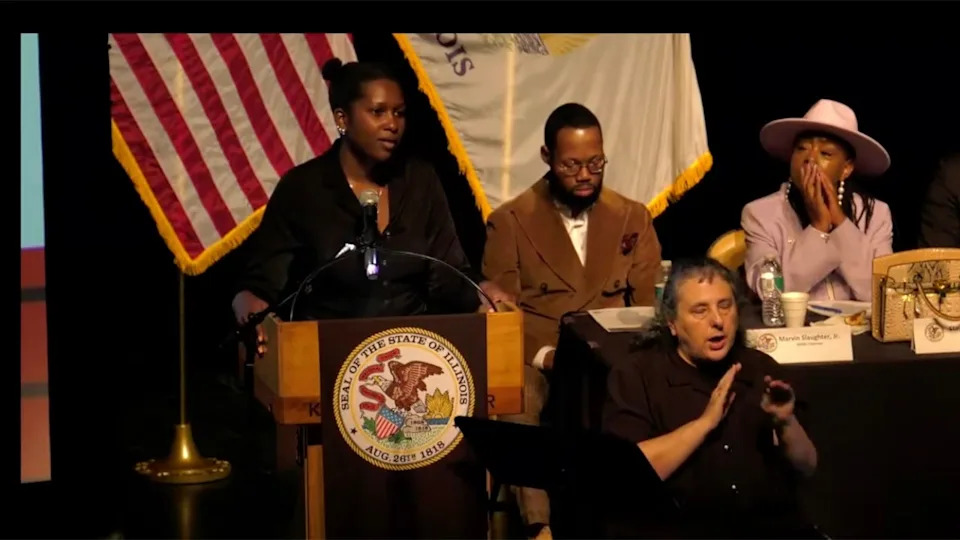
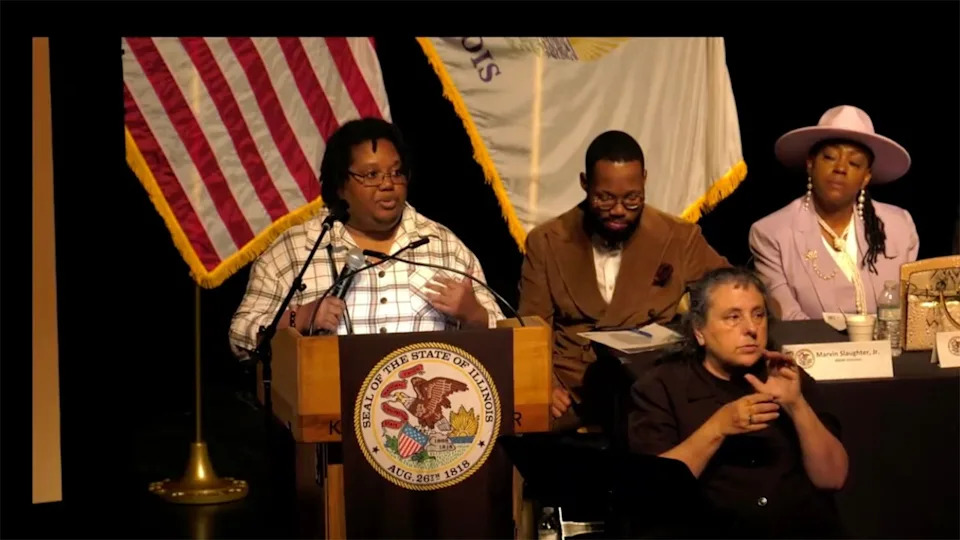
University of Illinois Urbana-Champaign doctoral student Naomi Simmons-Thorne speaks at an Illinois African Descent-Citizens Reparations Commission meeting on campus on Oct. 4, 2025.
Sundiata Keita Cha-Jua, a history professor at UIUC, summarized research on the lived experiences of Black workers in Illinois, arguing that Black and White workers "shared labor exploitation" but that Black workers suffered enduring, race-specific harms under capitalism. He described a range of historical conditions including slavery, sharecropping, domestic work and low-wage, precarious employment that contribute to persistent disadvantage.
A University of Illinois entry sign in Champaign, Illinois.
"The most frequent lived experience of the African American people has been as enslaved persons, sharecroppers, farm laborers, domestic servants, washerwomen, wageworkers, non-industrial or industrial workers, menial laborers in the public sector and as contemporary sub-proletarians laboring in part-time, temporary, low-wage un-unionized and benefit-less jobs," Cha-Jua said.
Cha-Jua argued that harms after emancipation—what he termed "super-exploitation" and "racial terrorism"—support a focus on collective remedies. "We constitute a nationality that simply does not have a state," he said, advocating for reparations to communities as well as individual payments.
University of Illinois Urbana-Champaign professor LaKisha David speaks at an Illinois African Descent-Citizens Reparations Commission meeting on campus on Oct. 4, 2025.
Naomi Simmons-Thorne, a doctoral student in philosophy, framed reparations within ethical and legal traditions, highlighting "rectificatory justice"—the idea that historical wrongs require corrective measures. She presented preliminary survey results from 61 respondents suggesting that many residents favor financial compensation and institutional guarantees to prevent recurrence of harms.
Simmons-Thorne also asked whether educational institutions adequately teach reparations precedents—such as Evanston’s local reparations program and the Rosewood, Florida, settlement—and suggested that better public education about reparations history and international law is needed.
In 2019, Evanston became the first U.S. locality to enact a local reparations program, offering eligible residents up to $25,000; by June the city had distributed roughly $6.3 million, according to the Evanston RoundTable. In 1994, the Florida Legislature approved $2.1 million in redress for survivors and descendants of the 1923 Rosewood massacre.
LaKisha David, an assistant professor of anthropology and director of The African Kinship Reunion (TAKiR), described the Illinois Family Roots Pilot Program, which offers free DNA testing to help African American families reconstruct genealogies and address what she calls "genealogical harm" caused by slavery and forced family separations.
David said the pilot "builds a more cohesive family narrative" and argued that access to family history supports psychological well-being, identity formation and a sense of belonging. She proposed an Office of Genealogical Affairs to treat genealogy as a public service and expand equitable access to records and support.
Simmons-Thorne, Cha-Jua and the University of Illinois had not responded to requests for comment at the time of reporting.
Help us improve.