Rep. Alma Adams warns that a proposed redefinition of “professional degrees” would exclude many nursing and education programs from higher federal graduate loan limits, capping most non-designated programs at $20,500 a year while allowing up to $50,000 for designated fields. With the average master’s costing about $62,820 over two years, Adams says the change would deepen existing shortages of teachers and nurses and put additional strain on hospitals and schools. She urges the public to comment during the required rulemaking period and calls for reinstating programs like the SAVE Plan to protect borrowers and workforce pipelines.
Schools and Hospitals at Risk: How a New “Professional Degree” Rule Would Cut Loan Access for Nurses and Teachers
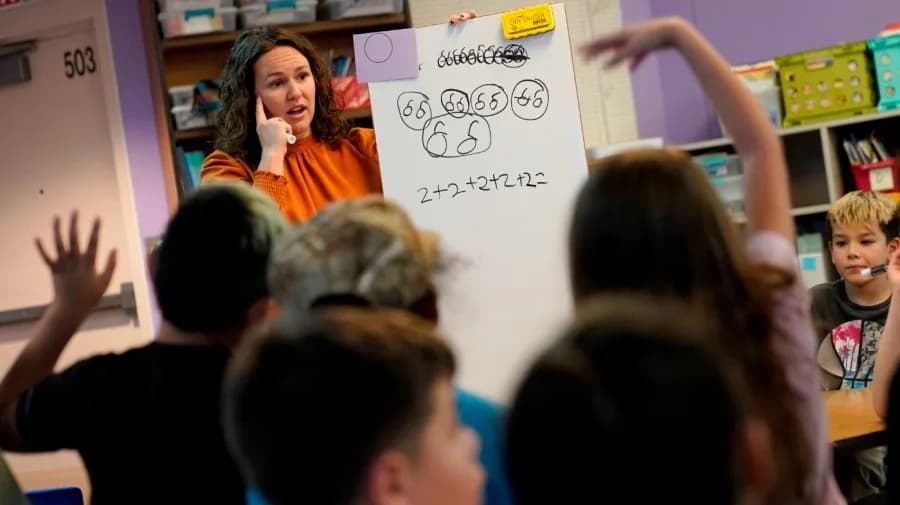
There is nothing admirable about how the Trump administration’s proposed change to the definition of “professional degrees” — part of the so-called “One Big Beautiful Bill” — would worsen national shortages of nurses and teachers.
What the Proposal Does
The administration would limit the federal loan category for graduate degrees by narrowing which programs qualify as “professional.” Under the proposal, degrees officially designated as “professional” could receive up to $50,000 a year in federal student loans, while all other graduate programs would be capped at $20,500 annually. By contrast, the average master’s degree costs roughly $62,820 over two years — well above the proposed cap for many nursing and education programs.
Why This Matters
If prospective students cannot finance their training, we cannot expect enough qualified professionals to join the workforce. The U.S. already faces severe shortages:
- Nationwide, one in eight teaching positions is either unfilled or covered by instructors who are not fully certified.
- Interest in teaching among high school and college students is at its lowest level in decades.
- Fewer than one-fifth of teachers who leave the profession do so because they are retiring — most leave for other reasons such as poor pay and working conditions.
Speaking from four decades in education, I have watched how low pay, insufficient institutional support and difficult working conditions drive talented people away from teaching. Adding a new, steep financial barrier will only make the crisis worse.
Similarly, North Carolina already projects a 13% nursing shortage by 2035, and some states could see shortages as high as 26% even before this proposed rule takes effect. If enacted, the change would further strain an already fragile health-care system.
Broader Health-Care and Policy Context
Hospitals, clinics and patients are already suffering from proposed policy changes that would roll back coverage and funding: lawmakers have floated plans amounting to roughly $1 trillion in Medicaid cuts, $500 billion in Medicare reductions, and the failure to renew enhanced premium tax credits under the Affordable Care Act. Together, these moves could result in an estimated 15 million Americans losing health coverage. Separately, about 5 million people are at risk of losing insurance next year because they can no longer afford premiums.
Hospitals and clinics — particularly in underserved and rural communities — are cutting services and closing doors because they cannot remain financially viable. A reduced pipeline of nurses and teachers will only deepen those shortages at a time when demand is rising.
What Should Be Done
The Department of Education claims these provisions will lower college costs, but there is no convincing evidence to support that. If the administration truly wants to make higher education more affordable, it should:
- Reinstate and protect the SAVE Plan, the most affordable federal student loan repayment option that currently helps about 7.7 million borrowers — a program that has been paused and faces elimination by 2028.
- Stop using Public Student Loan Forgiveness as a political tool that penalizes public servants, including teachers and nurses.
- Abandon efforts to dismantle the Department of Education and instead work with Congress to strengthen funding and access to higher education and health-care training programs.
Higher education is too expensive. Targeting nurses and teachers for loan-eligibility cuts will not solve that problem — it will make it worse.
Call to action: The proposal must undergo a public comment period before any final rule is issued. I urge every American to review the rule when it is posted and make their voice heard — because there is nothing beautiful about this idea.
Rep. Alma Adams (D-N.C.), Ph.D. is serving her fifth full term representing North Carolina’s 12th Congressional District in the U.S. House of Representatives.
Copyright 2026 Nexstar Media, Inc. All rights reserved. This material may not be published, broadcast, rewritten, or redistributed.
Help us improve.