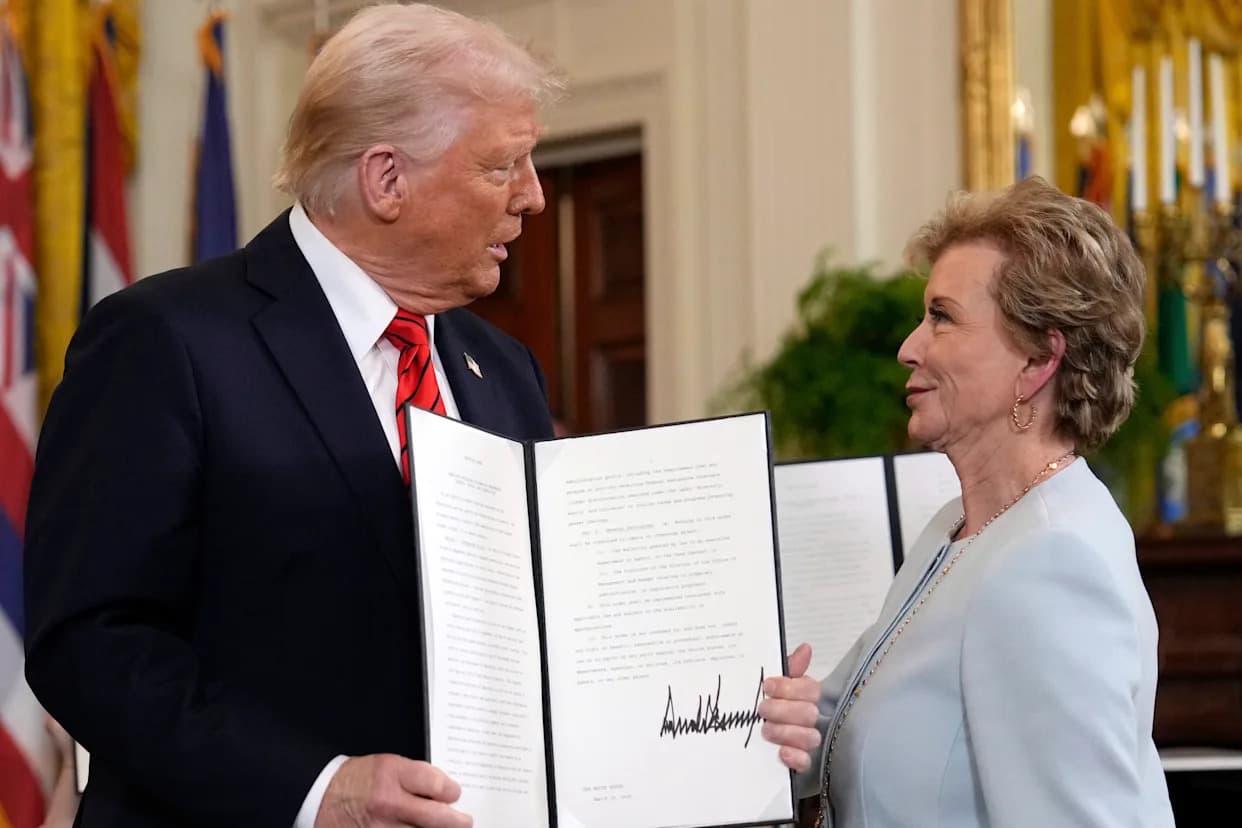
President Donald Trump used sweeping executive actions in 2025 to unsettle K-12 districts and higher-education institutions. Now the administration is attempting to transform that burst of enforcement into permanent policy by moving from investigations and funding pressure to formal rulemaking.
From Investigations to Rulemaking
Over the past year the White House issued numerous executive orders touching diversity programs, Title IX enforcement, campus oversight and the structure of the Education Department. Federal officials opened more than 120 civil-rights probes into colleges and dozens into K-12 systems, froze billions in university research funding and shifted parts of the department’s responsibilities to other agencies.
The stated goals were to push institutions to adopt policies aligned with the administration’s priorities, expand what officials call parental rights, and return more control over schooling to states. In some cases that pressure produced quick changes: several schools curtailed diversity initiatives, some districts prohibited transgender students from competing on girls’ sports teams, and a number of universities negotiated settlements to regain frozen funds.
Why Rulemaking Matters
Executive actions and agency investigations can be powerful, but they are often reversible by a future administration or vulnerable to legal challenge. Formal regulations—promulgated through notice-and-comment rulemaking—last longer and give federal agencies clearer authority to enforce policy.
Administration allies say the next step is clear. "This has been a year of enforcement through investigation," said Bob Eitel, former senior counsel to Education Secretary Betsy DeVos. "Next year will be the year of rulemaking." Officials have signaled plans to revise how Title IX (sex discrimination) and Title VI (race and national-origin discrimination) are interpreted and enforced, as well as to tighten reporting rules for foreign gifts, revisit accreditation standards and implement changes required by the One Big Beautiful Bill Act.
Practical Hurdles
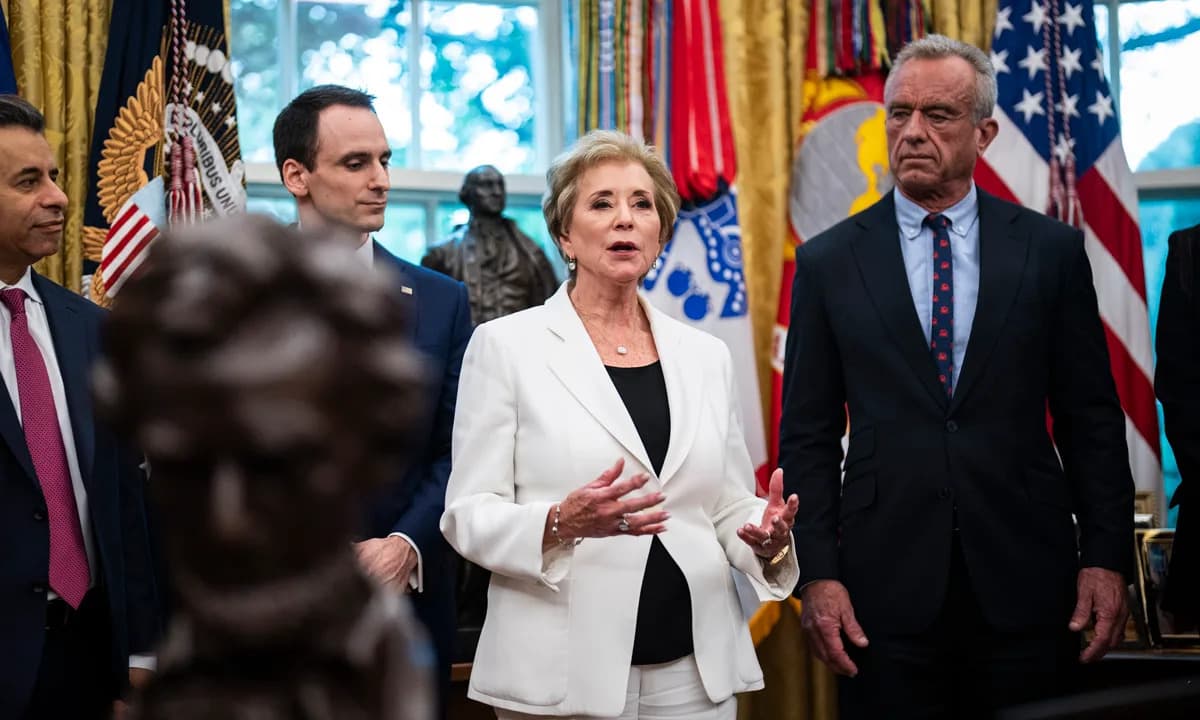
Drafting robust regulations is technical, time-consuming work typically undertaken by career civil servants. But the Education Department has reduced its workforce substantially under Secretary Linda McMahon, and many experienced staff were reassigned or departed. That shrinkage could slow the rulemaking pipeline at the same time the department faces tight statutory deadlines tied to the recent law.
The One Big Beautiful Bill Act requires the department to adopt a series of student-loan and Pell-grant rules with implementation milestones next year, and Treasury must begin writing regulations for a new school-choice tax credit before it takes effect in 2027. At the same time, the Higher Education Act’s "master calendar" establishes timing constraints: rules finalized after Nov. 1 generally cannot take effect the following July, effectively adding a planning calendar that can delay major regulatory initiatives.
Court Pushback and Political Risks
Several of the administration’s aggressive tactics have met judicial resistance. Two federal judges ordered restoration of research funds to Harvard and UCLA after finding the freezes unlawful or coercive. Those rulings may embolden other institutions to resist negotiated settlements and complicate the administration’s strategy of leveraging federal dollars to force policy changes.
Legal losses and the limits of budgetary coercion make formal rulemaking more attractive for the administration—but also more difficult. Regulations themselves are often litigated, and any rules that affect civil-rights protections or students’ access may face intense court scrutiny.
What To Watch
- Title IX and Title VI Rulemaking: Proposed revisions could redefine sex and race discrimination standards, affecting campus admissions, athletics and diversity programs.
- Higher-Education Oversight: New reporting requirements for foreign gifts and proposed accreditation changes could reshape university governance.
- Implementation Deadlines: Rules tied to the One Big Beautiful Bill Act have near-term timelines that will test the department’s reduced staff capacity.
- Court Challenges: Multiple lawsuits already limit some tactics; future litigation is likely to shape how—and whether—new rules stand.
Administration officials point to early victories—the rapid FAFSA rollout and prompt civil-rights activity—as evidence the department can move quickly even with fewer staff. Skeptics warn that a depleted workforce, a clogged regulatory calendar, and ongoing litigation could produce a slow, contested path to durable policy change.
"It's one thing to launch investigations," said Eitel. "In the long run, what's going to matter is what regulations exist on the books and which can be enforced down the road."
As the administration pivots from short-term pressure campaigns to long-form rulemaking, the outcome will hinge on legal battles, congressional dynamics, staffing capacity and the timelines written into statute. The effort to cement the 2025 policy shifts into regulation is under way—but enshrining those changes permanently will be neither quick nor guaranteed.