The Department of Justice recently released hundreds of MCC surveillance clips that raise new questions about which cameras were recording when Jeffrey Epstein died in 2019. The files include footage from cameras previously described as non-recording and clips that predate the stated 30-day retention policy. Missing footage—most notably from the July 23 incident when Epstein was found unconscious—remains a major gap, and experts point to possible technical explanations such as unused storage, damaged drives, or post-incident rewiring. The DOJ may hold additional recordings, and withholding further material could raise legal concerns under the transparency law.
Newly Released Epstein Jail Videos Deepen Questions About MCC Surveillance
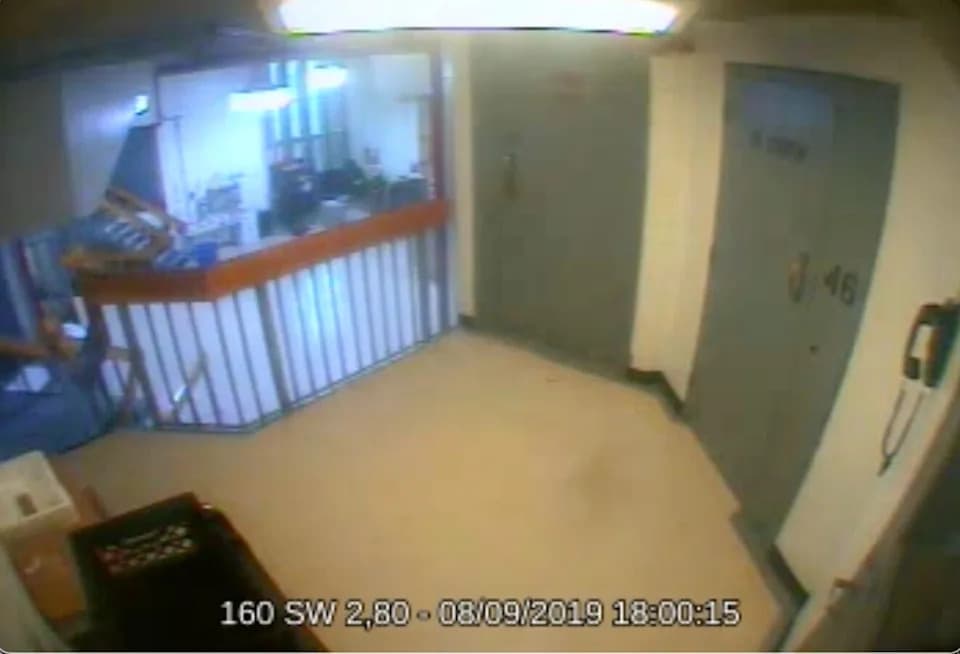
Image from security camera video inside the Metropolitan Correctional Center, dated Aug. 9, 2019. / Credit: U.S. Bureau of Prisons
A fresh tranche of surveillance footage from the Metropolitan Correctional Center (MCC) in New York has reignited scrutiny of the prison's camera system and the official account of Jeffrey Epstein's 2019 death. The Department of Justice released hundreds of one-hour clips under the Epstein Files Transparency Act, but instead of clarifying events, the material raises new technical and procedural questions.
What the New Files Show
The DOJ disclosure includes more than 400 one-hour clips spanning sporadic dates beginning July 5, 2019, and extending to the day after Epstein's death on Aug. 10. Among the files are recordings from five cameras inside the facility that had previously been described as non-recording, including several hours from a camera that offers an unobstructed view of the Special Housing Unit (SHU) entrance and the stairs leading to Epstein's tier.

Image from security video at the Metropolitan Correctional Center shows a view of the primary entrance to the Secure Housing Unit (SHU) and the stairs leading to Epstein's tier. / Credit: U.S. Bureau of Prisons
Tensions With Earlier Accounts
Those clips intensify discrepancies with earlier statements and reports. A 2023 Office of the Inspector General (OIG) report said 10 of 11 SHU cameras were not recording because of malfunctioning hard drives, and DOJ correspondence released with the footage said the surveillance system stopped recording on July 29 and was not repaired until Aug. 14. Yet four one-hour clips from the previously non-recording camera are dated Aug. 12—two days after Epstein's death—prompting questions about which devices were actually capturing video around the time of the incident.
"There is a plausible explanation for it, but it's just odd," said Nick Barreiro, a digital forensic expert, noting that a post-incident rewiring to a different DVR could explain the discrepancy.
Missing And Partial Footage
The release also spotlights notable gaps. Clips dated as far back as July 5 conflict with internal emails saying the system's retention policy was set to 30 days. Experts told reporters that if storage capacity was available, older footage may not have been overwritten, which could explain recovered files outside the stated window.
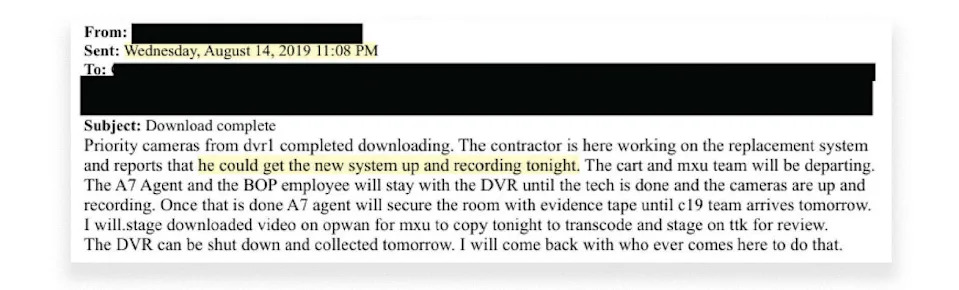
/ Credit: Released by Department of Justice
Crucially, footage from July 23—the night Epstein was found unconscious and later revived—is missing. That incident occurred before the reported hard-drive failures and would likely have been recorded by cameras on Epstein's tier. The DOJ said attempts to recover data from damaged drives were abandoned because recovery could have taken months and might not yield usable footage.
Other Released Clips
Beyond the SHU material, the DOJ disclosed 188 one-hour clips from an adjacent housing unit known as "10 South" (apparently mislabeled in files), 26 one-hour clips from an elevator bank, and several brief desk- and tier-area clips, including a 2-minute, 23-second recording labeled "J tier" with no date. The OIG had reported that the J tier camera was not recording at the time of Epstein's death.
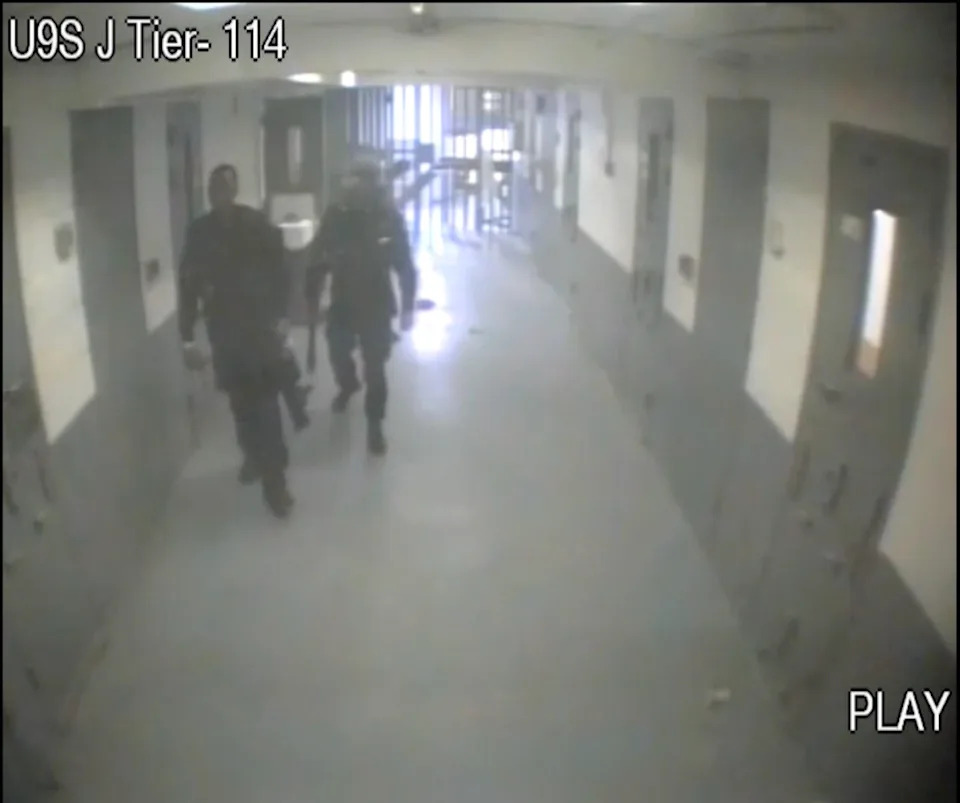
Image from video at the Metropolitan Correctional Center labeled
Outstanding Questions
- Why do clips predate the stated 30-day retention setting?
- Which cameras were actually recording in the hours and days surrounding Epstein's death?
- Was any relevant footage—especially movements after officers discovered Epstein—captured by active cameras and withheld from public release?
Documents obtained earlier by CNN suggested the DOJ had footage from 147 cameras covering 24 hours before and after Epstein's death—over eight terabytes of data—which may mean additional material remains unreleased. If more relevant unclassified records exist and are not disclosed, the department could face questions about compliance with the statutory transparency requirement.
CBS News and other outlets have asked the DOJ for comment; the department had not provided a substantive response at publication.
Timeline (Key Dates)
July 5, 2019: Earliest clips included in the recent disclosure.
July 23, 2019: Epstein found unconscious and revived—relevant footage missing.
July 29, 2019: DOJ correspondence says surveillance stopped recording.
Aug. 10, 2019: Epstein found dead in his MCC cell.
Help us improve.